
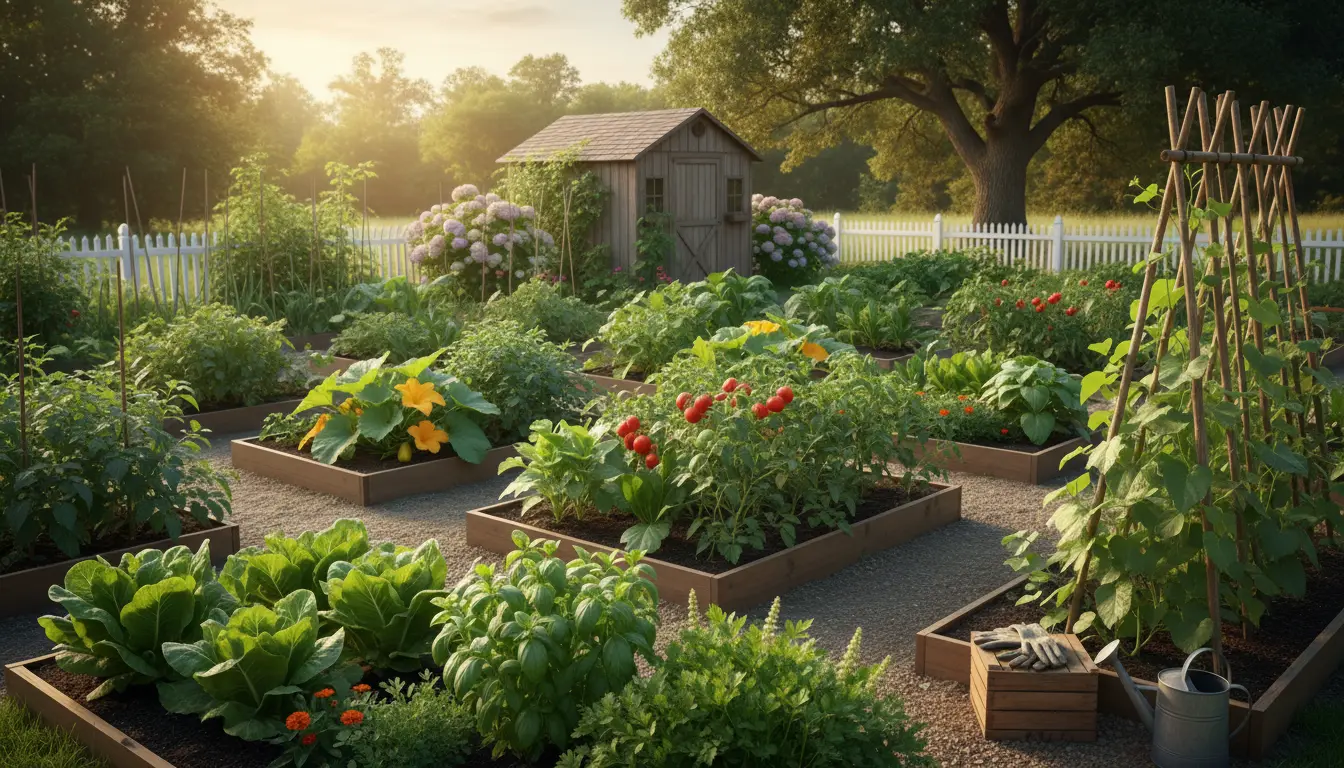
Start Smart: Quick Overview Before You Begin
Starting a vegetable garden at home is manageable with a short plan and basic tools. This guide gives clear steps you can follow whether you have a backyard, balcony, or small patio.
Focus on location, soil, plants, and simple maintenance to get reliable produce in your first season. Use the lists and examples below to avoid common beginner mistakes.
How to Start a Vegetable Garden: Choose the Right Location
Light and access determine most of your success. Pick a spot that receives 6 to 8 hours of direct sunlight for most vegetables.
Also consider access to water, good drainage, and protection from strong winds. If space is limited, containers or raised beds on a balcony work well.
How to Start a Vegetable Garden: Assess Sun and Space
Mark shade patterns during the day to confirm sunlight hours. Note morning versus afternoon sun since some vegetables prefer cooler morning light.
Measure the available footprint and plan bed sizes that match your time and budget. Start small: a 4×4 or 4×8 raised bed is ideal for beginners.
How to Start a Vegetable Garden: Prepare Soil and Beds
Soil quality is the foundation of a productive garden. Aim for rich, loose soil with good drainage and a neutral to slightly acidic pH (6.0–7.0).
If your yard has heavy clay or poor topsoil, raised beds filled with a mix of compost, topsoil, and well-rotted manure will speed results and reduce weeds.
How to Start a Vegetable Garden: Soil Mix and Testing
Use a simple soil test kit to check pH and nutrient levels. Amend soil based on results: add lime to raise pH or sulfur to lower it.
Incorporate compost at a rate of 2–4 inches on top and mix into the top 6–8 inches. This improves structure, water retention, and fertility.
How to Start a Vegetable Garden: Select Vegetables for Beginners
Choose crops that are low maintenance and produce reliably. Good beginner vegetables include lettuce, radishes, tomatoes, beans, and zucchini.
Consider seasonality: peas and spinach are cool-season crops, while tomatoes and peppers thrive in warm months. Stagger plantings to extend harvests.
- Lettuce and leafy greens — quick and continuous harvests
- Radishes — fastest to mature, great for new gardeners
- Tomatoes — high yield but need staking and regular watering
- Beans — low maintenance and fix nitrogen in soil
- Zucchini — very productive, space accordingly
How to Start a Vegetable Garden: Planting and Watering Basics
Follow seed packet or plant label spacing and depth instructions. Crowding plants reduces airflow and increases pest and disease risk.
Water deeply and less frequently to encourage strong roots. Aim for 1 to 1.5 inches of water per week, adjusting for rainfall and temperature.
How to Start a Vegetable Garden: Mulching and Maintenance
Mulch with straw, shredded leaves, or bark to retain moisture and suppress weeds. Apply 2–3 inches around plants, keeping mulch away from stems.
Regularly remove weeds, monitor for pests, and prune as needed. Early intervention often prevents larger problems later in the season.
How to Start a Vegetable Garden: Pest and Disease Management
Use integrated pest management (IPM): inspect plants, use physical barriers, and encourage beneficial insects. Avoid broad-spectrum pesticides that kill pollinators.
Rotate crops each year to reduce disease buildup. Keep garden debris cleaned up in fall to limit overwintering pests.
How to Start a Vegetable Garden: Seasonal Care and Harvesting
Adjust care by season: shade cloth and extra watering in hot months, row covers and frost blankets in unexpected cold. Harvest regularly to encourage more production.
Pick vegetables at recommended maturity times — for example, harvest lettuce leaves young for best flavor and let a few heads mature fully for seeds.
Companion planting can reduce pests naturally. For example, planting marigolds near tomatoes can deter certain nematodes and insect pests.
Small Case Study: How to Start a Vegetable Garden in a 4×4 Bed
Case: A beginner converted a 4×4 raised bed on a suburban patio and grew tomatoes, lettuce, and bush beans in one season. They started in April and harvested from June through October.
Results: 8 tomato plants produced roughly 60 pounds of fruit, lettuce provided continuous salads, and beans added 10–15 pounds. Time investment averaged 30 minutes, 3 times weekly.
Key takeaways: proper soil mix, consistent watering, and simple staking for tomatoes increased yield substantially. Starting small reduced overwhelm and led to steady success.
How to Start a Vegetable Garden: Quick Checklist Before You Plant
- Confirm 6–8 hours of sun or choose shade-loving crops.
- Test and amend soil or prepare raised bed mix.
- Select beginner-friendly vegetables suited to your season.
- Arrange watering plan and mulch to conserve moisture.
- Schedule weekly checks for pests and growth progress.
Final Tips to Start a Vegetable Garden and Keep It Productive
Start small, keep records of planting dates and yields, and learn from each season. Gardening is iterative: small adjustments improve results yearly.
Join a local gardening group or seed swap to learn regional tips and obtain hardy varieties. With patience and basic care, your home vegetable garden will reward you with fresh produce and experience.