
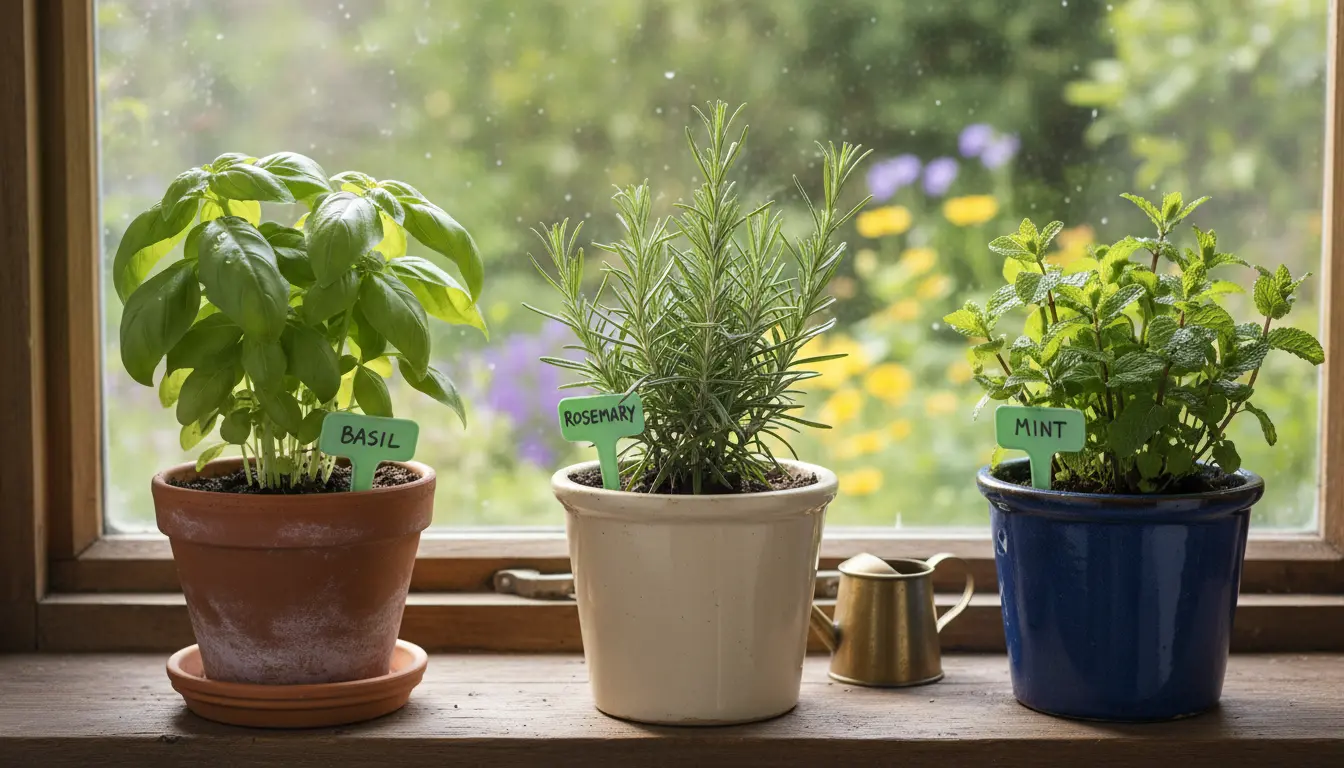
Growing herbs indoors is a practical way to have fresh flavors year-round. This guide explains how to start an indoor herb garden with simple steps you can follow this weekend.
Why an Indoor Herb Garden Works
An indoor herb garden saves space and gives you easy access to fresh herbs. Herbs are generally forgiving and adapt well to containers and limited light.
For beginners, herbs like basil, mint, parsley, and chives are reliable choices. They need minimal tools and respond quickly to consistent care.
Choosing Plants for Your Indoor Herb Garden
Pick herbs based on kitchen use, light availability, and maintenance level. Consider starting with 3–5 varieties to keep care simple.
- Basil — prefers bright light and warm temperatures.
- Mint — tolerates lower light but needs frequent trimming.
- Parsley — slower grower, likes steady moisture.
- Chives — hardy and good in small pots.
- Thyme and rosemary — need very good light and drier soil.
Light, Soil, and Containers for an Indoor Herb Garden
Light is the most important factor for a successful indoor herb garden. Most culinary herbs need 4–6 hours of bright light daily.
Light Options for an Indoor Herb Garden
Place herbs on a south- or west-facing windowsill if possible. If natural light is limited, use a full-spectrum LED grow light for 8–12 hours per day.
Soil and Containers
Use a light, well-draining potting mix formulated for herbs or vegetables. Avoid heavy garden soil, which can compact and hold too much water.
Choose containers with drainage holes to prevent root rot. Pots between 4–8 inches work well for most herbs; larger pots suit bushier types like mint or rosemary.
Planting and Care Routine for an Indoor Herb Garden
Follow a simple routine: plant, position for light, water appropriately, and prune regularly. Consistency helps herbs thrive indoors.
- Planting: Fill pot with potting mix, place seedling or transplant at the same depth as the nursery container, firm soil gently, and water lightly.
- Watering: Water when the top 1 inch of soil is dry. Water thoroughly until excess drains, then discard the runoff.
- Fertilizing: Feed lightly every 4–6 weeks with a balanced liquid fertilizer at half strength during the growing season.
- Humidity and Airflow: Moderate indoor humidity is fine. Provide gentle airflow to reduce fungal problems.
Pruning and Harvesting Tips
Regular pruning keeps herbs bushy and productive. Pinch or cut back one-third of growth at a time rather than removing large sections.
Harvest in the morning after the dew has dried for best flavor. Use scissors to avoid crushing stems.
Some herbs like basil will produce more leaves when you regularly pinch the flower buds. Removing early flowers redirects energy back to leaf growth.
Common Problems and Solutions in an Indoor Herb Garden
Indoor herb gardens face predictable issues. Watch for these problems and use targeted fixes to keep plants healthy.
- Yellow leaves: Often a sign of overwatering or poor drainage. Let soil dry and check pot drainage.
- Leggy growth: Caused by insufficient light. Move plants closer to light or add a grow light.
- Pests: Aphids and spider mites can appear. Wipe leaves, use insecticidal soap, or isolate the plant.
- Slow growth: May need more nutrients or larger containers; repot if roots are crowded.
Small Case Study: Kitchen Counter Basil
Anna, a busy home cook, started a small basil plant on her kitchen counter. She used a 6-inch pot with well-draining mix and placed it 2 feet from a south-facing window.
Her routine: water when the top inch of soil was dry, pinch the top leaves twice a week, and rotate the pot every few days for even light. Within six weeks she had frequent harvests and no major pest issues.
Key outcomes: consistent light, regular pruning, and proper drainage turned one pot into a steady supply of fresh basil for meals.
Quick Start Checklist for Your Indoor Herb Garden
- Select 3–5 herbs suited to your kitchen use and light conditions.
- Use pots with drainage and a light potting mix.
- Provide 4–12 hours of bright light; supplement with LED grow lights if needed.
- Water when the top inch of soil is dry; avoid sitting in water.
- Prune regularly and feed lightly during the growing season.
Example Weekly Care Schedule
- Monday: Check soil moisture; water if dry.
- Wednesday: Inspect for pests and prune lightly.
- Saturday: Rotate pots, clean leaves, and apply diluted fertilizer if needed.
Starting an indoor herb garden is low-cost and high-reward. With the right plants, light, and a short care routine, you can have fresh herbs at hand and improve your cooking and wellness.