
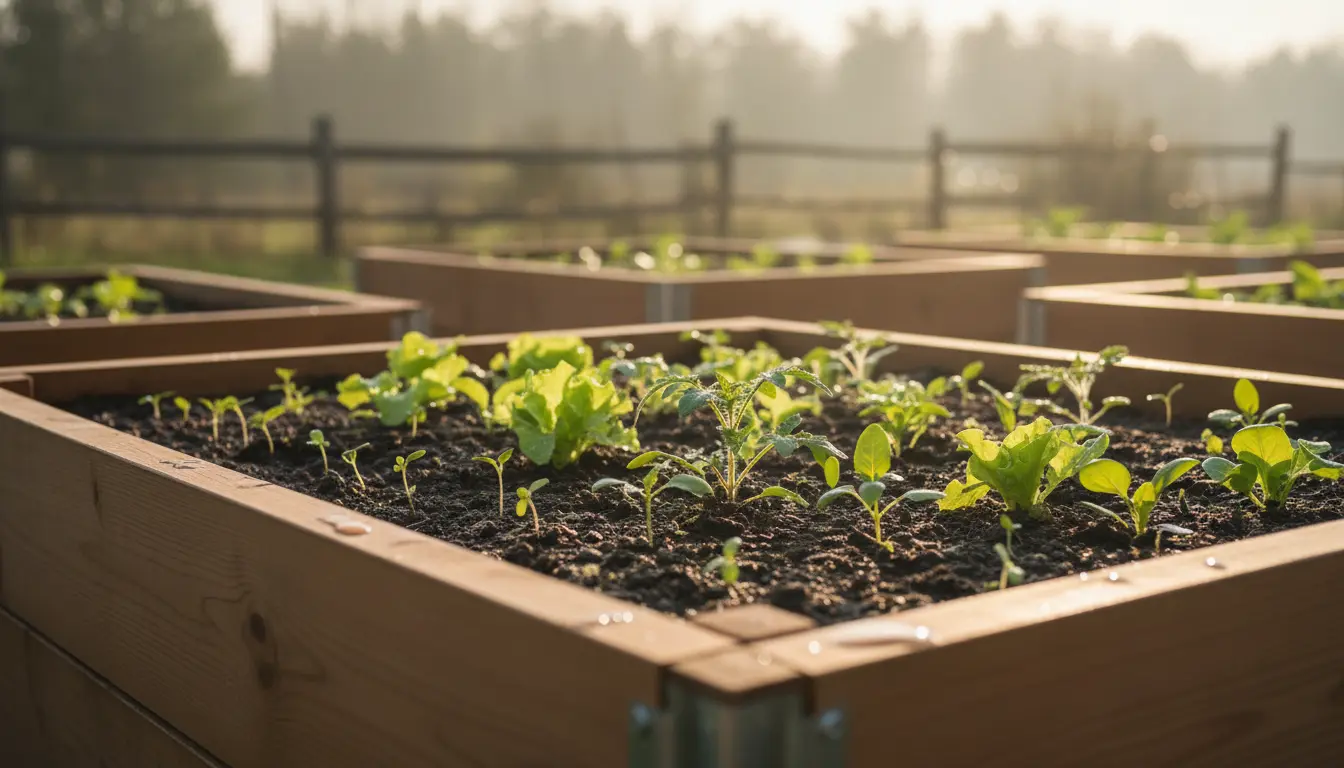
Starting a vegetable garden at home is a practical way to grow fresh food, save money, and enjoy outdoor activity. This guide gives step-by-step instructions you can follow, even if you have limited space or little prior experience.
Choosing a Site for Your Vegetable Garden
Pick a location that gets at least six hours of sun each day. Most vegetables need full sun to produce well.
Consider these site factors:
- Sun exposure: South- or west-facing areas are best.
- Drainage: Avoid low spots that collect water.
- Access: Place the garden near a water source and where you will pass by often.
Sunlight Needs for a Vegetable Garden
Leafy greens tolerate partial shade, but fruiting crops like tomatoes and peppers need full sun. Observe the site over a day to confirm light patterns.
Soil and Compost for a Vegetable Garden
Good soil is the foundation of a productive vegetable garden. Aim for loose, well-draining loam rich in organic matter.
Basic soil steps:
- Test your soil pH with a kit. Most vegetables prefer pH 6.0–7.0.
- Add compost: Spread 2–3 inches of finished compost and mix into the top 6–8 inches of soil.
- Use raised beds if your native soil is poor or compacted.
How to Improve Soil Fast
Work in compost and aged manure in fall or spring. Cover crops like clover can also add organic matter and protect soil between seasons.
Planting and Spacing in a Vegetable Garden
Follow spacing recommendations on seed packets or plant tags. Crowded plants compete for light, water, and nutrients, lowering yields.
Planting tips:
- Start with easy crops: lettuce, radishes, bush beans, and zucchini produce quickly and reliably.
- Group plants with similar water needs together to simplify irrigation.
- Succession plant: sow a new row of lettuce every 2–3 weeks for continuous harvest.
Example Plant Layout for a Small Garden
In a 4×8 foot bed, try one row of tomatoes trained on stakes, one row of bush beans, and space for successive salads in the remaining area. This uses vertical space and reduces disease risk.
Watering and Maintenance for a Vegetable Garden
Consistent moisture is key. Water deeply once or twice a week instead of shallow daily sprinkling. Deep watering encourages strong roots.
Maintenance checklist:
- Mulch with straw or bark to conserve moisture and suppress weeds.
- Remove weeds regularly before they set seed.
- Prune only when needed to improve air flow for tomatoes and squash.
Irrigation Options for a Vegetable Garden
Use soaker hoses or drip irrigation for efficient water delivery. If hand-watering, apply water at the soil level to avoid wetting foliage, which can spread disease.
Pest and Disease Control in a Vegetable Garden
Integrated pest management (IPM) reduces damage while limiting chemical use. Start with prevention and monitoring.
IPM steps:
- Rotate crops each year to reduce soil-borne diseases.
- Use row covers to protect young plants from insects.
- Introduce beneficial insects like ladybugs or lacewings for aphid control.
Handpick larger pests and remove diseased leaves promptly. If needed, use targeted organic sprays such as insecticidal soap or neem oil.
Harvesting and Extending the Season in a Vegetable Garden
Harvest vegetables at peak ripeness for best flavor and nutrition. Regular harvesting often encourages more production.
To extend the growing season:
- Use cold frames or cloches for early spring and late fall crops.
- Choose varieties labeled early or short-season for cooler climates.
Companion planting such as basil near tomatoes can improve flavor and help deter pests. Simple plant pairings can boost health without chemicals.
Small Case Study: One Season in a Small Backyard Vegetable Garden
Maria had a 10×10 foot corner in her yard. She built two 4×4 raised beds, filled them with a compost-soil mix, and planted tomatoes, lettuce, carrots, and beans.
Her process and results:
- Prepared beds in early spring and planted lettuce and carrots by mid-April.
- Staked and pruned three tomato plants, used drip irrigation, and mulched with straw.
- By August she harvested weekly salads and fresh tomatoes through September, saving about $200 in grocery costs and having surplus to share.
Her key actions were consistent watering, timely succession planting, and rotating beans to a different bed the next year to reduce disease pressure.
Final Tips for a Successful Vegetable Garden
Start small and expand as you gain confidence. Keep a gardening journal with planting dates, varieties, and harvest yields to learn what works for your microclimate.
Summarized checklist:
- Select a sunny, well-drained site.
- Improve soil with compost and test pH.
- Choose easy, high-yield crops first.
- Use mulch and efficient watering methods.
- Monitor pests and rotate crops annually.
With steady care and simple planning, your vegetable garden can provide fresh produce and satisfaction all season long.