
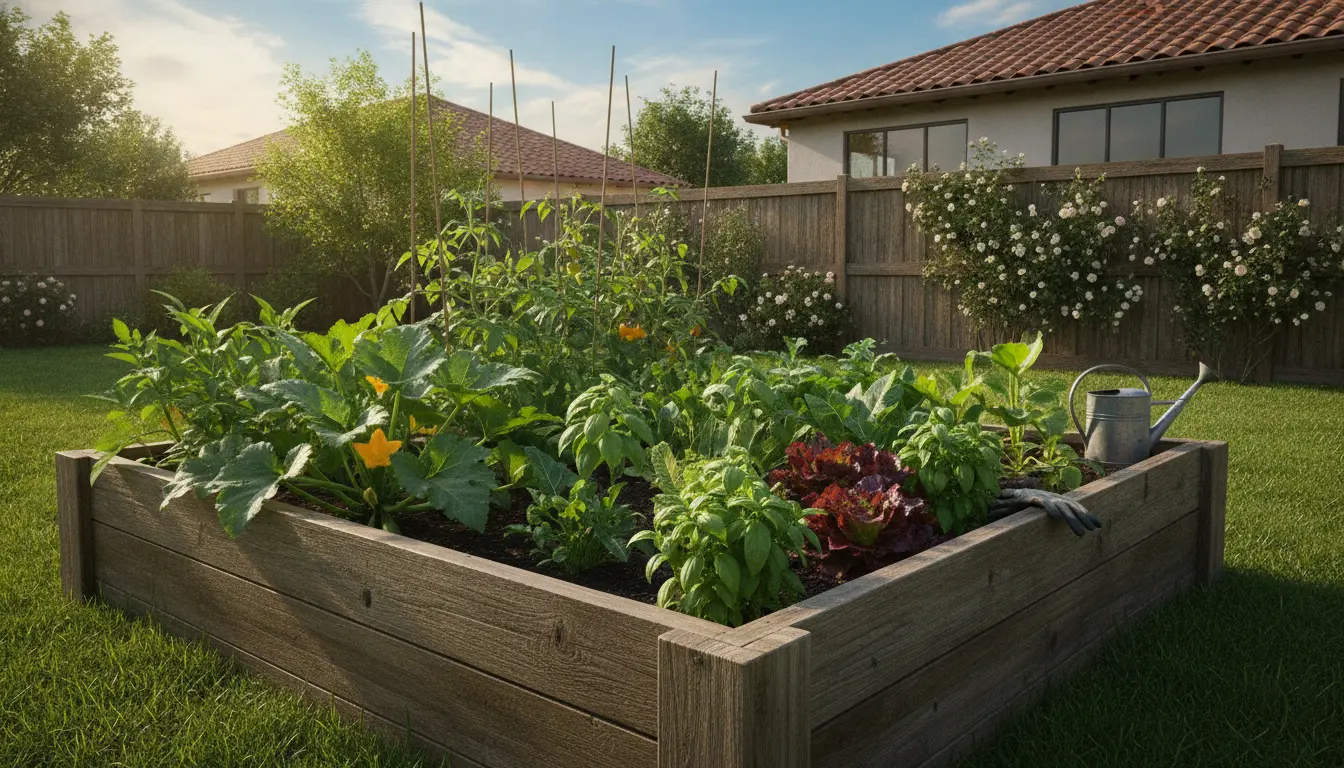
Starting a vegetable garden is a practical way to grow fresh food, save money, and enjoy outdoor time. This guide walks through clear steps you can follow, whether you have a small balcony or a backyard plot.
Plan Your Vegetable Garden: Choose Goals and Space
Decide what you want from your vegetable garden. Are you aiming to supply a few meals a week, to grow a few specialty items, or to teach gardening to children?
Assess available space. Common options include ground beds, raised beds, and containers. Each works for different sizes and soil conditions.
Pick Easy Starter Crops for a Vegetable Garden
- Leafy greens: lettuce, spinach, Swiss chard
- Quick growers: radishes, green onions
- High yield staples: bush beans, cherry tomatoes
- Herbs: basil, parsley, chives
Site Selection for Your Vegetable Garden
Vegetables need sun, water access, and good drainage. Choose a site with at least 6 hours of direct sun for most crops.
Avoid low spots that collect water. If sunlight is limited, focus on leafy greens that tolerate partial shade.
Soil and Soil Preparation
Healthy soil is the foundation of a productive vegetable garden. Test soil pH and nutrient levels using a basic kit or a lab test for precise results.
Improve soil by adding organic matter such as compost or well-rotted manure. For heavy clay or poor native soil, raised beds with a mixed planting medium are a fast solution.
Design a Practical Layout for Your Vegetable Garden
Keep beds narrow enough to reach the center without stepping on soil. Paths should allow easy access for watering and harvest.
- Standard raised bed: 4 feet wide to reach across
- Path materials: mulch, gravel, or stepping stones
- Use vertical supports for vining crops to save space
Planting Schedule and Succession Planting

Use a simple planting calendar based on your last frost date. Direct-sow quick crops and starter transplants for slower plants like tomatoes and peppers.
Succession planting extends harvests. After harvesting radishes, replace them with lettuce or spinach for another crop cycle.
Watering and Mulching Tips for a Vegetable Garden
Consistent moisture is crucial. Water deeply at the base of plants rather than frequent shallow sprinkling.
Mulch with straw, leaves, or bark to retain moisture, suppress weeds, and regulate soil temperature.
Pest and Disease Management
Start with prevention: healthy soil, good air circulation, and crop rotation reduce problems. Inspect plants weekly for early signs of pests or disease.
Use these practical controls:
- Handpick larger pests like caterpillars
- Use row covers to protect young plants from insects
- Apply organic controls such as insecticidal soaps for soft-bodied pests
Harvesting and Ongoing Care in Your Vegetable Garden
Harvest regularly. Many vegetables produce more when picked promptly, such as beans and summer squash.
Keep notes on planting dates, varieties, and yields. Simple records help you improve each season.
Case Study: Small Raised Bed Success
Maria converted a 10 by 4 foot corner of her yard into two raised beds. She filled them with a mix of compost, topsoil, and coconut coir for moisture retention.
Year one she planted tomatoes, bush beans, lettuce, and basil. Using drip irrigation and a 2 inch layer of straw mulch, she reduced weeds and saved time on watering.
Result: Maria harvested fresh salad greens every week for four months and saved roughly $200 on store-bought produce that season. Her notes recorded which tomato variety performed best in partial afternoon shade.
Quick Checklist to Start a Vegetable Garden
- Choose location with 6+ hours sun or adjust crop choices
- Decide: ground bed, raised bed, or containers
- Test and amend soil; add compost
- Create a simple planting calendar by frost dates
- Install water access and mulch after planting
- Inspect plants weekly and harvest regularly
Final Practical Tips for New Vegetable Gardeners
Start small and expand over time. A single raised bed can teach you most skills without overwhelming time demands.
Use local extension services, seed catalogs, and community gardens for localized advice. Practical learning and small experiments will grow your confidence and yields each season.
With planning and routine care, a vegetable garden becomes a reliable source of fresh food and a rewarding hobby. Begin with a single bed or a few containers, track results, and refine your approach the next season.