
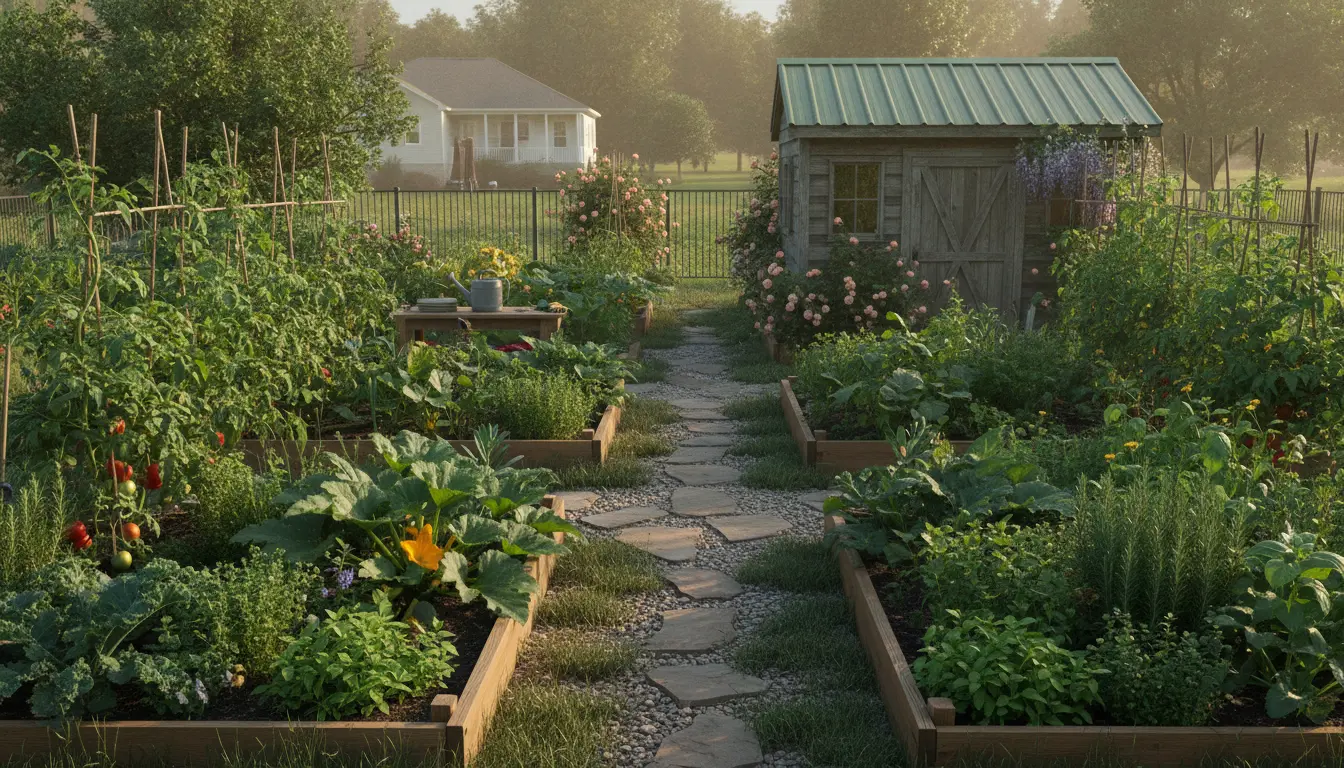
Why Start a Vegetable Garden
Starting a vegetable garden saves money, improves food quality, and gives hands-on control over what you eat. Many beginners find it rewarding and surprisingly manageable with basic planning.
This guide walks you through how to start a vegetable garden step by step, focusing on simple choices that produce reliable results in the first season.
Choose the Right Site to Start a Vegetable Garden
Sunlight is the most important factor when you start a vegetable garden. Most vegetables need at least six hours of direct sun each day.
Also consider access to water, soil drainage, and proximity to your kitchen. A site near a water source and visible from the house is easier to maintain.
Checklist for site selection
- Full sun for 6–8 hours daily
- Level or gently sloping ground with good drainage
- Easy access to water
- Protected from strong winds if possible
Prepare Soil Before You Plant
Soil quality determines crop health. Most urban soils benefit from adding organic matter before you start a vegetable garden.
Test soil pH if possible; many vegetables prefer pH 6.0–7.0. Amend heavy clay with compost and grit; add compost to sandy soil to improve water retention.
Simple soil preparation steps
- Clear grass and weeds from the bed area.
- Loosen soil to 8–12 inches with a fork or tiller.
- Mix in 2–4 inches of compost and a balanced organic fertilizer as needed.
- Level the bed and water once to settle the soil.
Decide Between Seeds and Starts
Seeds are cheaper and give more variety; starts (young plants) are faster to harvest. Choose based on time and confidence.
Some crops are easier from seed—beans, carrots, and peas—while tomatoes, eggplants, and peppers are commonly started as transplants.
Plan What to Plant
Start with easy, high-reward vegetables: tomatoes, lettuce, radishes, beans, and zucchini. Mix fast-growing crops with slower ones to keep harvests coming.
Example planting plan for a small bed
- One tomato plant (center)
- Row of lettuce (cool-season, quick harvest)
- Three bean plants along a trellis
- Radishes interplanted between lettuce for quick turnover
Watering and Mulching Tips
Consistent moisture matters more than frequent watering. Water deeply once or twice a week, depending on weather and soil type.
Mulch conserves moisture, suppresses weeds, and moderates soil temperature. Use straw, shredded leaves, or wood chips 2–3 inches thick.
Pest and Disease Basics for a New Vegetable Garden
Start with prevention: healthy soil, proper spacing, and crop rotation reduce many problems. Inspect plants weekly to catch issues early.
Use physical barriers like row covers for pests, and remove severely infected plants to limit spread. Favor non-chemical controls first.
Low-effort pest controls
- Handpick slugs and caterpillars in the evening
- Use floating row covers to protect young plants
- Encourage beneficial insects with flowering herbs and flowers
Seasonal Care and Crop Rotation
Rotate plant families each year to different beds to reduce soil-borne pests and nutrient depletion. Keep simple notes on what you plant where.
Succession planting keeps beds productive. After a quick crop like radishes, replace with a warm-season transplant or another seed row.
Small Real-World Case Study
Case Study: A suburban gardener converted two 4×8 raised beds in spring. They added 3 inches of compost, planted tomatoes, basil, lettuce, and beans, and used drip irrigation.
Results: By midsummer they had weekly lettuce harvests, four mature tomato plants producing through August, and consistent bean yields with minimal pest issues. The initial investment paid off in reduced grocery runs and fresh salads all season.
Basic Tools and Materials to Start a Vegetable Garden
- Garden fork or shovel for soil work
- Hand trowel and weeder for small tasks
- Watering can or hose with a soft nozzle
- Mulch, compost, and basic organic fertilizer
Quick Troubleshooting When You Start a Vegetable Garden
Leaves yellowing early: check drainage and nitrogen levels. Stunted growth: test soil pH and compaction. Poor fruit set: ensure adequate sun and pollinators.
Keep a simple log: planting dates, fertilizer applications, pest observations, and harvests. This record shortens the learning curve for future seasons.
First Season Goals and Expectations
Set realistic goals for your first season—learn local conditions, get comfortable with basic maintenance, and aim for a few reliable crops rather than perfection.
With good site choice, basic soil work, and regular watering, most beginners harvest useful amounts of vegetables in year one.
Next Steps After Your First Season
Analyze your notes and identify what worked and what did not. Improve soil each fall with compost, and plan crop rotation for the next year.
Consider expanding beds or adding more variety as confidence grows. Small, steady improvements yield the best long-term results.
Follow these practical steps to start a vegetable garden and build experience across seasons. Simple care and thoughtful planning make a productive garden achievable for most yards or containers.