
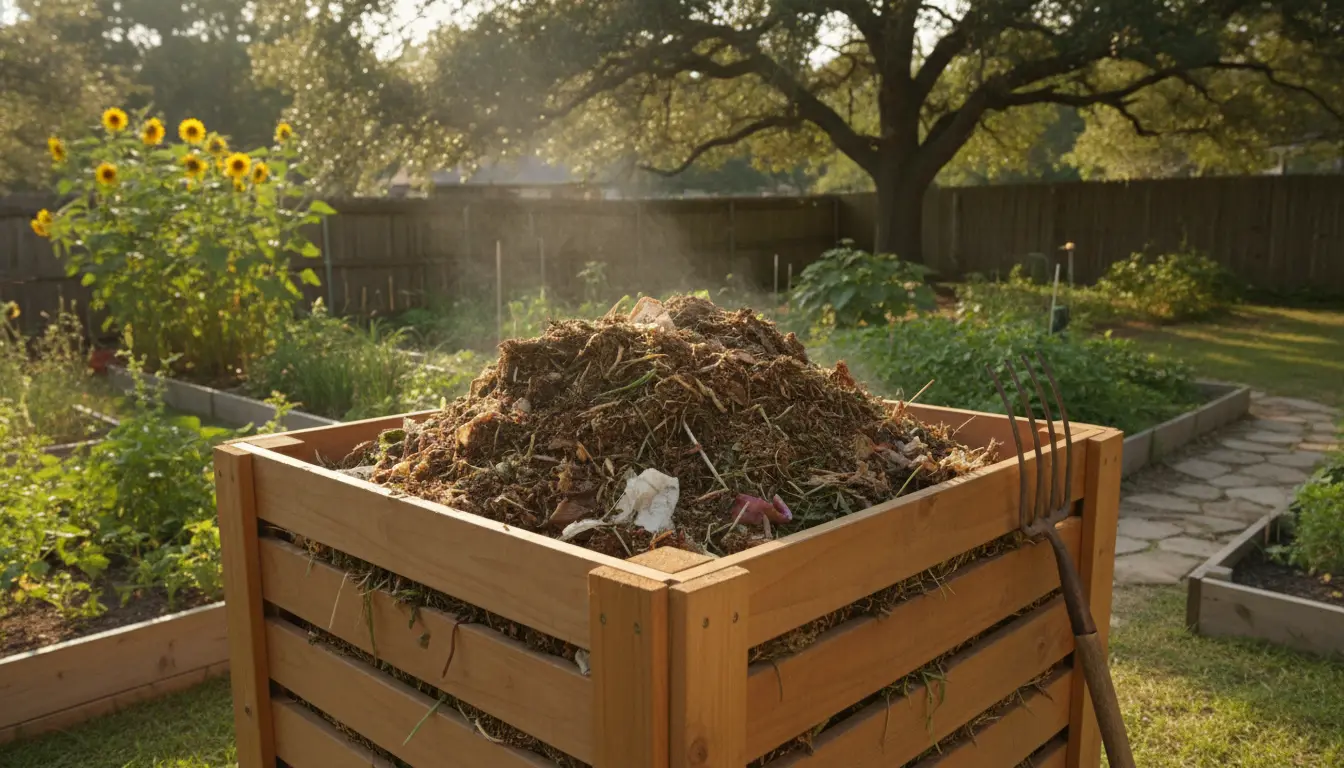
Why Home Composting Matters
Home composting turns kitchen and yard waste into a valuable soil amendment. It reduces landfill waste, lowers greenhouse gas emissions, and improves garden health.
This guide explains practical steps for beginners so you can start composting with confidence and few tools.
Basic Principles of Home Composting
Compost is produced by microbes breaking down organic matter in the right conditions. You need a mix of carbon (browns), nitrogen (greens), water, and air.
Balance and regular maintenance speed up decomposition and prevent odor problems.
Key Materials for Home Composting
- Greens (nitrogen): kitchen scraps, fresh grass clippings, coffee grounds
- Browns (carbon): dry leaves, shredded paper, straw, cardboard
- Avoid: meat, dairy, oils, diseased plants, pet waste
How to Start a Compost Bin at Home
You can use a store-bought bin, a simple wooden pallet enclosure, or a tumbler. Choose a spot with some shade and good drainage.
Follow these steps to set up a basic compost system.
Step-by-Step Setup
- Place the bin on soil to allow worms and microbes to access the pile.
- Start with a 4–6 inch layer of coarse browns (small sticks or straw) for airflow.
- Add alternating layers of greens and browns. Aim for roughly 1 part greens to 3 parts browns by volume.
- Keep material moist like a wrung-out sponge; avoid waterlogging.
- Turn the pile every 1–2 weeks to introduce air and speed decomposition.
Maintaining Your Home Compost
Maintenance is straightforward: manage moisture, turn the pile, and adjust materials for balance. Small fixes prevent common problems.
Common Issues and Solutions
- Bad smell: add more browns, aerate, and reduce wet food scraps.
- Pests: bury food scraps, use closed bins or secure lids, and avoid meat/dairy.
- Slow decomposition: chop materials finer, increase greens slightly, and check moisture and temperature.
Home Composting Methods to Consider
Choose a method that fits your space and patience level. Each method gives different speed and convenience.
Bin Composting
Easy for small yards. Requires turning and monitoring. Good balance of control and simplicity.
Tumbler Composting
Tumblers make turning simple and reduce pest access. They work well for smaller volumes and faster results.
Vermicomposting
Worm bins are ideal for apartments and kitchens. Red worms break down food quickly and produce rich castings.
Composting one ton of organic waste can prevent about 0.5 to 1 ton of CO2 equivalent emissions compared with landfill disposal.
How to Tell When Compost Is Ready
Mature compost is dark, crumbly, and smells earthy. Most materials will break down in 2–6 months with regular turning.
Use finished compost as a soil top dressing, potting mix ingredient, or garden amendment.
Quick Uses for Finished Compost
- Mix into garden beds at 1–3 inches depth to improve structure and fertility.
- Add to potting mixes at 10–20% for seedlings and container plants.
- Use as a mulch layer to conserve moisture and feed soil life.
Small Real-World Example: Suburban Backyard Composting
Jane, a homeowner with a small backyard, started a 60-gallon tumbler and a small worm bin for kitchen scraps. She followed a 1:3 green-to-brown ratio and turned the tumbler weekly.
After four months, she had enough compost to top-dress her vegetable beds and reported stronger plant growth and reduced grocery waste. Her trash volume dropped by one 30-gallon bag per week.
Practical Tips for Long-Term Success
- Keep a small countertop bucket with a tight lid for kitchen scraps and empty it regularly.
- Shred or chop materials to speed decomposition and reduce turning effort.
- Use a simple thermometer if you want to monitor pile temperature for hot composting.
- Record what you add to learn what mix gives the best results in your climate.
Conclusion: Start Small and Learn
Home composting is low-cost and adaptable. Start with a simple bin, focus on balance, and adjust as you learn what works for your household.
With a few habits and basic maintenance, you can convert waste into a resource and improve your garden’s health.