
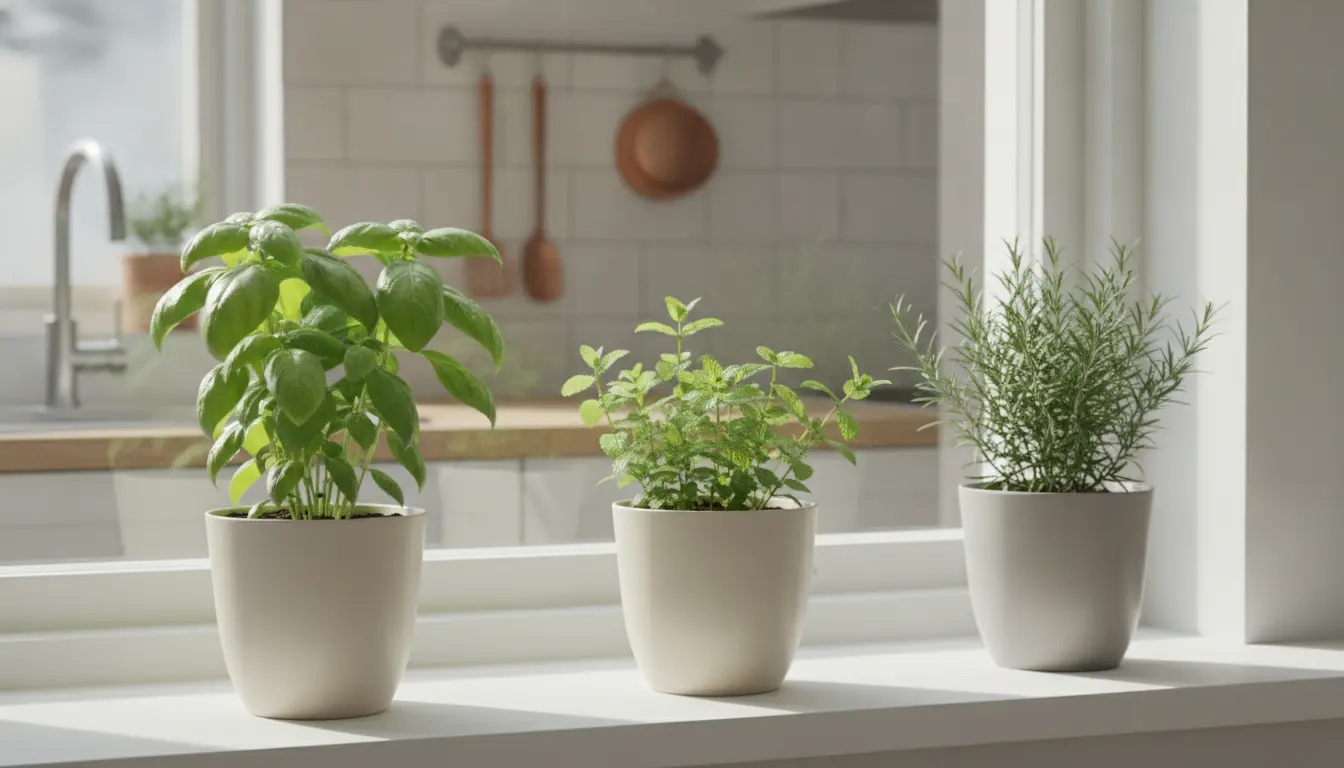
Plan Your Indoor Herb Garden
Decide which herbs you want to grow and where you will place them. Choose a bright windowsill, a shelf near a south or west-facing window, or a grow light if natural light is limited.
Start small with three to six herbs so you can learn basic care without becoming overwhelmed. Common starter herbs are basil, parsley, mint, rosemary, thyme, and chives.
Choose the Right Herbs for an Indoor Herb Garden
Select herbs that adapt well to indoor conditions. Leafy herbs like basil and parsley grow quickly and tolerate moderate light.
Woody herbs such as rosemary and thyme need more light and drier soil, so place them where they get stronger sun or use a supplemental light.
Herbs for Beginners
- Basil: Fast-growing, needs bright light and warm temperatures.
- Parsley: Tolerates lower light than basil, steady watering helps.
- Mint: Very forgiving, grows aggressively so keep it contained.
- Chives: Compact and easy, good for small pots.
Pick Containers and Soil
Choose pots with drainage holes to prevent waterlogged roots. Use saucers only to catch excess water and empty them after watering.
Use a light, well-draining potting mix formulated for container plants. Avoid garden soil because it compacts and can harbor pests.
Container Tips
- Size matters: 6 to 8 inch pots are fine for single herbs; larger pots help moisture last longer.
- Material: Terracotta dries faster; plastic retains moisture longer.
- Spacing: Keep at least 2 to 3 inches between pots to allow air circulation.
Provide the Right Light for an Indoor Herb Garden
Most culinary herbs need at least 6 hours of bright light per day. A south or west window is ideal in many climates.
If natural light is insufficient, use full-spectrum LED grow lights placed 6 to 12 inches above the plants. Run lights for 12 to 16 hours a day depending on plant needs.
Watering and Fertilizing an Indoor Herb Garden
Water consistently but avoid overwatering. Check soil moisture by sticking a finger into the mix; water when the top inch is dry for most herbs.
Fertilize lightly: a balanced water-soluble fertilizer every 3 to 4 weeks during the growing season keeps plants productive without causing leggy growth.
Common Watering Mistakes
- Watering on a strict schedule rather than checking moisture leads to root rot or drought stress.
- Leaving pots standing in water reduces oxygen to roots and invites disease.
Pruning, Harvesting, and Encouraging Growth
Regular pruning promotes bushy growth and prevents herbs from flowering too early. Pinch or cut stems just above a pair of leaves.
Harvest frequently but never remove more than one third of the plant at once. This keeps the herb healthy and productive.
When to Replace or Repot
- Repot when roots circle the container or growth slows noticeably, usually every 12 to 18 months.
- Replace plants that show persistent disease, root rot, or pest infestations despite care.
Pest and Disease Management for an Indoor Herb Garden
Indoors, pests are usually manageable with inspection and hygiene. Check leaves regularly for aphids, spider mites, or whiteflies.
Use a gentle soap spray or neem oil for small infestations. Improve air circulation and remove affected leaves to reduce disease spread.
Practical Setup Checklist for an Indoor Herb Garden
- Pick 3 to 6 herbs suited to your light conditions.
- Choose pots with drainage and a quality potting mix.
- Place in a bright window or add a full-spectrum grow light.
- Water when the top inch of soil is dry and fertilize lightly.
- Prune regularly and monitor for pests.
Many herbs release stronger flavor when harvested in the morning after the dew has evaporated. Frequent harvesting can increase essential oil production and improve taste.
Real-World Case Study: Small Kitchen, Big Flavor
Maria, who lives in a two-bedroom apartment, started an indoor herb garden on a sunny windowsill using three 6-inch pots for basil, chives, and parsley. She used a balanced potting mix and rotated the pots weekly to ensure even light exposure.
Within six weeks she had enough fresh herbs to reduce grocery purchases of packaged herbs by 80 percent and began sharing excess basil with neighbors. Her plants remained healthy by using a small LED grow light two evenings a week during winter months.
Troubleshooting Common Problems
Yellowing leaves often indicate overwatering or poor drainage. Move to a lighter mix and reduce watering frequency.
Leggy, stretched plants usually mean insufficient light. Move pots closer to a window or use a grow light placed at the proper distance.
Final Tips for a Successful Indoor Herb Garden
- Start with hardy varieties and expand as you gain experience.
- Label your pots to track different watering needs and harvest times.
- Keep a small journal noting light exposure, watering, and harvest yields for each herb.
With a simple plan and routine care, an indoor herb garden yields fresh flavor year-round and fits into even limited spaces. Start small, observe, and adjust care based on how each herb responds.