
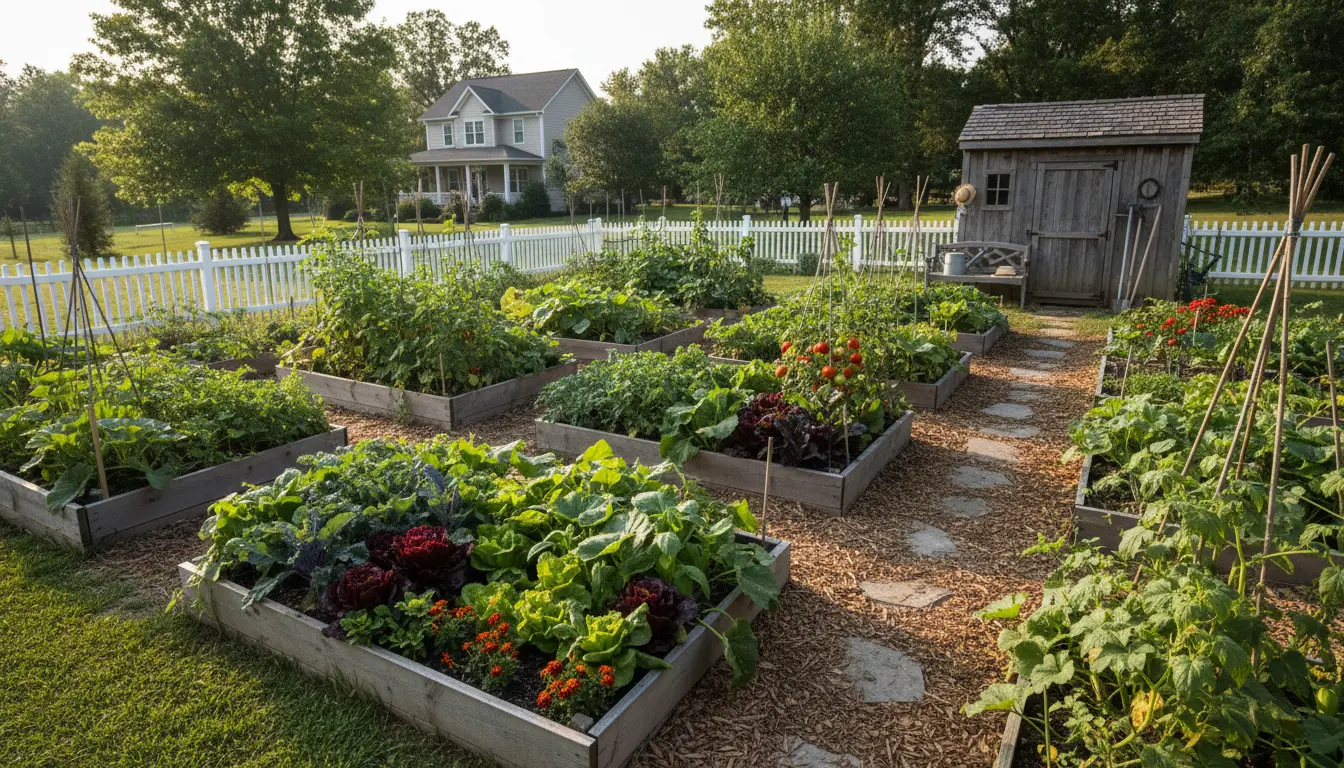
Starting a vegetable garden is a practical way to grow fresh food, save money, and enjoy time outdoors. This guide walks you through simple, actionable steps to start a vegetable garden even if you have limited space.
Plan How to Start a Vegetable Garden
Good planning reduces mistakes and keeps work manageable. Begin by deciding the garden size, location, and the vegetables you want to grow.
- Choose a sunny spot with at least 6 hours of direct sun for most vegetables.
- Decide on bed type: in-ground, raised beds, or containers.
- Set realistic goals and a small starter list of easy crops like lettuce, radishes, tomatoes, and green beans.
Choose the Right Location to Start a Vegetable Garden
Location affects yield and maintenance. Aim for a level area near a water source and good exposure to sun.
Consider proximity to the house for frequent checks and harvesting. Avoid low spots that collect water and areas under large tree roots.
Decide What to Grow in Your Vegetable Garden
Pick vegetables that match your climate, season, and eating preferences. Beginners should focus on fast rewards and forgiving plants.
Examples of easy starter crops:
- Lettuce and salad greens for quick harvests
- Radishes and baby carrots for fast results
- Tomatoes, peppers, and bush beans for greater yields
Prepare Soil and Beds to Start a Vegetable Garden
Healthy soil is the foundation of a productive vegetable garden. Test and amend soil to improve structure, drainage, and nutrients.
Steps for soil preparation:
- Do a basic soil test or use a DIY kit to check pH and nutrient levels.
- Add organic matter like compost to improve fertility and water retention.
- Use raised beds if your soil is poor or compacted. Raised beds warm faster in spring and drain well.
Work compost into the top 6 to 8 inches of soil and avoid working very wet soil to prevent compaction.
Planting and Layout to Start a Vegetable Garden
Plan rows and spacing before planting to reduce crowding. Follow seed packet or plant tag spacing recommendations for best yields.
Use companion planting and succession planting to maximize space and extend harvests. For example, plant radishes between slower growing crops to use space efficiently.
Start Seeds Vs Buy Transplants in Your Vegetable Garden
Starting seeds is cost effective but requires more attention. Buying transplants saves time and gives a head start for warm season crops.
Seed starting tips:
- Start indoors 6 to 8 weeks before the last frost for tomatoes and peppers.
- Direct sow fast growers like beans, peas, and root vegetables after soil warms.
Care and Maintenance of a Vegetable Garden
Regular maintenance keeps plants healthy and productive. Set a simple weekly routine for watering, weeding, and inspection.
- Water deeply and less often to encourage strong roots. Aim for 1 inch of water per week, more in hot weather.
- Mulch around plants to conserve moisture and suppress weeds.
- Monitor for pests and diseases and use physical controls like row covers or hand removal first.
Fertilize based on crop needs. Leafy greens benefit from nitrogen, while fruiting crops need balanced feeding when flowers form.
Harvesting From Your Vegetable Garden
Harvest at peak ripeness for best flavor and to encourage more production. Check plants regularly and pick mature vegetables promptly.
Storage tips:
- Store leafy greens in the fridge wrapped in a damp towel for up to a week.
- Tomatoes do best stored at room temperature until fully ripe and then used quickly.
Simple Pest and Disease Strategies for Your Vegetable Garden
Preventive care is the easiest defense. Rotate crops annually to reduce soil borne pests and diseases.
Additional tactics include:
- Encouraging beneficial insects by planting flowers like marigolds and dill.
- Removing diseased leaves promptly to limit spread.
- Using organic sprays only when necessary and following label guidance.
Many common vegetables like lettuce and radishes can be harvested in under 30 days from sowing, providing quick success for new gardeners.
Small Case Study: Sarahs 10×10 Urban Vegetable Garden
Sarah converted a 10 by 10 foot patio into a raised bed vegetable garden. She used two 4 by 8 foot beds and containers along the edge.
In her first season she planted tomatoes, basil, lettuce, and bush beans. She followed a weekly watering routine, added compost twice, and used mulch to reduce weeds.
Results after one season:
- Consistent salad greens harvest for four months
- Tomato yield of about 20 pounds spread across varieties
- Minimal pest problems due to hand inspection and row covers early in the season
Her quick wins came from choosing easy crops, keeping beds small, and sticking to a simple maintenance schedule.
Final Tips to Start a Vegetable Garden
Start small, learn each season, and keep records of what worked. A small, well cared for garden is more productive than a large, neglected one.
Key takeaways:
- Plan the site and crops before planting
- Build healthy soil with compost
- Maintain a simple schedule for water, mulch, and inspection
With consistent care and realistic goals you can start a vegetable garden that provides fresh produce and a satisfying hobby.