
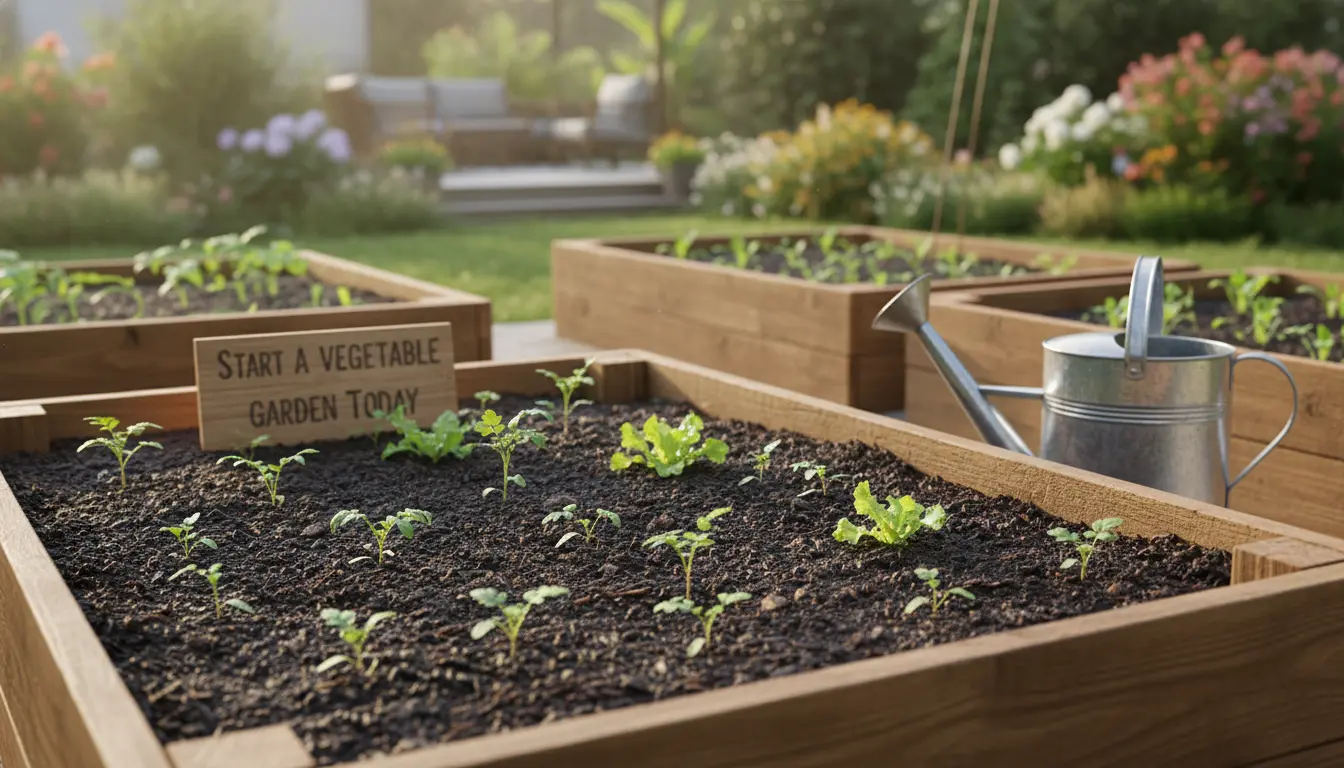
Starting a vegetable garden is a hands-on way to grow fresh food and learn useful skills. This guide gives clear, practical steps so you can plan, prepare, and care for a productive garden in your first season.
Plan Where to Start a Vegetable Garden
Good planning reduces problems later. First, pick a site with the right sun, access to water, and reasonable drainage.
Choose the best location to start a vegetable garden
Most vegetables need 6–8 hours of direct sun. Check the yard at different times to confirm sunlight. Avoid low spots that collect water.
- Sun: 6–8 hours daily for tomatoes, peppers, and most crops.
- Water access: within easy reach of a hose or irrigation system.
- Protection: consider fences or raised beds if pests or pets are a problem.
Decide garden size and type
Start small to make care manageable. A pair of 4 x 8 ft raised beds or a 10 x 10 ft in-ground area fits most beginners. Containers work well on patios if space is limited.
Choose Vegetables and Plan Planting
Select crops that match your climate, season, and eating habits. Focus on reliable, easy-to-grow varieties for your first year.
Easy vegetables to start a vegetable garden
- Lettuce and salad greens — quick harvests and continuous cutting.
- Radishes — fastest harvest, good for practice.
- Tomatoes and peppers — common favorites, need staking or cages.
- Beans and peas — good for vertical space and improving soil nitrogen.
- Herbs like basil, parsley, and chives — low maintenance and useful.
Plan planting times using local frost dates. Use a simple calendar to stagger plantings for steady harvests.
Prepare Soil and Beds to Start a Vegetable Garden
Healthy soil is the foundation of a productive garden. Test and amend soil before planting for best results.
Simple soil preparation steps
- Remove grass, weeds, and large roots from the area.
- Loosen soil to 8–12 inches for in-ground beds; fill raised beds with a good mix of topsoil and compost.
- Add 2–4 inches of compost and mix it in; compost improves nutrients and structure.
- Consider a basic soil test to check pH and nutrient levels; amend if needed.
For containers, use high-quality potting mix rather than garden soil. Containers dry faster, so choose mixes that retain moisture and nutrients.
Planting and Care When You Start a Vegetable Garden
Proper planting and routine care keep plants healthy. Follow seed packet or plant tag instructions for depth and spacing.
Watering, mulching, and feeding
Water deeply and less often to encourage strong roots. Mulch with straw or shredded leaves to reduce weeds and conserve water.
- Water schedule: 1–2 times weekly depending on weather and soil type.
- Mulch: 2–3 inches around plants, keeping mulch a few inches from stems.
- Feeding: use compost tea or balanced organic fertilizer every 4–6 weeks for hungry crops like tomatoes.
Support and pruning
Stake or cage tall plants to prevent breakage and improve air circulation. Remove late-season leaves that show disease to keep plants healthy.
Troubleshooting and Common Problems
Expect pests, disease, and nutrient gaps in the first season. Early detection makes control easier and less chemical-dependent.
- Slugs and snails: use traps or hand removal early in the morning.
- Aphids: wash off with a strong spray of water or use insecticidal soap.
- Blossom end rot on tomatoes: often from calcium deficiency and irregular watering.
- Yellow leaves: check for overwatering, poor drainage, or nutrient deficiency.
Planting beans after a heavy-feeding crop like corn adds nitrogen back to the soil because legumes fix atmospheric nitrogen with the help of root bacteria.
Case Study: First-Season Success With Two Raised Beds
A small family turned two 4 x 8 ft raised beds into a year-one victory. They planted tomatoes, bush beans, lettuce, and basil. With weekly watering and a monthly dose of compost tea, they harvested fresh salads from June to October.
Key steps they used: full sun placement, 4 inches of compost mixed into the beds, staking tomatoes early, and succession planting lettuce every three weeks. Their yield reduced grocery trips and motivated continued expansion the next year.
First-Season Tips to Start a Vegetable Garden
Keep expectations realistic; learning takes a season. Use these practical tips to build confidence and produce food you enjoy.
- Start small and expand after one successful season.
- Keep a simple journal: planting dates, varieties, and harvest notes.
- Work in short, regular sessions to avoid burnout and keep weeds down.
- Talk to local gardeners or extension services for climate-specific advice.
Starting a vegetable garden is a step-by-step process: plan the space, improve the soil, choose easy crops, and care for plants with consistent routines. With small, regular efforts you can enjoy fresh homegrown vegetables in your first season.