
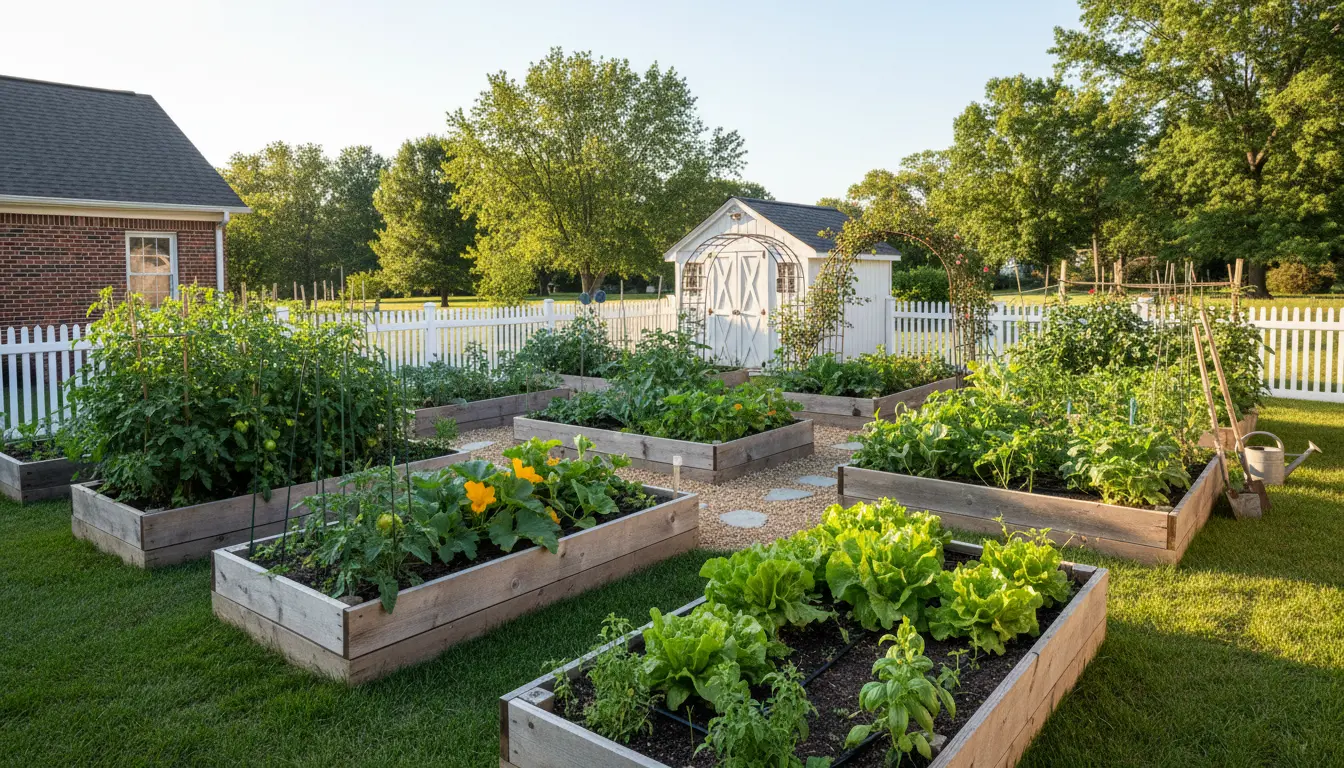
Starting a small vegetable garden at home is practical and rewarding. This guide gives clear, step-by-step instructions you can follow whether you have a backyard, patio, or balcony.
Why a small vegetable garden is a good choice
A small vegetable garden fits limited spaces and reduces maintenance compared to a large plot. It lets you focus on a few high-yield crops and learn gardening basics without feeling overwhelmed.
Small gardens also lower costs for soil and tools. They are easier to protect from pests and easier to irrigate efficiently.
How to start a small vegetable garden: plan your space
Choose a location that gets at least 4–6 hours of direct sunlight. Most vegetables need full sun to produce well.
Consider these options for a small space:
- Raised beds: good for soil control and drainage.
- Containers: ideal for patios and balconies.
- Traditional in-ground row: works if you have a small yard.
Measure and map your garden
Measure the area and draw a simple map. Note sunlight patterns, nearby trees, and access to water. Planning prevents overcrowding and helps with crop rotation later.
How to start a small vegetable garden: prepare soil and containers
Healthy soil is the most important factor for success. For raised beds and containers, use a mix of quality topsoil, compost, and a light mineral such as perlite for drainage.
For in-ground gardens, test soil pH if possible. Most vegetables prefer pH 6.0–7.0. Add compost to improve fertility and structure.
- Compost: adds nutrients and helps moisture retention.
- Mulch: reduces weeds and stabilizes soil temperature.
- Fertilizer: use a balanced product according to package directions.
How to start a small vegetable garden: choose easy crops
Begin with vegetables that are forgiving and fast to harvest. These give motivation and a steady supply of produce.
Good starter crops include:
- Lettuce and salad greens — quick harvest and good in containers.
- Radishes — mature in about 4 weeks.
- Tomatoes (compact varieties) — high yield from small plants.
- Herbs like basil, parsley, and chives — useful and low maintenance.
- Green beans and peas — productive in small trellises.
Seed vs. seedlings
Seeds are cheaper but take longer and require careful watering. Seedlings (young plants) give faster results and are easier for beginners. Choose based on how much time you can commit.
How to start a small vegetable garden: watering and maintenance
Consistent water is crucial. Check soil moisture every few days by feeling the top inch. Water deeply to encourage strong roots, but avoid overwatering.
Simple irrigation options for a small garden:
- Soaker hoses for raised beds to deliver slow, deep water.
- Self-watering containers that store water in a reservoir.
- Hand-watering with a hose or watering can for tiny plots.
Routine tasks include weeding, harvesting, and pruning. Keep a calendar to track planting dates and expected harvests.
How to start a small vegetable garden: pest control and common problems
Small gardens can still face pests and diseases. Use these practical methods first:
- Handpick large pests like caterpillars.
- Use row covers to protect young plants from insects.
- Encourage beneficial insects (ladybugs, lacewings) by planting flowers or herbs nearby.
- Rotate crops each season to reduce soil-borne diseases.
Only use pesticides as a last resort, and choose targeted, low-toxicity options if needed.
Container-grown tomatoes can produce fruit in about 60–70 days when given full sun and consistent watering. Containers warm faster in spring, allowing an earlier start.
Small vegetable garden layout ideas
Choose a layout that matches your space and crops. Here are three simple layouts for a small garden:
- One 4×4 raised bed with vertical trellis for beans and compact tomatoes.
- Three to four containers grouped together for herbs, lettuce, and a tomato.
- Window boxes for salad greens and small herbs if you have no floor space.
Example planting schedule
Spring: plant peas, lettuce, radishes, and early-season herbs. Summer: add tomatoes, peppers, and beans. Fall: sow leafy greens and cover crops to restore soil.
Case study: Maria’s balcony small vegetable garden
Maria had a south-facing balcony and wanted fresh salad greens. She used four 12-inch containers and a small trellis for cherry tomatoes.
She filled containers with a potting mix and added compost. Maria planted lettuce, basil, and two tomato seedlings. She watered daily for the first week, then every other day.
By week eight she harvested her first salad. The compact setup required minimal space and gave regular produce that reduced her grocery visits.
Final tips for a successful small vegetable garden
- Start small and expand when you feel confident.
- Keep a simple log of planting dates and harvests to learn what works.
- Focus on a few crops you will actually eat to stay motivated.
- Protect young plants from extreme weather and grazing animals.
With regular care and small, steady steps, anyone can start a small vegetable garden at home. It delivers fresh food, cuts grocery costs, and teaches valuable skills with manageable time and effort.