
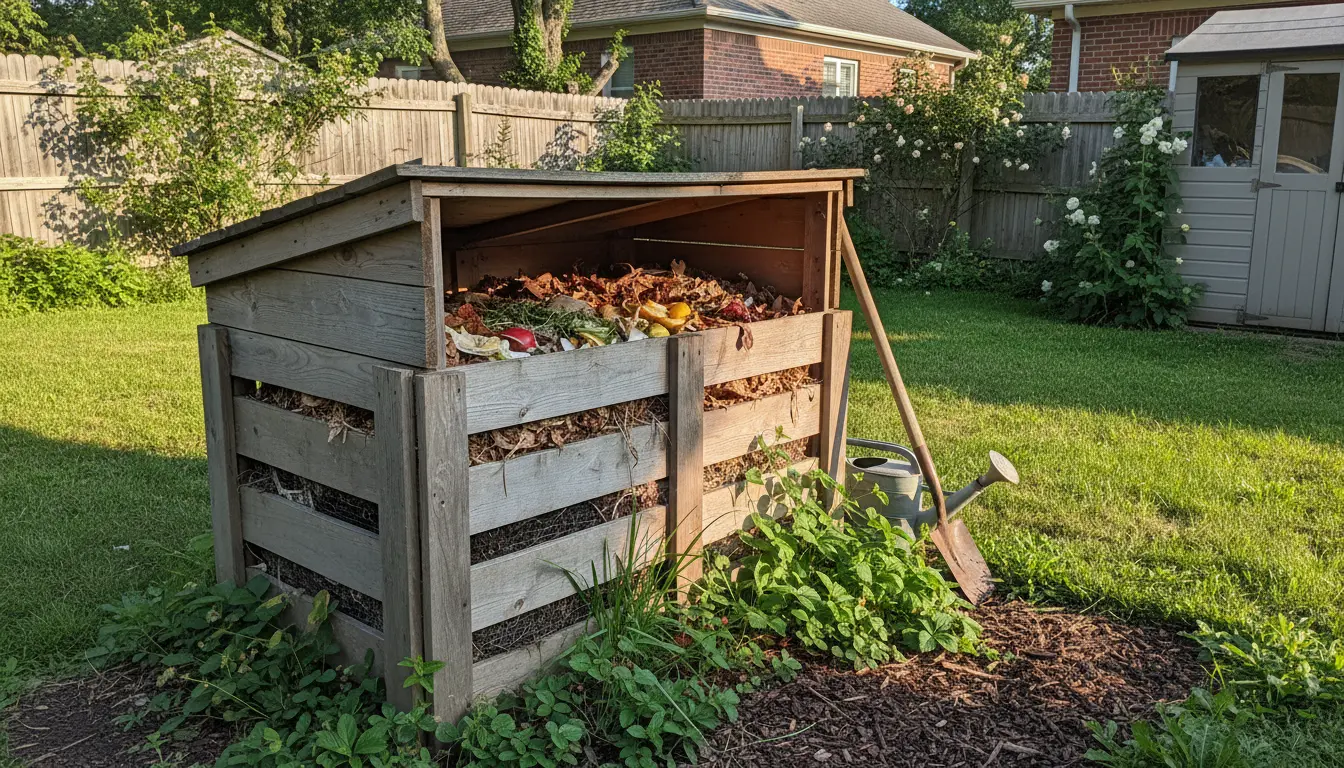
Why home composting matters
Home composting turns kitchen scraps and yard waste into a valuable soil amendment. It reduces household waste and improves garden health without expensive inputs.
For beginners, composting is a practical way to lower garbage output while creating nutrient-rich compost for plants. This guide gives clear steps and troubleshooting tips to get started.
How to start home composting
Begin with a simple plan: choose a bin, pick a location, collect materials, and set a maintenance routine. Follow the basic rules and adjust as you learn what works in your climate.
Step 1: Choose a compost system
Select a system that fits your space and needs. Options include a basic pile, a stationary bin, or a tumbling composter for faster results.
- Backyard pile: low cost, needs turning, works for larger yards.
- Static bin: contained and tidy, minimal setup, occasional mixing required.
- Tumbler: faster aeration and mixing, good for small spaces and quicker compost.
Step 2: Pick the right location
Place your compost on level ground, away from direct footpaths and too much sun. A partly shaded spot keeps moisture balanced and organisms active.
Ensure easy access for adding materials and turning the pile when needed.
Step 3: Gather materials and follow the ratio
Compost needs a mix of ‘greens’ and ‘browns’ to break down efficiently. Greens provide nitrogen and browns provide carbon.
- Greens: vegetable scraps, coffee grounds, fresh grass clippings.
- Browns: dry leaves, shredded paper, straw, cardboard.
A common rule is roughly 2 parts browns to 1 part greens by volume. Adjust if your compost is too wet or smells.
Composting steps and maintenance
Follow a simple routine: layer materials, keep the pile moist, and turn periodically. These steps keep microbes active and prevent odors.
Layering and building the pile
Start with coarse browns at the bottom for drainage. Alternate layers of greens and browns in 3–6 inch layers to maintain airflow.
Chop larger items to speed decomposition.
Moisture and aeration
The pile should feel like a wrung-out sponge — damp but not soggy. Add water during dry spells and cover with browns or a lid to retain moisture in heavy rain.
Turn the pile every 1–3 weeks for faster composting. Less frequent turning still produces compost but more slowly.
Troubleshooting common problems with home composting
Beginners often face a few predictable issues. Diagnose by checking smell, moisture, and texture.
- Bad smells: usually too wet or too many greens. Add dry browns and turn the pile to increase aeration.
- Slow breakdown: pile too dry, too cold, or particle size too large. Add water, insulate, and chop materials smaller.
- Pests: avoid meat, dairy, and oily foods. Use a closed bin or bury food in the center of the pile.
What finished compost looks like
Mature compost is dark, crumbly, and earthy-smelling. It no longer resembles the original materials and has a uniform texture.
You can sift compost for fine topsoil and return larger pieces to the pile for more decomposition.
Small real-world example
Case study: A family of four in a suburban home started a 200-liter static bin. They collected kitchen scraps and garden clippings and followed a 2:1 brown-to-green rule.
After six months of regular turning and occasional watering, they produced enough compost to top-dress two raised beds and reduce their weekly trash by one bag. Their tomatoes yielded visibly fuller growth the next season.
Quick checklist for home composting beginners
- Choose a bin or pile suitable for your space.
- Collect greens and browns separately for easy mixing.
- Maintain moisture and turn periodically.
- Avoid meat, dairy, and diseased plant material.
- Harvest finished compost and use it in pots or beds.
Next steps
Start small and observe. Adjust the brown-to-green ratio and turning frequency based on smell and decomposition speed. Composting skills improve with a few cycles.
Use finished compost to enrich soil, reduce fertilizer costs, and complete the cycle of organic reuse at home.