
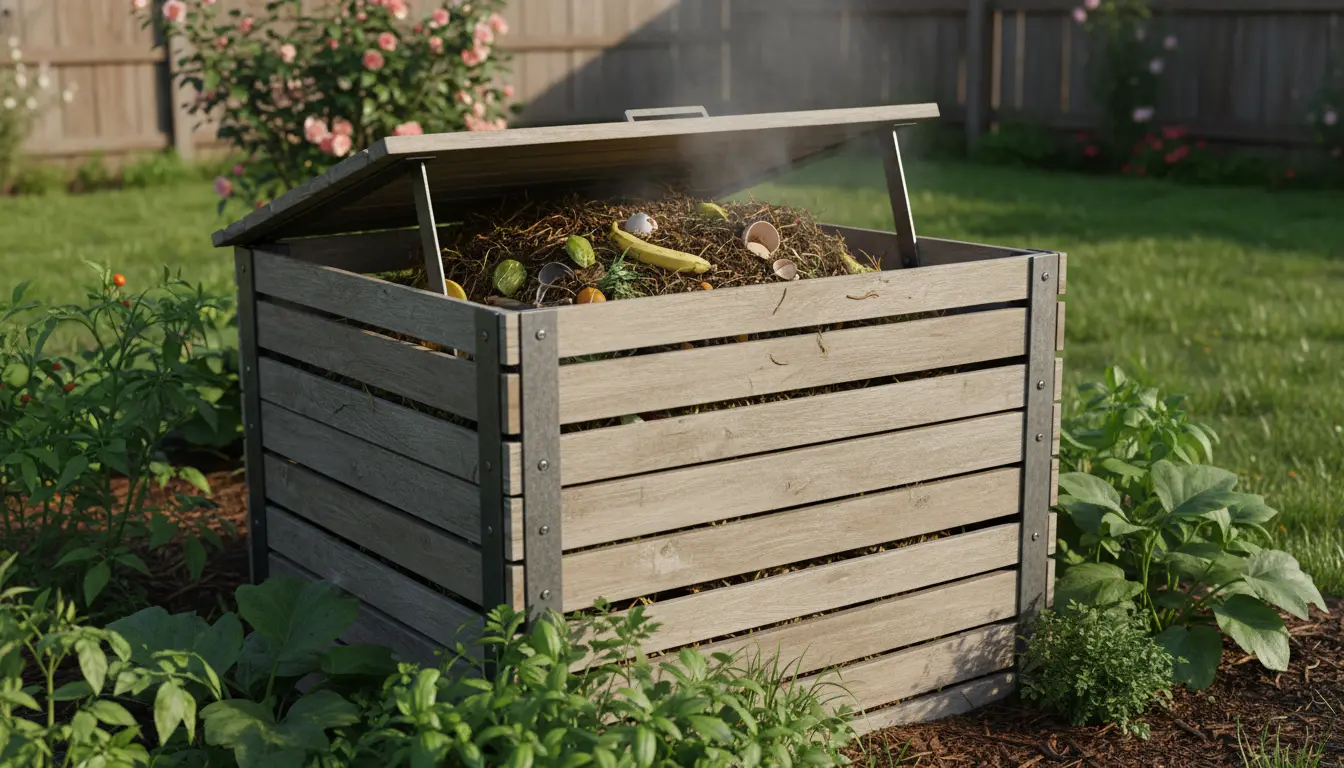
What Is Home Composting?
Home composting is the controlled breakdown of organic waste into a nutrient-rich soil amendment. It converts kitchen scraps, garden trimmings, and other biodegradable items into compost you can use in pots, beds, and lawns.
Why Start Home Composting
Composting reduces household waste and returns valuable nutrients to the soil. It also cuts landfill methane and lowers disposal costs for many households.
Benefits of home composting
- Reduces kitchen and garden waste volume.
- Improves soil structure and water retention.
- Provides free, organic fertilizer for plants.
- Helps lower household carbon footprint.
Choose The Right Composting Method
Select a method that fits your space, time, and patience. Common options include a compost bin, a tumbler, a simple pile, or vermicomposting with worms.
Quick guide to methods
- Compost bin — Good for yards; keeps material tidy and warmer.
- Tumbler — Faster decomposition with regular turning; ideal for small yards.
- Open pile — Low effort for large volumes; slower and needs space.
- Vermicompost — Indoor or small-space option using red worms; produces rich castings.
Get The Balance Right: Browns And Greens
Compost needs two main ingredient types: carbon-rich ‘browns’ and nitrogen-rich ‘greens’. Balancing them helps microbes do their job efficiently.
Examples of browns and greens
- Greens: vegetable scraps, coffee grounds, fresh grass clippings.
- Browns: dry leaves, shredded cardboard, straw, paper towels.
A practical target is about 3 parts browns to 1 part greens by volume. Adjust based on moisture and smell.
Step-by-Step: Start Home Composting
- Pick a dry, shady spot near a water source or use a container indoors for vermicompost.
- Place a layer of coarse browns (twigs or straw) at the base for airflow.
- Add alternating layers of greens and browns, chopping larger items to speed breakdown.
- Keep the pile moist like a wrung-out sponge; add water if dry or more browns if soggy.
- Turn or mix the pile every 1–2 weeks to add oxygen and speed decomposition.
- Harvest finished compost when dark, crumbly, and earthy-smelling—usually 2–6 months.
Troubleshooting Common Compost Problems
Many issues come down to moisture, aeration, and ingredient balance. A few quick fixes will get you back on track.
Foul odor
Usually too wet or too many greens. Add dry browns and turn the pile to aerate.
Slow decomposition
Pile may be too dry, too cold, or too compacted. Increase turning, moisture, and smaller particle sizes.
Fruit flies and pests
Cover fresh kitchen scraps with a layer of browns and bury food deeper. Use a closed bin or secure lid for larger pests.
Compost can raise soil temperature slightly and help seed germination and root growth. Proper composting also reduces household waste by up to 30 percent.
How To Use Finished Compost
Finished compost is versatile and easy to apply. Use it to improve potting mixes, topdress lawns, or boost vegetable beds.
- Work 2–4 inches into garden beds before planting.
- Mix 1 part compost to 2 parts soil for container plants.
- Topdress lawns with a thin layer to slowly feed grass and improve soil.
Quick Maintenance Tips For Ongoing Success
- Chop or shred large items to speed composting.
- Keep a small countertop bin for kitchen scraps to reduce trips outside.
- Rotate layers and add water in dry spells to maintain activity.
- Record what you add and how often you turn the pile to learn what works.
Case Study: Small Backyard, Big Results
Maria, a renter with a small backyard, started composting in a 60-liter tumbler. She collected coffee grounds, vegetable scraps, and shredded mail for browns. By turning the tumbler twice a week and keeping the mix moist, she produced usable compost in three months.
Maria used the compost on potted herbs and saw stronger growth and fewer fertilizer needs. Her household waste bin volume dropped noticeably within one season.
Safety And What Not To Compost
Avoid adding meat, dairy, diseased plants, or pet waste to typical home compost systems. These items attract pests and can introduce pathogens.
Items to skip
- Cooked meat and dairy
- Oily foods
- Diseased plant material
- Pet feces from carnivores
Final Advice For New Composters
Start simple and learn by doing. Small adjustments to moisture, particle size, and turning frequency will improve results over time.
Composting is a practical way to reduce waste, save money, and feed your soil. Begin with easy-to-manage steps and scale up once you see consistent success.