
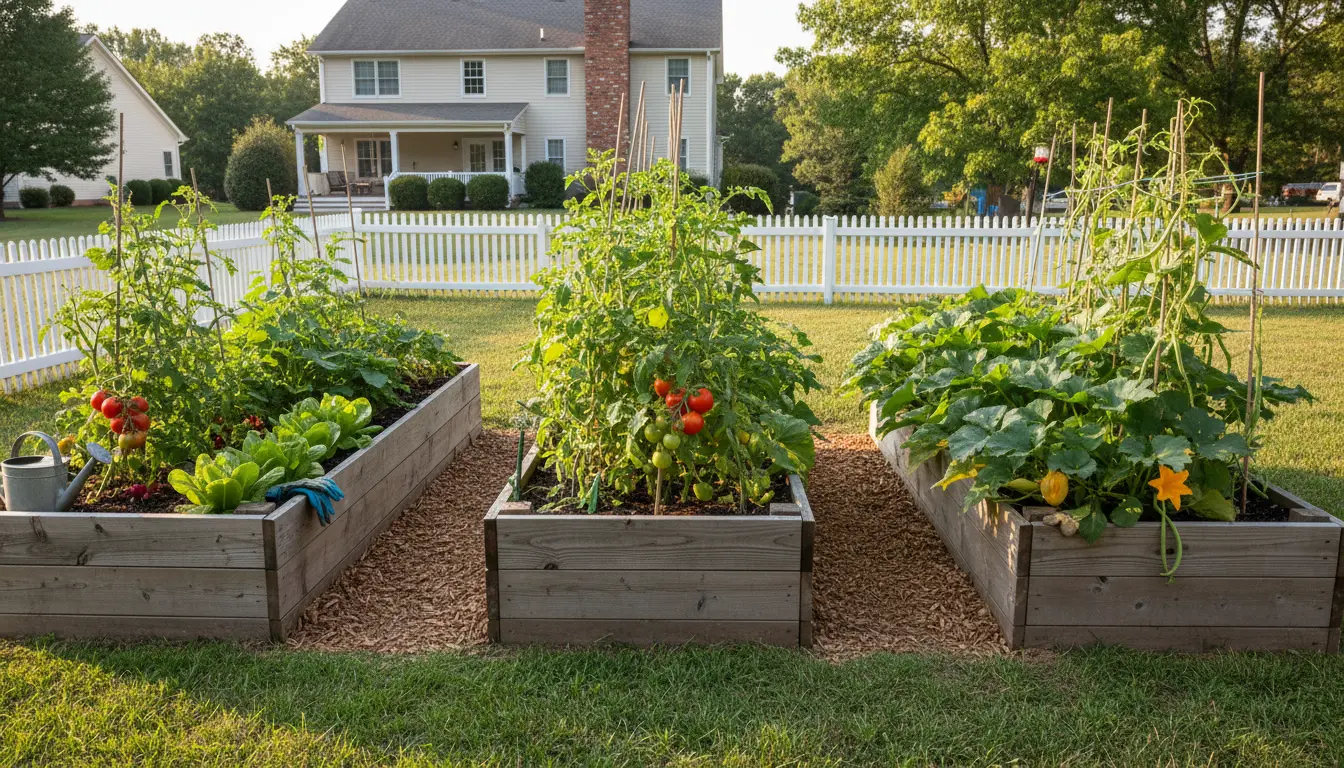
How to Start a Vegetable Garden: Planning and Goals
Decide why you want a vegetable garden and what you want to grow. Clear goals help you choose the right size, location, and crops.
Start small if you are new. A 4×8 foot raised bed or a few containers can feed a household with fresh salad greens and herbs.
How to Start a Vegetable Garden: Choosing the Location
Sun is the most important factor. Most vegetables need 6 to 8 hours of direct sun per day. Observe the prospective site through a full day if possible.
Consider access to water, level ground, and protection from strong winds or late frost pockets. Avoid sites near large tree roots or heavy shade.
Soil vs Raised Beds
If your native soil is poor, use raised beds filled with a quality mix. Raised beds warm faster in spring and drain better than compacted ground soil.
For containers, choose deep pots for root crops and well-draining mixes to prevent waterlogged roots.
How to Start a Vegetable Garden: Preparing Soil
Good soil is the foundation of a productive garden. Test soil pH and nutrient levels with a simple kit or lab test to know what to adjust.
Improve soil by adding compost, aged manure, or well-rotted organic matter. Mix 2 to 4 inches of compost into the top 6 to 12 inches of soil.
Soil Tips
- Loamy soil with good structure holds moisture and drains well.
- Maintain pH between 6.0 and 7.0 for most vegetables.
- Use mulch to conserve moisture and suppress weeds.
How to Start a Vegetable Garden: Selecting Vegetables
Choose crops suited to your climate and season. Start with easy, reliable vegetables that tolerate beginner mistakes.
Good starter vegetables include lettuce, radishes, bush beans, tomatoes, zucchini, and herbs like basil and parsley.
Plan by Season
List cool-season crops (lettuce, spinach, peas) and warm-season crops (tomatoes, peppers, cucumbers). Stagger planting dates to extend harvests.
How to Start a Vegetable Garden: Planting and Spacing
Follow seed packet or plant tag spacing to avoid crowding. Proper spacing reduces disease and competition for nutrients.
Sow seeds at the recommended depth and keep soil consistently moist until seedlings emerge. Thin crowded seedlings to the strongest plants.
Success Tips for Planting
- Water deeply at planting to establish roots.
- Use supports like cages or trellises for vining crops to save space.
- Interplant quick crops like radishes between slower ones to maximize yield.
How to Start a Vegetable Garden: Watering and Fertilizing
Most vegetables need 1 to 1.5 inches of water per week. Water deeply and less frequently to encourage strong roots.
Fertilize based on soil test results. A balanced organic fertilizer or compost tea works well for regular feeding during the season.
How to Start a Vegetable Garden: Pest and Disease Management
Inspect plants regularly for signs of pests or disease. Early detection makes control easier and less chemical-dependent.
Use cultural methods first: crop rotation, proper spacing, clean garden debris, and encouraging beneficial insects.
Simple Controls
- Handpick larger pests like slugs and caterpillars.
- Use row covers to protect young plants from insects and birds.
- Apply organic sprays like insecticidal soap only when necessary.
Adding one inch of compost to a 100 square foot bed provides roughly 8 cubic feet of organic matter, improving soil structure and nutrient content for an entire growing season.
How to Start a Vegetable Garden: Harvesting and Succession Planting
Harvest vegetables at peak ripeness for best flavor and to encourage continued production. Pick regularly to prevent overripening and disease.
Practice succession planting: sow fast crops after a harvest to keep beds productive throughout the season.
Case Study: Small Urban Vegetable Garden Success
Case: A 6×4 foot raised bed on an urban patio produced a season of salads and cooking greens for a family of two. They grew lettuce, kale, cherry tomatoes, and bush beans.
By rotating crops, adding compost twice, and watering with a soaker hose, the bed yielded weekly salads from May through October and 20 pounds of tomatoes mid-summer.
How to Start a Vegetable Garden: Common Mistakes to Avoid
- Planting too much at once and becoming overwhelmed—start small.
- Ignoring soil health—good soil reduces most problems.
- Overwatering young plants—keep soil moist but not waterlogged.
Final Steps to Start Your Vegetable Garden Today
Make a simple plan: choose location, pick 3 to 5 easy crops, prepare soil or a raised bed, and set a watering schedule.
Track what works and what doesn’t. Gardening is iterative; small improvements each season lead to better yields and less effort over time.
Follow these practical steps and you can start a vegetable garden that fits your space, time, and food goals. Happy planting.