
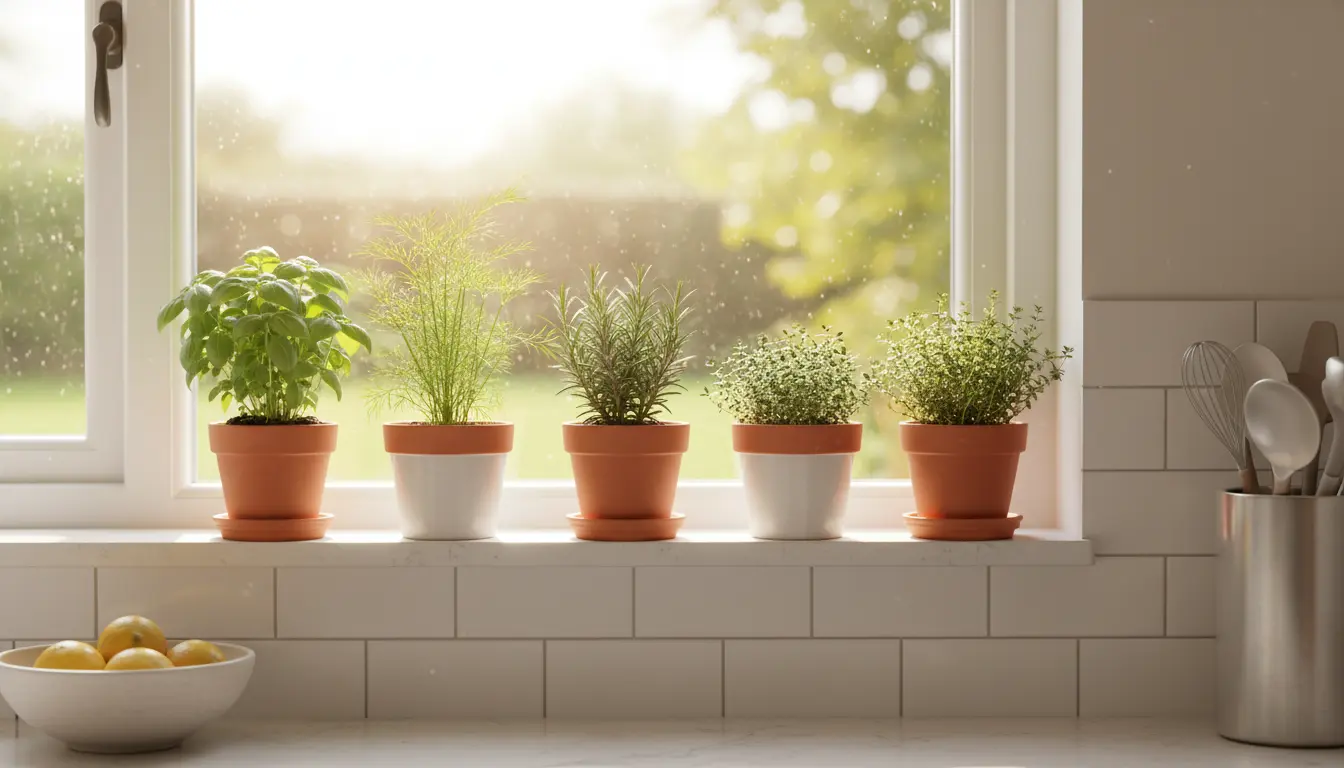
Why Indoor Herb Gardening Works
Indoor herb gardening is a practical way to grow fresh flavors year-round. Many common culinary herbs thrive in containers and need only moderate care.
This guide gives step-by-step, actionable tips for starting and maintaining an indoor herb garden that actually produces.
Getting Started with Indoor Herb Gardening
Begin by choosing a dedicated spot that receives steady light. A sunny windowsill or a shelf near a bright window is ideal for most herbs.
Decide whether you want individual pots or a shared planter. Both approaches work; the main difference is how often you need to water and manage space.
Choosing Herbs for Indoor Herb Gardening
Pick herbs that are known to do well indoors. Good beginner choices include basil, parsley, chives, mint, thyme, and oregano.
Avoid large, woody herbs that need extensive pruning unless you have space and experience. Start with two to six plants to keep care manageable.
Light Requirements for Indoor Herb Gardening
Most herbs need 6–8 hours of bright light daily. South- or west-facing windows give the best natural light in temperate regions.
If natural light is limited, use a full-spectrum LED grow light placed 6–12 inches above the plants for 10–12 hours a day.
Soil, Containers, and Drainage
Use a well-draining potting mix formulated for containers. Avoid garden soil, which compacts and can hold too much moisture.
Containers should have drainage holes. If you must use a decorative pot without holes, create a drainage layer and monitor water closely.
Container Size and Material
- Small herbs (chives, thyme): 4–6 inch pots
- Medium herbs (basil, parsley): 6–8 inch pots
- Larger herbs or multiple plants: 10–12 inch planters
Terra cotta pots dry out faster and can be great for herbs that dislike soggy roots. Plastic retains moisture longer and reduces watering frequency.
Watering and Fertilizing Tips
Water when the top 1 inch of soil feels dry. Overwatering is the most common cause of problems in indoor herb gardening.
Use a balanced liquid fertilizer at half strength every 3–4 weeks during active growth. Fertilize less in winter when growth slows.
Signs of Water or Nutrient Problems
- Yellowing leaves: overwatering or poor drainage
- Leggy stems: insufficient light
- Slow growth: low nutrients or root crowding
Pest Management for Indoor Herb Gardening
Indoor herb gardens are less prone to pests than outdoor ones, but issues can still appear. Common pests are aphids, spider mites, and fungus gnats.
Inspect plants weekly and isolate any affected herb to prevent spread. Use a mild insecticidal soap or neem oil for control.
Simple Pest Control Steps
- Rinse leaves with water to remove small insects
- Remove heavily infested leaves and dispose of them
- Adjust watering to reduce fungus gnat problems
Pruning and Harvesting
Regular harvesting encourages bushier growth. Pinch the tips of basil and other soft-stemmed herbs to prevent legginess.
For woody herbs like rosemary and thyme, prune back larger stems but avoid removing more than one-third of the plant at once.
Harvesting Guidelines
- Harvest in the morning for the best flavor
- Clip stems above a pair of leaves to encourage branching
- Preserve excess herbs by drying or freezing
Common Mistakes in Indoor Herb Gardening
New growers often overwater, underestimate light needs, or crowd plants into small pots. Correcting these errors quickly prevents long-term damage.
Keep a simple log of watering and feeding until you learn how your specific location affects plant needs.
Many herbs release stronger aromas when slightly stressed by drier soil. Letting the top inch of soil dry before watering can increase essential oil concentration and flavor.
Small Real-World Example: A Window-Led Kitchen Herb Setup
Laura, a city apartment renter, started an indoor herb garden on a 4-foot windowsill. She chose basil, chives, and mint in three 6-inch pots with a lightweight potting mix.
Using an LED grow light for two hours in early morning and late afternoon during winter, she harvested fresh basil twice weekly and cut grocery spending on fresh herbs by nearly 50% in three months.
Quick Start Checklist for Indoor Herb Gardening
- Choose 2–6 beginner-friendly herbs
- Pick a bright spot or add a grow light
- Use well-draining potting mix and pots with drainage holes
- Water when the top inch of soil is dry
- Fertilize lightly during active growth
- Inspect weekly for pests and prune regularly
Conclusion: Keep It Simple and Consistent
Success with indoor herb gardening comes from consistent light, proper drainage, and regular harvesting. Small, steady efforts yield fresh flavor and an enjoyable hobby.
Start small, observe how your plants respond, and adjust light and water. Within weeks you’ll have a reliable source of fresh herbs for the kitchen.