
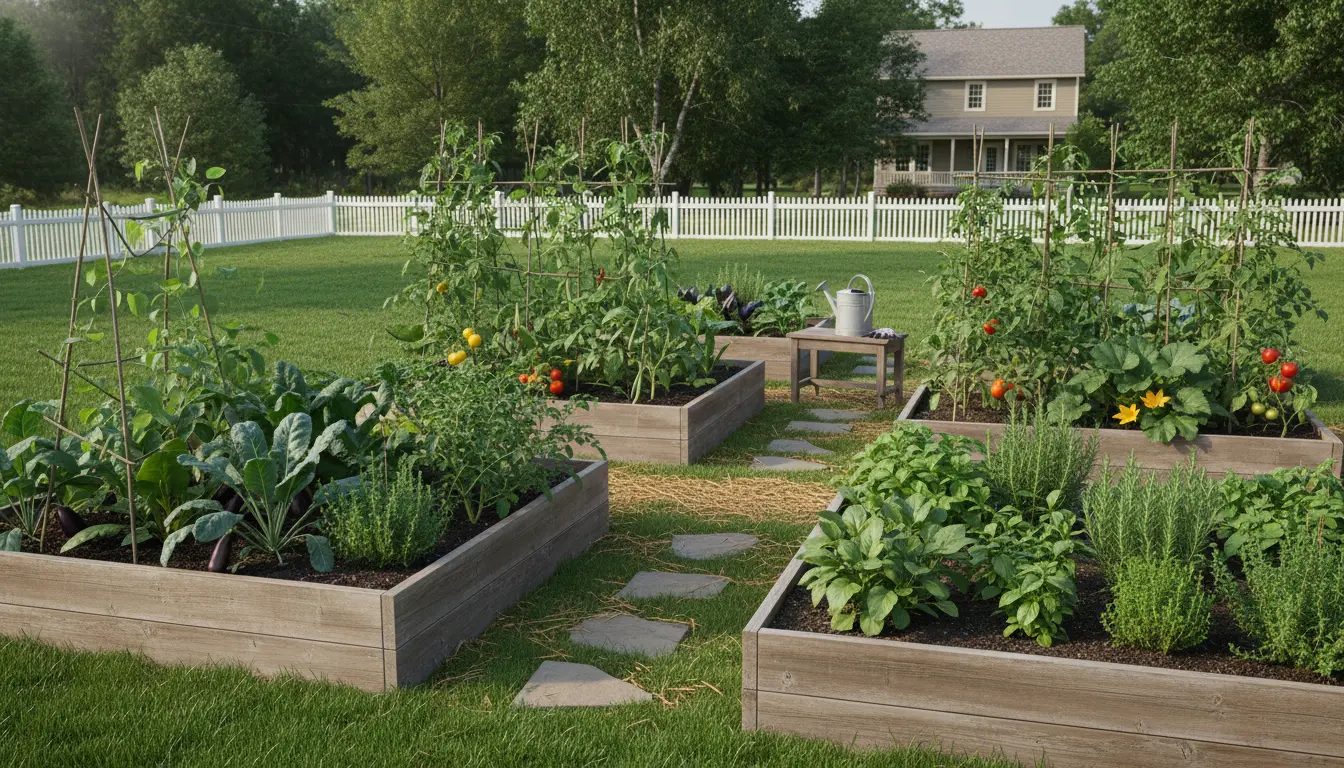
Start a Vegetable Garden: Simple First Steps
Starting a vegetable garden is straightforward when you follow a clear plan. This guide breaks the process into practical steps you can complete in a few weekends.
Plan Where to Start Your Vegetable Garden
Good planning saves time and mistakes. Choose a sunny spot that gets at least six hours of direct sunlight daily.
Consider access to water and how you will reach the beds for planting and harvesting. Small raised beds or containers work well for limited spaces.
Choose the Right Location to Start a Vegetable Garden
Sun, soil, and access are the three essentials. Southern exposure usually gives the best light in temperate zones.
- Sunlight: 6–8 hours for most vegetables.
- Water: Within a few steps of a hose or tap.
- Access: Wide enough for a wheelbarrow and easy to reach plants.
Prepare Soil and Beds for Your Vegetable Garden
Healthy soil is the foundation of a productive vegetable garden. Aim for loose, well-draining soil rich in organic matter.
For raised beds, use a mix of topsoil, compost, and aged manure or a commercial organic mix.
Soil Steps to Start a Vegetable Garden
- Test soil pH with a simple kit; most vegetables prefer pH 6.0–7.0.
- Add compost at 2–3 inches and work it into the top 6–8 inches.
- Adjust pH with lime (raise) or sulfur (lower) if needed.
Select Vegetables for Beginners
Start with easy, fast-growing vegetables that tolerate beginner mistakes. Good choices include lettuce, radishes, bush beans, zucchini, and tomatoes.
Plant varieties labeled “easy” or “beginner friendly” and choose disease-resistant cultivars when possible.
Example Planting List to Start a Vegetable Garden
- Leafy greens: Lettuce, spinach
- Root crops: Radish, carrot
- Vining or bush: Bush beans, zucchini
- Fruiting: Cherry tomatoes, pepper
Planting and Spacing Guidelines
Follow seed packet or plant tag spacing to avoid crowding. Proper spacing improves air circulation and reduces disease.
Use succession planting for continuous harvests: plant another set of lettuce or radish every 2–3 weeks.
Watering and Feeding Your Vegetable Garden
Consistent watering is crucial. Most vegetables need 1–1.5 inches of water per week, applied deeply rather than lightly.
Use a soaker hose or drip irrigation to keep foliage dry and reduce disease risk.
Basic Fertilizer Routine When You Start a Vegetable Garden
- At planting: mix compost into soil.
- Mid-season: side-dress with compost or use a balanced organic fertilizer.
- Follow label rates; over-fertilizing can reduce flavor and yield.
Pest and Disease Management
Preventive practices are more effective than cures. Rotate crops, remove diseased plants, and keep weeds under control.
Use row covers to protect young plants from insects and hand-pick pests like caterpillars when feasible.
Natural Pest Controls to Start a Vegetable Garden
- Encourage beneficial insects with flowers like marigolds and dill.
- Use diatomaceous earth on soil surfaces for slugs and soft-bodied pests.
- Apply neem oil or insecticidal soap for aphid outbreaks, following instructions.
Harvesting and Ongoing Care
Harvest vegetables when ripe to encourage more production. Regular picking of beans and zucchini increases yield.
Keep beds mulched to conserve moisture and reduce weeds. Replace summer crops with fall plantings if your season allows.
Succession planting can double your harvest space: plant fast crops like radishes or lettuce between slower-growing plants to maximize yield in the same bed.
Small Real-World Case Study
Case study: Sarah, an apartment gardener, started a 4×2 ft raised bed on her balcony. She used a commercial raised bed mix and planted cherry tomatoes, basil, and leaf lettuce.
In the first season she followed watering and feeding guidelines and used a small trellis for tomatoes. By week 10 she harvested several pounds of tomatoes and weekly salads for two people.
Lessons learned: keep containers well-watered, choose compact varieties, and add a small trellis to increase vertical space.
Quick Checklist to Start a Vegetable Garden
- Choose a sunny location and prepare soil or containers.
- Select easy vegetables and check spacing.
- Install watering method and mulch beds.
- Monitor for pests and harvest regularly.
Final Tips for New Gardeners
Start small and expand as you gain experience. Keep a simple notebook to record planting dates, varieties, and lessons.
Join a local gardening group or online community for region-specific advice and seasonal reminders.
With a bit of planning and regular care, anyone can start a vegetable garden that produces food and satisfaction all season long.