
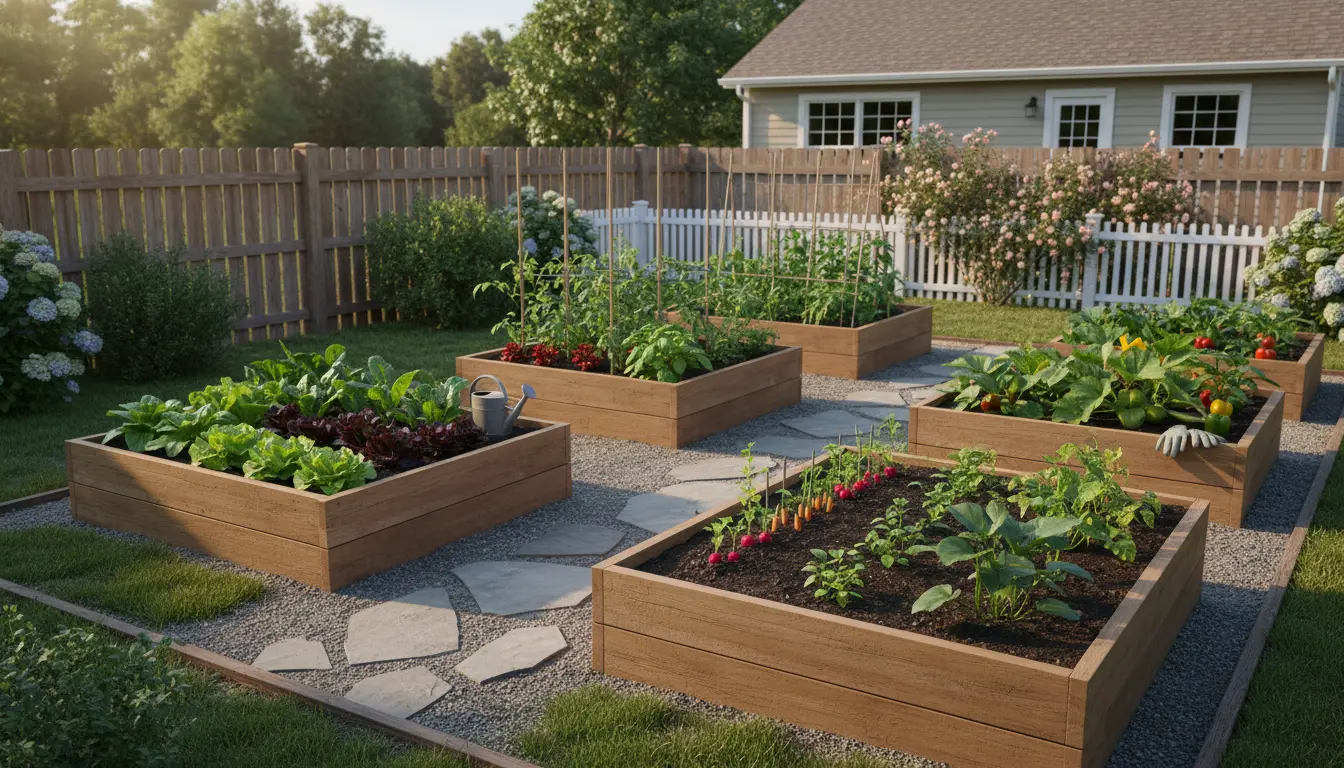
Starting a vegetable garden is a rewarding way to grow fresh food, save money, and enjoy the outdoors. This guide gives clear, practical steps you can follow whether you have a backyard, balcony, or small plot.
Why start a vegetable garden
A vegetable garden provides control over what you eat and when you harvest. Growing your own vegetables can reduce grocery bills and increase nutrient intake from fresher produce.
Gardening also supports mental well being and adds biodiversity to your space. Even small gardens attract pollinators and improve soil health.
Planning to start a vegetable garden
Good planning makes the garden easier to manage and more productive. Start by assessing space, sunlight, and water access before planting anything.
Choose the right location
Select a spot with at least 6 hours of direct sunlight for most vegetables. Avoid low areas that collect cold air or water, and pick a location close to a water source.
If space is limited, consider containers, vertical planters, or raised beds to maximize yield in a small footprint.
Select vegetables for your garden
Choose crops that you and your family will eat and that suit your climate. Start with easy plants like lettuce, radishes, tomatoes, bush beans, and herbs.
- Beginner friendly: Lettuce, radish, kale, spinach
- Warm season: Tomato, pepper, cucumber, squash
- Slow growers for later seasons: Carrot, beet, onion
Preparing soil and beds for your vegetable garden
Healthy soil is the single most important factor in success. Test soil texture and pH, then amend with organic matter to improve structure and fertility.
For raised beds, fill with a mix of topsoil, compost, and a light mineral component such as sand or perlite for drainage. In-ground beds benefit from added compost worked into the top 6 to 8 inches.
- Soil test: Check pH and nutrient levels using a kit or local extension service
- Amend: Add 2 to 4 inches of compost annually
- Drainage: Ensure beds are not waterlogged
Planting and care when you start a vegetable garden
Follow planting dates for your region and pay attention to frost dates. Plant seeds or transplants at the recommended depth and spacing shown on seed packets.
Mulch around plants to conserve moisture and suppress weeds. Organic mulches such as straw, leaves, or wood chips also break down to feed the soil.
Watering for success
Most vegetables need about 1 to 1.5 inches of water per week. Water deeply and less frequently to encourage strong root systems.
Use drip irrigation or a soaker hose to deliver water efficiently and reduce leaf wetness that can cause disease.
Fertilizing and pest control
Fertilize based on soil test results. A balanced organic fertilizer or compost tea can provide needed nutrients without burning plants.
Use integrated pest management: monitor regularly, remove pests by hand, introduce beneficial insects, and use row covers when needed. Save chemical controls for last resort.
Harvesting and rotating crops
Harvest vegetables at peak ripeness for best flavor and to encourage continued production. Pick frequently for crops like beans and zucchini to prolong yield.
Practice crop rotation by moving families of plants to new beds each year. Rotation reduces pest buildup and balances nutrient use in the soil.
Small case study: Urban balcony garden
Maria, an apartment dweller, started a vegetable garden on a south-facing balcony. She used three 12 inch deep containers and planted cherry tomatoes, basil, and lettuce.
By using a good potting mix, daily morning watering, and vertical trellis for tomatoes, she harvested weekly salads and two large tomato harvests over the summer. Maria saved about 30 percent on groceries for fresh herbs and salad greens.
Did You Know? Companion planting, such as growing basil near tomatoes, can improve flavor and deter pests naturally.
Common problems and quick fixes
- Poor germination: Check seed depth and soil moisture; try fresh seeds
- Yellowing leaves: Test for nutrient deficiency or overwatering
- Slug or snail damage: Use beer traps or hand removal at night
- Poor pollination: Plant flowers to attract pollinators or hand-pollinate tomatoes and peppers
Record what you plant, where, and when to refine timing and variety choices each year. Small notes help improve yields season after season.
Starting a vegetable garden is a step-by-step process that rewards patience and observation. With planning, good soil, and regular care you can enjoy fresh vegetables and a more sustainable food source.