
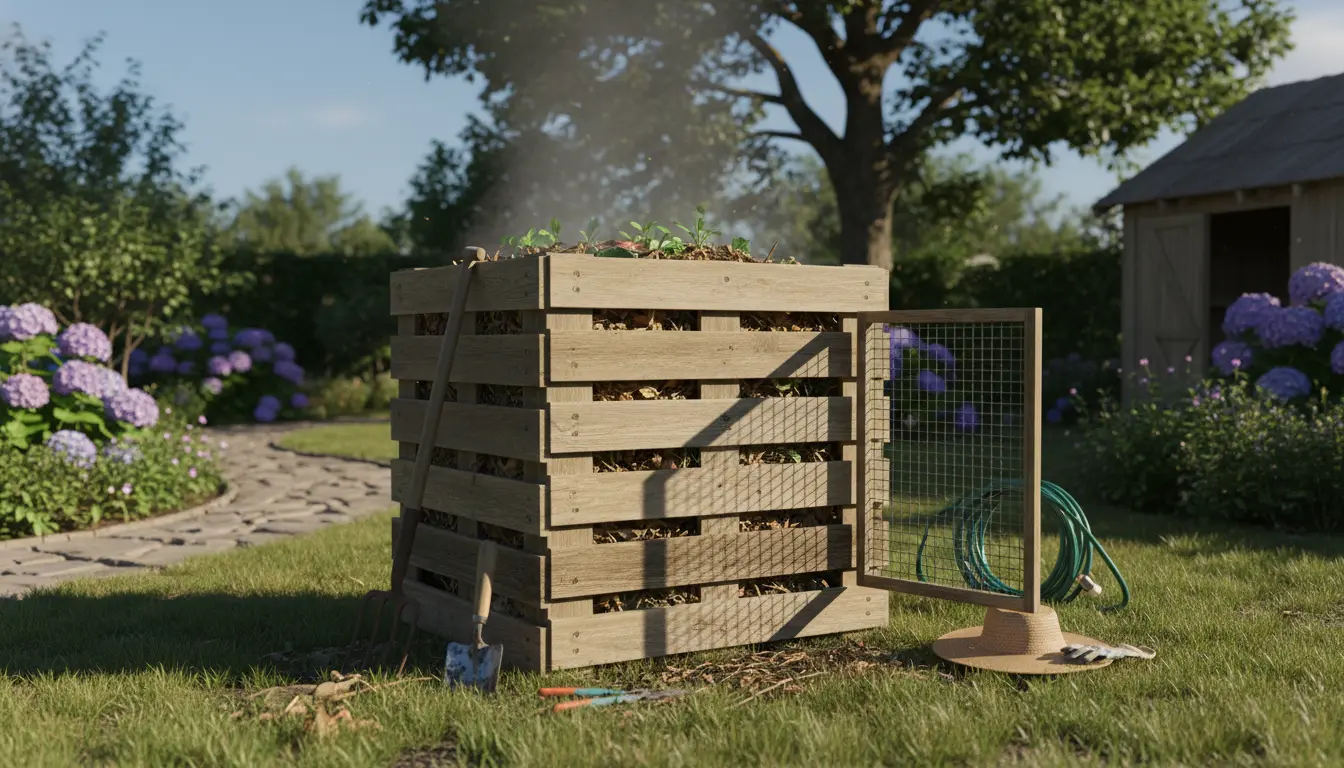
Why start composting at home
Composting at home turns kitchen scraps and yard waste into nutrient-rich soil. It reduces household waste and improves plant health with minimal cost.
This guide gives step-by-step instructions, practical tips, and a small case study so you can begin today.
Choose a composting method for home
Select a method that fits your space and lifestyle. Popular options include backyard piles, bins, tumblers, and indoor vermicomposting with worms.
- Backyard pile: low cost, needs space and occasional turning.
- Bin or tumbler: neater, speeds up decomposition, better for small yards.
- Vermicomposting: ideal for apartments, uses worms to process food scraps quickly.
Quick decision checklist
- Space available: yard, balcony, or countertop.
- Time: can you turn a pile weekly?
- Amount of waste: small household or large yard?
Gather materials: greens, browns, and tools
Compost needs a mix of nitrogen-rich “greens” and carbon-rich “browns.” Balance these for efficient breakdown.
- Greens: fruit and vegetable scraps, coffee grounds, fresh grass clippings.
- Browns: dry leaves, shredded paper, straw, cardboard.
- Tools: pitchfork or compost aerator, thermometer (optional), garden gloves, a sturdy bin.
Common items to avoid
- No meat, dairy, or oily foods in a basic backyard pile — these attract pests.
- Avoid diseased plants and weed seeds unless your compost gets very hot.
Step-by-step: how to start composting at home
Follow these simple steps to build your first compost mound or bin. Keep actions small and consistent.
- Pick a location: choose a partly shaded, well-drained spot for a bin or pile.
- Start with a base layer: add coarse browns like small branches to aid airflow.
- Add alternating layers: 3 parts browns to 1 part greens is a good rule of thumb.
- Maintain moisture: the pile should feel like a wrung-out sponge, not soaking wet.
- Turn the pile: every 1–2 weeks to add oxygen and speed decomposition.
Managing temperature and time
A hot compost (131–160°F or 55–70°C) breaks down materials quickly and kills seeds. Household compost can also be cool and ready in 6–12 months with less effort.
Use a thermometer to monitor heat, or rely on regular turning and moisture control for steady results.
Composting reduces methane production from landfills and can cut household waste by up to 30 percent. Proper composting also returns nutrients to the soil and improves water retention.
Troubleshooting common problems
Even simple systems can run into issues. Troubleshoot quickly to keep your compost healthy and odor-free.
- Bad smell: add more browns and turn the pile to introduce air.
- Pests: bury food scraps under browns or use a closed bin or tumbler.
- Too dry: add water and some greens to rehydrate the mix.
- Too wet: mix in dry browns and increase turning to improve aeration.
When is compost ready?
Finished compost is dark, crumbly, and smells earthy. Small items like twigs may remain; these can be sifted or returned to a new pile to decompose further.
Using finished compost at home
Apply finished compost to garden beds, mix it into potting soil, or use it as a lawn top dressing. Start with a thin layer and observe plant response.
- Vegetable beds: mix 2–3 inches into the top 6–8 inches of soil before planting.
- Container plants: blend 1 part compost with 2 parts potting mix.
- Lawn: spread a half-inch layer over the turf and water it in to improve soil structure.
Small real-world example: apartment worm composting
Case study: A two-person apartment in Portland started vermicomposting in a 10-liter bin with red wigglers. They collected about 1–2 liters of food scraps per week.
Within three months they produced enough castings to refresh two large potted herbs. They avoided odors by keeping bedding slightly moist, adding shredded cardboard, and feeding in small amounts.
Practical tips for long-term success
Keep the system simple and adapt to your household. Small, steady inputs beat long, inconsistent bursts of kitchen waste.
- Keep a small countertop container for scraps and empty it daily into your bin.
- Chop larger items to speed decomposition.
- Record what you add and how the pile responds to learn quickly.
Final checklist to start composting at home
- Choose a method that fits your space: pile, bin, tumbler, or worm box.
- Balance greens and browns and maintain moisture.
- Turn regularly and troubleshoot odors or pests early.
- Use finished compost to enrich soil and reduce the need for chemical fertilizers.
Starting composting at home is a low-cost way to reduce waste and build healthier soil. With a few small steps and regular attention, most households can produce useful compost within months.