
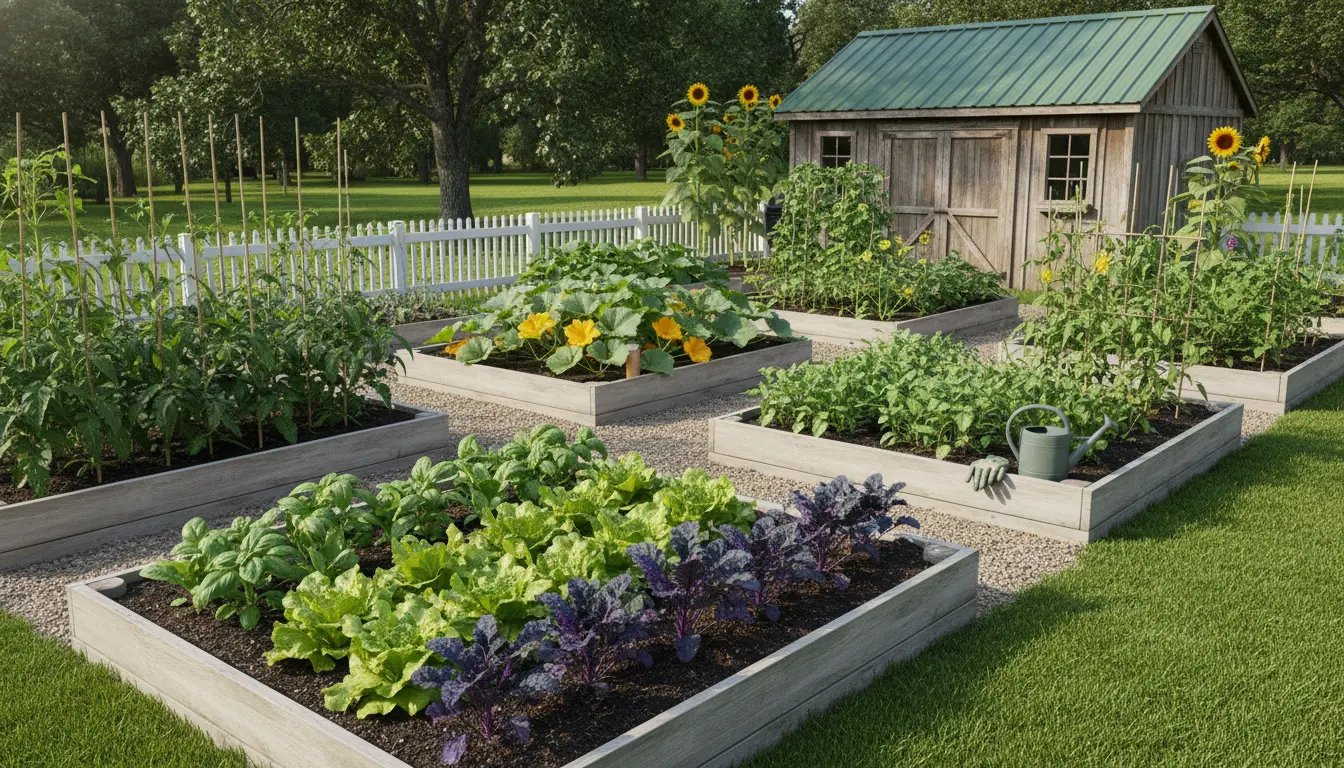
Starting a productive garden does not require a large budget or specialized skills. This guide shows step-by-step, low-cost methods to plan, plant, and maintain a successful vegetable garden.
Plan Your Low-Cost Vegetable Garden
Choose a compact area with at least six hours of sun for most vegetables. Use a sketch to map bed size, path access, and water source to reduce wasted time and materials.
Selecting the Best Location for a Low-Cost Vegetable Garden
Look for flat ground near an outdoor tap to save on watering effort. If only shady spaces are available, focus on leafy greens and herbs that tolerate less light.
Affordable Soil and Bed Options
Good soil matters more than fancy raised beds. You can build productive beds using inexpensive or repurposed materials.
- No-dig beds: Layer cardboard, compost, and mulch over the ground to improve soil cheaply.
- Reused lumber: Salvaged wood or pallets make low-cost raised sides; avoid treated wood for edibles.
- Containers: Buckets, grow bags, or old planters work well for small spaces and cost less than custom beds.
Making Cheap, Rich Soil
Mix equal parts topsoil, compost, and shredded leaves to create a versatile planting mix. Source free or low-cost compost from local community programs or make your own from kitchen scraps and yard waste.
Low-Cost Seeds, Starts, and Planting
Buy seeds instead of seedlings for the best cost per plant. Start seeds indoors or use direct sowing depending on the crop and local climate.
- Easy, inexpensive crops: lettuce, radishes, bush beans, cherry tomatoes, and herbs.
- Succession planting: Sow small amounts every 2–3 weeks to maintain harvests without extra beds.
Spacing and Companion Planting
Follow seed packet spacing but use intercropping to maximize production. Plant fast growers like radishes between slower crops such as tomatoes to use space efficiently.
Watering and Irrigation on a Budget
Water efficiently to save both time and money. Simple techniques maintain soil moisture and reduce water waste.
- Mulch heavily with straw, leaves, or grass clippings to keep soil cool and moist.
- Use a basic soaker hose or drip tape on a timer for consistent watering without professional installation.
- Collect rainwater in barrels to lower water bills and provide free irrigation.
Natural Pest and Disease Control for a Low-Cost Vegetable Garden
Preventative care reduces the need for expensive treatments. Use cultural methods first, then low-cost organic controls if needed.
- Crop rotation: Change plant families each season to reduce pest buildup.
- Physical barriers: Netting, row covers, or collars stop insects and animals cheaply.
- Home remedies: Soap sprays, diatomaceous earth, and hand-picking are effective for small problems.
Beans and peas fix nitrogen in the soil, which can reduce the need for added fertilizer when rotated with leafy crops.
Maintaining Your Low-Cost Vegetable Garden
Routine tasks keep yields high without extra investment. Spend short daily checks and slightly longer weekly sessions on key garden chores.
- Daily: Check moisture, remove obvious pests, and harvest ripe produce.
- Weekly: Weed, add mulch as needed, and inspect for disease signs.
- Monthly: Top up compost, adjust supports, and prune as necessary.
Recording Results
Keep a simple notebook of planting dates, varieties, and yields to improve next season. Small adjustments accumulate into bigger savings and productivity improvements.
Small Case Study: Backyard Plot on a Budget
Maria turned a 10 ft by 6 ft patch into a productive garden for under $80. She used reclaimed lumber for two simple 3×4 ft raised beds, free compost from a city program, and seeds bought in bulk.
In her first season she grew lettuce, cherry tomatoes, bush beans, and herbs. By staggering plantings and mulching heavily, she harvested fresh vegetables weekly and cut grocery spending noticeably.
Practical Checklist to Start a Low-Cost Vegetable Garden
- Choose a sunny location close to water.
- Decide on bed type: no-dig, raised, or containers.
- Source or make compost and mix with local soil.
- Buy seeds, start indoors if needed, and plan succession sowing.
- Mulch, water efficiently, and monitor pests early.
With planning and simple techniques, a low-cost vegetable garden can deliver fresh food and steady savings. Start small, learn each season, and build soil health to increase yields without large expenses.