
What Is Home Composting for Beginners
Home composting turns kitchen scraps and yard trimmings into nutrient-rich soil. It reduces waste, saves money, and feeds plants naturally.
This guide gives practical, step-by-step instructions for beginners so you can start composting at home with confidence.
Choose the Right Composting Method
There are several home composting methods. Pick one based on space, time, and how much waste you produce.
Bin Composting
Bin composting uses a closed container or tumbler. It’s tidy and keeps pests away, which makes it ideal for small yards and beginners.
Bokashi and Worm Bins
Bokashi ferments food waste quickly and works well indoors. Worm bins (vermicomposting) use red worms to process scraps into high-quality castings.
Both are suitable for apartments or limited outdoor space.
Where to Place Your Compost
Select a level, well-drained spot with partial shade. Avoid placing a compost pile directly against house foundations or under overhanging roofs.
If using an indoor system, keep it in a ventilated area like a balcony, garage, or under-sink space dedicated to the bin.
What to Add and What to Avoid
Good compost needs a balance of carbon-rich “browns” and nitrogen-rich “greens.” Aim for a roughly 3:1 ratio by volume (browns : greens).
- Greens: vegetable peels, fruit scraps, coffee grounds, fresh grass clippings.
- Browns: dry leaves, shredded paper, cardboard, straw, wood chips.
Avoid meat, dairy, oily foods, diseased plants, and pet feces in regular compost. These items attract pests and slow decomposition.
How to Start a Compost Pile
Start with a 6–12 inch layer of coarse browns like twigs or straw to help airflow. Add alternating layers of greens and browns.
Moisten each layer so the compost is damp like a wrung-out sponge. If it’s too dry, decomposition slows; if too wet, it smells.
Turning and Aeration
Turn the pile every 1–2 weeks with a pitchfork or by rotating a tumbler. Turning adds oxygen and speeds up decomposition.
If you don’t turn, make a deeper pile and be prepared for a longer breakdown period (several months).
Troubleshooting Common Problems
Knowing the common issues helps you maintain a healthy pile. Most problems are fixable with simple adjustments.
- Bad odor: Add more browns and turn the pile to introduce air.
- Pile too dry: Add water and greens, then mix thoroughly.
- Slow decomposition: Chop materials into smaller pieces and balance the greens and browns.
- Pests: Use a closed bin and avoid adding meats or oily foods.
When Is Compost Ready?
Finished compost is dark, crumbly, and smells earthy. Particle size should be small and uniform, with no recognizable food bits.
Depending on method and maintenance, compost can finish in 2 months (hot method) to 9 months (cold method).
Adding crushed eggshells to your compost adds calcium and helps reduce odor. Rinse shells and crush them before adding to speed breakdown.
Using Your Compost
Apply finished compost as a top dressing, mix into potting soil, or use in garden beds to improve soil structure and nutrient content.
Use a thin layer (1–2 inches) for established plants and mix more heavily for new beds or potting mixes.
Small Real-World Example: Case Study
Case Study: A two-person household started a 50-liter compost tumbler on a small patio. They added kitchen scraps and shredded cardboard and turned it twice a week.
Result: After four months they produced about 80 liters of finished compost, reduced their kitchen waste by 45%, and used the compost to feed balcony vegetables. No pests were reported thanks to the closed tumbler and avoiding meat scraps.
Practical Tips for Success
Consistency is more important than perfection. Small daily habits build a steady supply of compost for your plants.
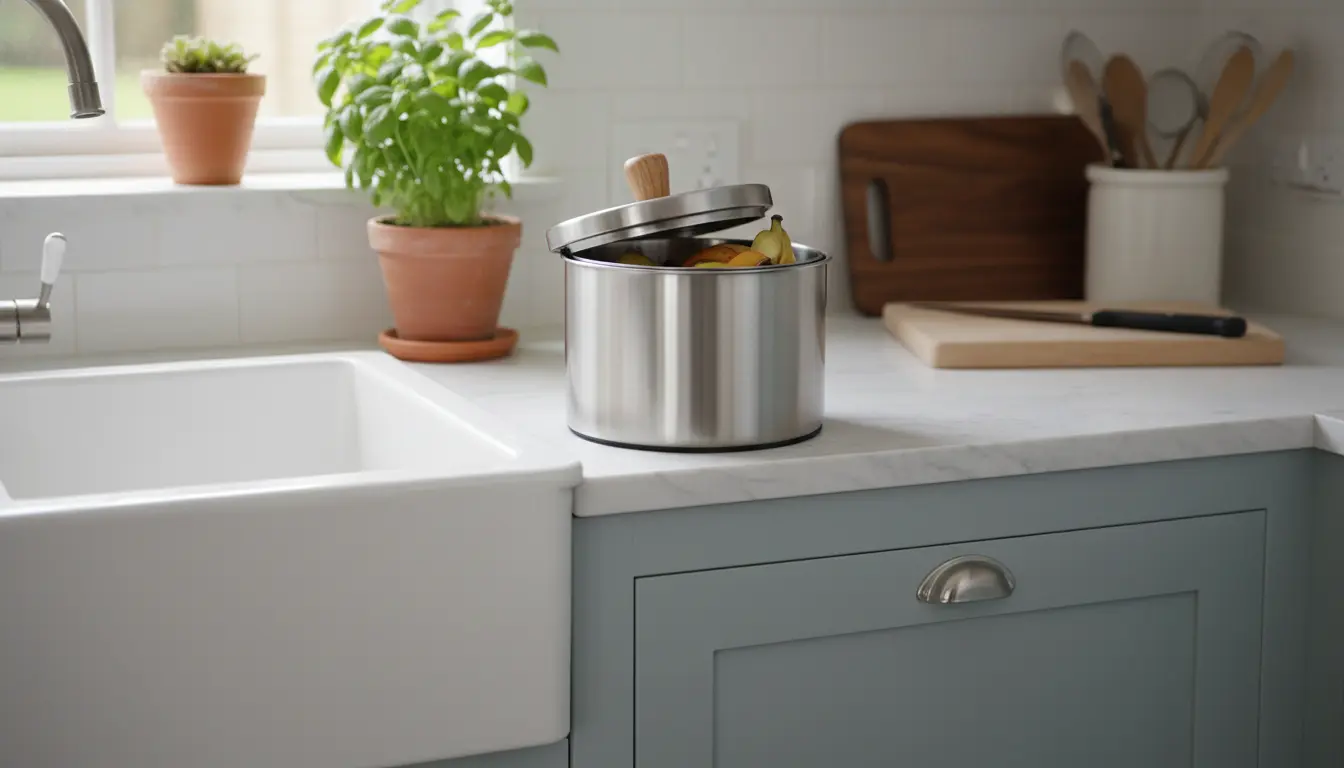
- Collect scraps in a small countertop bin to avoid trips to the outdoor bin.
- Chop or blend larger items to speed decomposition.
- Keep a supply of brown materials like shredded paper or leaves on hand.
- Record what you add and how often you turn the pile to learn what works best.
Summary: Start Home Composting Today
Home composting for beginners is practical, affordable, and flexible. Choose a method that fits your space, maintain balance, and troubleshoot common issues quickly.
Begin with simple steps: select a bin, layer greens and browns, keep the pile moist, and turn it regularly. Within months you will have nutrient-rich compost to improve your garden or potted plants.
Ready to start? Gather a small bin, collect your kitchen scraps, and try your first three-week cycle. Adjust based on smell, moisture, and how fast materials break down.