
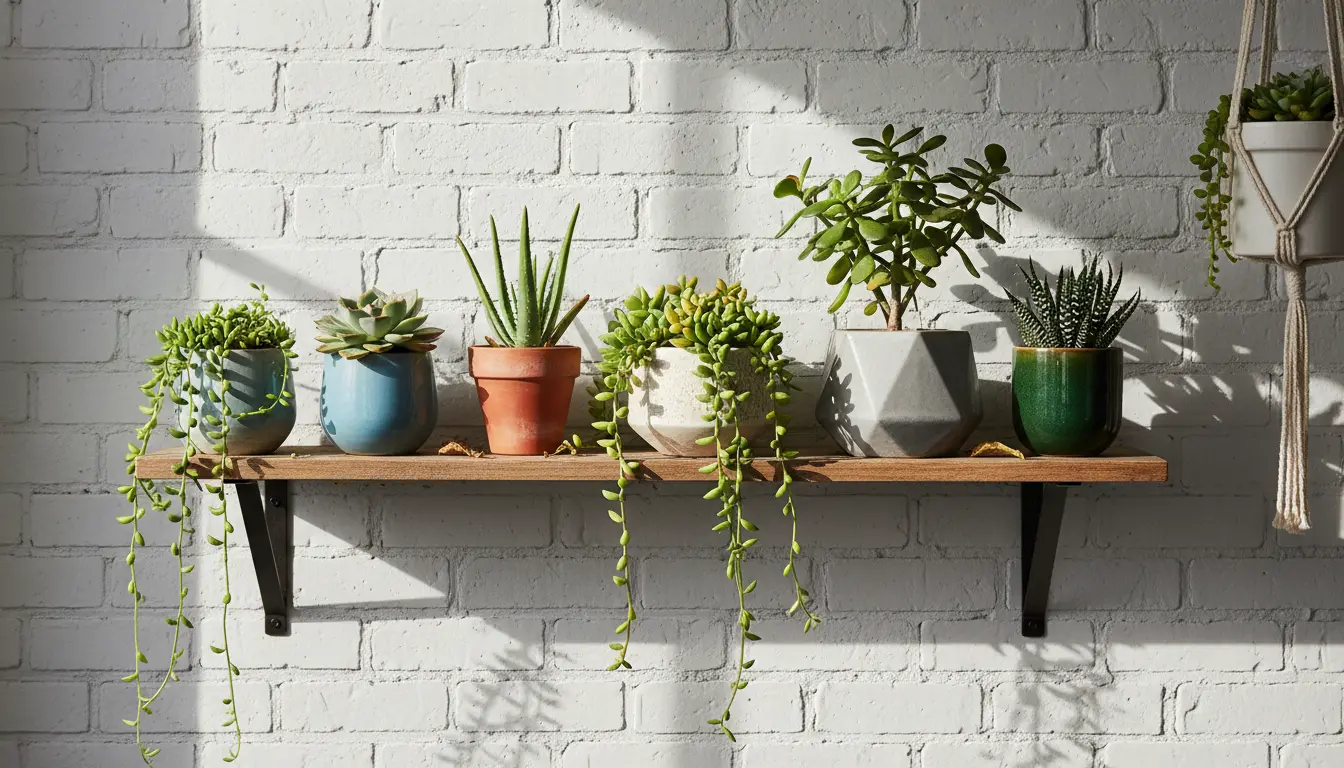
Why indoor succulent care matters
Succulents are popular because they tolerate dry conditions and need less maintenance than many houseplants. However, indoor succulent care still requires attention to light, water, soil, and pot choice to avoid common problems.
Indoor succulent care basics
Good care starts with understanding how succulents store water and where they evolved. Most are adapted to bright, well-drained environments with occasional deep waterings.
Follow a few simple principles: give bright light, use fast-draining soil, water sparingly, and avoid standing water in the pot.
Light for indoor succulent care
Light is the most important factor for healthy succulents. Most species need at least 4–6 hours of bright, indirect light each day.
Place succulents near a south- or west-facing window if possible. If natural light is limited, use a grow light for 10–12 hours daily to prevent stretching and weak growth.
Watering in indoor succulent care
Overwatering is the top cause of failure. Use a soak-and-dry approach: water thoroughly until water drains from the pot, then wait until the soil dries before watering again.
Factors that affect frequency include pot size, season, light level, and humidity. Typical indoor cycles range from 1–3 weeks.
Soil and pot selection for indoor succulent care
Use a fast-draining mix made for cacti and succulents or mix regular potting soil with perlite and coarse sand. The goal is quick drainage and air around the roots.
Choose pots with drainage holes. Unglazed clay pots dry faster than glazed ones and can reduce the risk of root rot.
Feeding and fertilizing
Succulents are light feeders. Fertilize lightly during the active growing season (spring and summer) with a balanced, diluted fertilizer once a month.
Avoid fertilizing in fall and winter when growth slows, as excess nutrients can stress the plant.
Common problems and solutions in indoor succulent care
Recognize symptoms to act quickly. Yellow, mushy leaves usually indicate overwatering. Thin, elongated stems (etiolation) mean insufficient light.
- Overwatering: Check roots for rot, cut away damaged tissue, repot in fresh soil, reduce watering.
- Underwatering: Leaves will shrivel; increase watering frequency slightly and adjust light if needed.
- Pests: Mealybugs and spider mites appear as white cottony spots or tiny webs. Treat with insecticidal soap or isopropyl alcohol swabs.
Repotting and propagation
Repot succulents every 1–2 years to refresh soil and inspect roots. Repot in spring for best recovery.
Propagation is easy: many succulents root from leaf or stem cuttings. Let cut ends dry for a day or two and then place on well-draining soil until roots form.
Indoor succulent care schedule
A simple schedule keeps care consistent. Adjust based on your conditions and the plant’s response.
- Weekly: Check soil moisture and rotate plants for even light exposure.
- Monthly (growing season): Lightly fertilize and inspect for pests.
- Annually: Repot if rootbound or replace old soil.
Did You Know?
Some succulents, like Haworthia and Gasteria, tolerate lower light much better than Echeveria or Sedum and are ideal for offices or north-facing windows.
Case study: A small apartment success
Anna, a city renter, had a south-facing ledge but kept killing succulents with weekly watering. She switched to a cactus mix, used terracotta pots with drainage, and established a soak-and-dry routine.
Within three months, her succulents regained firm leaves and compact growth. Key changes were better soil, drainage, and reducing watering frequency rather than increasing it.
Quick checklist for indoor succulent care
- Provide bright light or supplemental grow light.
- Use fast-draining soil and a pot with drainage holes.
- Water deeply but infrequently; let soil dry between waterings.
- Fertilize lightly in growing season only.
- Inspect regularly for pests and remove damaged leaves promptly.
Final tips for consistent indoor succulent care
Observe your plants and let them guide you. Slight leaf shriveling is better than soft, translucent leaves that signal rot.
Keep a simple log of watering and any changes to light or location. Small adjustments and consistent routines will keep succulents healthy indoors for years.