
Getting Started: Why start a vegetable garden
Starting a vegetable garden is a practical way to grow fresh food, save money, and enjoy outdoor activity. Even a small space like a balcony or a 4×4 foot bed can produce meaningful yields.
This guide gives step-by-step instructions to help beginners start a vegetable garden with confidence and predictable results.
How to Start a Vegetable Garden: Plan Your Space
Decide where to start a vegetable garden by checking sunlight, access to water, and space. Most vegetables need at least six hours of direct sun each day.
Consider bed type: in-ground rows, raised beds, or containers. Raised beds warm faster and drain well, while containers are flexible for small spaces.
Choose a Location to Start a Vegetable Garden
Look for south- or west-facing spots with minimal shade. Avoid low areas that collect cold air or flood when it rains.
Measure available space and plan beds or pots accordingly. Leave paths for easy access and harvesting.
How to Start a Vegetable Garden: Test and Prepare Soil
Healthy soil is the foundation of a productive garden. Test soil pH and nutrient levels with a simple kit or send a sample to a local extension service.
Most vegetables prefer slightly acidic to neutral soil (pH 6.0–7.0). Add amendments based on test results to balance nutrients.
Improve Soil Before You Plant
Add organic matter such as compost or well-rotted manure to improve structure and fertility. Spread 2–4 inches of compost and work it into the top 6–8 inches of soil.
For heavy clay, add coarse sand and compost to improve drainage. For light sandy soil, add organic matter to increase water retention.
How to Start a Vegetable Garden: Pick Easy Vegetables for Beginners
Choose crops that are forgiving and mature quickly. Good first vegetables include lettuce, radishes, cherry tomatoes, green beans, and herbs like basil and parsley.
Start with a few types to avoid being overwhelmed. Grow what you and your family will eat to keep motivation high.
Planting Tips and Timing
Follow seed packet or plant tag directions for spacing and depth. Plant cool-season crops (lettuce, peas) in early spring or fall and warm-season crops (tomatoes, peppers) after the last frost.
Use succession planting for continuous harvests: sow a new row of lettuce every two weeks in spring and early summer.
How to Start a Vegetable Garden: Watering and Maintenance
Consistent watering helps plants develop steady roots and reduce stress. Aim for deep, infrequent watering rather than shallow daily sprinkles.
Install a simple drip irrigation or soaker hose to save time and water. Mulch around plants to retain moisture and suppress weeds.
Pest and Disease Basics
Inspect plants weekly for pests and disease. Remove damaged leaves and use physical barriers like row covers when needed.
Encourage beneficial insects by planting flowers such as marigolds and dill. Rotate crops yearly to reduce soil-borne diseases.
How to Start a Vegetable Garden: Harvesting and Ongoing Care
Harvest vegetables when they reach ideal size and flavor. Regular picking encourages continued production for many crops.
Keep beds tidy by pulling spent plants and adding their biomass to compost. Plan fall cover crops like clover or rye to protect and feed the soil over winter.
Simple Tools and Supplies to Start a Vegetable Garden
- Hand trowel and fork for planting and turning soil
- Garden hoe or rake for bed prep
- Watering can or hose with a nozzle
- Quality compost and a basic soil test kit
- Mulch and stakes or cages for tall plants
Did You Know?
Some vegetable crops, like lettuce and radishes, can mature in as little as 30 days. Quick crops are great for beginners because they show fast results and build confidence.
Example Planting Plan to Start a Vegetable Garden
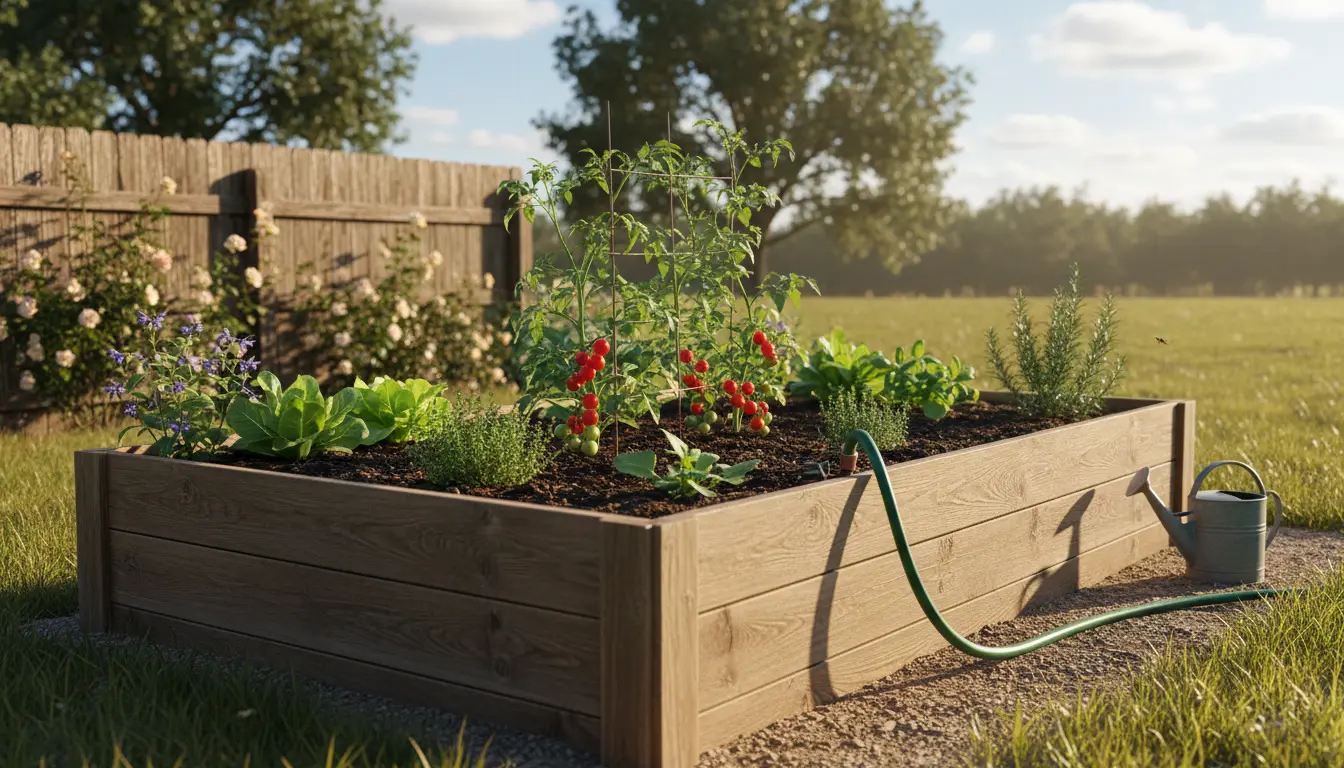
For a 4×8 foot raised bed, try this simple layout: one row of tomatoes with cages, two rows of salad greens in the center, and one row of beans or peas at the back.
Stagger planting times: sow transplants for tomatoes once soil warms, then sow lettuce seeds every two weeks for continuous salad greens.
Case Study: Sarah’s 10×10 Raised Bed
Sarah had a small yard and built a 10×10 raised bed to start a vegetable garden. She added two cubic yards of compost and chose tomatoes, peppers, lettuce, and bush beans.
By following basic watering and mulching, she harvested fresh salad greens within five weeks and a steady supply of tomatoes by mid-summer. Her initial investment in soil and a drip line paid off with reduced grocery buys and more frequent home-cooked meals.
Common Mistakes When You Start a Vegetable Garden
- Planting too many varieties at once — focus on a few that fit your space.
- Ignoring soil tests — you may over or under-fertilize without data.
- Watering inconsistently — this stresses plants and reduces yield.
Final Tips to Start a Vegetable Garden Successfully
Start small, learn by doing, and keep records of planting dates and results. Simple changes—better soil, proper watering, and correct timing—produce the biggest gains.
Join a local gardening group or extension service for region-specific advice and plant varieties that perform well in your climate.