
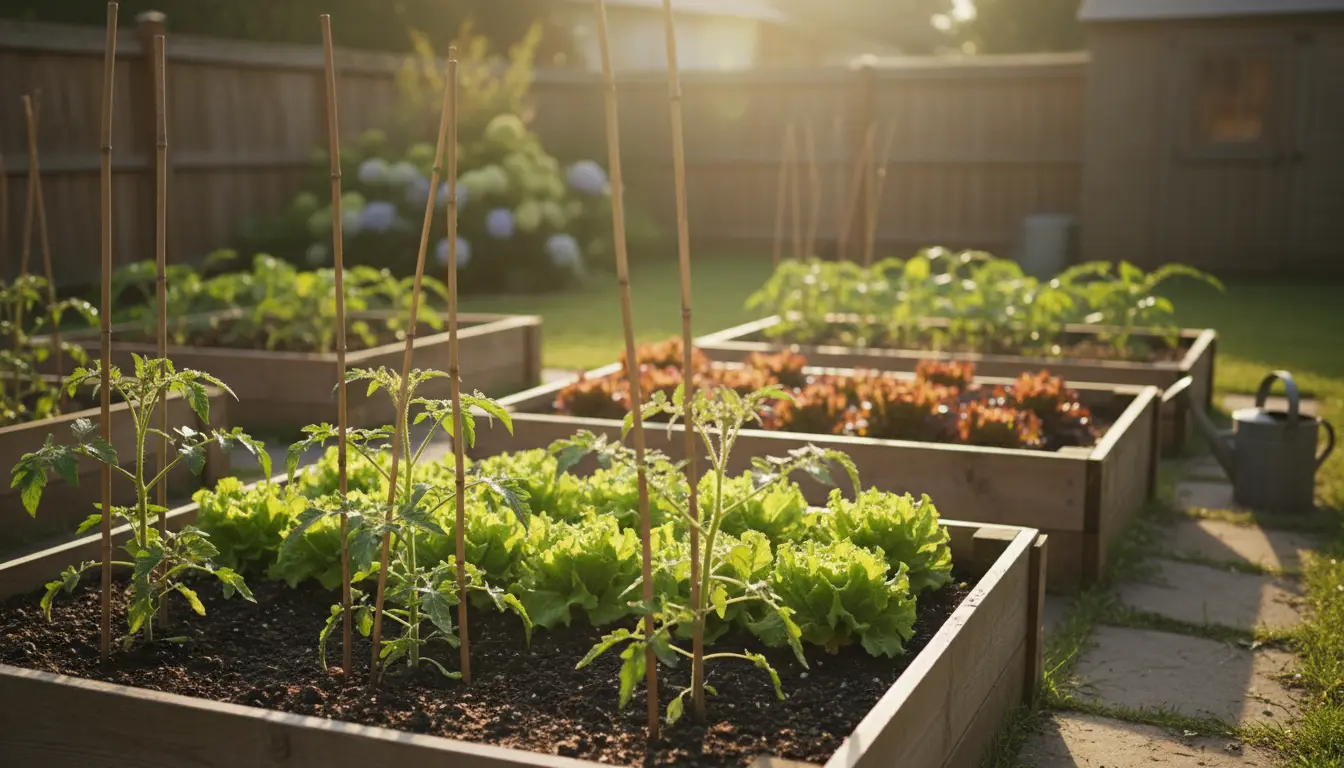
How to Start a Vegetable Garden: First Steps
Starting a vegetable garden is a straightforward project that rewards planning and consistent care. This guide breaks the process into clear steps you can follow, whether you have a small balcony or a backyard.
Choose the Right Spot to Start a Vegetable Garden
Good site selection matters more than fancy tools. Pick a spot with at least 6 hours of direct sunlight, easy access to water, and good drainage.
Avoid low areas that collect water and places under large trees that compete for nutrients. A sunny fence line or a raised bed on a flat yard often works well.
Assess Soil and Light for Your Vegetable Garden
Test soil texture and drainage with a simple jar test or a quick dig: clay stays, sand sinks, loam mixes. Consider a soil test for pH and nutrient levels if you want precise results.
Observe light at different times of day for a week to confirm sun patterns. Note morning vs. afternoon sun, since some crops prefer cooler morning light.
Prepare Soil to Start a Vegetable Garden
Healthy soil is the foundation of a productive garden. Build soil by adding organic matter like compost, aged manure, or leaf mulch to improve structure and fertility.
For many beginners, raised beds or containers are the fastest way to get good soil without heavy digging. Use a mix of topsoil, compost, and a little coarse sand for drainage if needed.
Soil Preparation Steps
- Clear weeds and turf from the bed area.
- Loosen soil to 8–12 inches for root crops; loosen less for established beds.
- Mix in 2–4 inches of compost and a balanced organic fertilizer if the test suggests it.
Choose Plants When You Start a Vegetable Garden
Select vegetables that match your climate, season, and taste. Beginners should start with easy, fast-growing crops like lettuce, radishes, green beans, and cherry tomatoes.
Check frost dates for your zone to plan planting times. Start seeds indoors for long-season crops, or buy seedlings from a local nursery to get growing quickly.
Planting Tips for a Vegetable Garden
- Follow spacing recommendations on seed packets to reduce disease pressure.
- Mulch around seedlings to retain moisture and suppress weeds.
- Water deeply at the base of plants early in the day to encourage strong roots.
Maintain Your Vegetable Garden
Regular maintenance keeps plants productive and reduces pest problems. Focus on consistent watering, timely weeding, and periodic feeding with compost tea or fertilizer.
Inspect plants weekly for signs of pests or disease. Remove affected leaves promptly and use physical controls like nets or handpicking before turning to organic sprays.
Seasonal Care and Crop Rotation
Rotate plant families each season to reduce soil-borne diseases. Follow heavy feeders (tomatoes, corn) with soil-building crops (beans, legumes) or cover crops in the off-season.
Prune only when necessary and stake tall plants to improve air flow and reduce breakage in wind.
Tools, Timing, and Common Mistakes When You Start a Vegetable Garden
You don’t need many tools to begin: a spade, hand trowel, watering can or hose, and a soil fork are enough. Quality beats quantity for tools.
Common mistakes include overwatering, crowding plants, and planting the wrong crops for the season. Start small and expand as you gain confidence.
Adding 2 inches of compost to a garden bed each year can increase soil organic matter and improve yields without synthetic fertilizers.
Quick Checklist to Start a Vegetable Garden
- Pick a sunny location with good drainage.
- Test soil and add compost if needed.
- Choose easy crops for your season and zone.
- Plant with correct spacing and mulch to retain moisture.
- Water regularly and inspect for pests weekly.
Real-World Example: Small Backyard Vegetable Garden Case Study
Maria converted a 10-by-6 foot lawn strip into three raised beds and followed a simple plan for her first season. She chose lettuce, radishes, bush beans, and two tomato plants for variety and quick returns.
By testing her soil and adding compost before planting, she avoided nutrient problems. Weekly 15-minute checks for pests and a consistent watering schedule produced fresh salad greens within 4 weeks and tomatoes by mid-summer.
Her harvest fed a family of four for several meals and gave her confidence to add peppers and herbs the following season.
Final Notes on How to Start a Vegetable Garden
Starting a vegetable garden is a practical way to improve food quality and reduce grocery costs. Begin small, learn from each season, and gradually expand as your skills grow.
With basic planning and regular care, most beginners can start harvesting within weeks to months depending on the crops chosen.