
Why Start a Small Vegetable Garden
Growing vegetables at home is efficient, rewarding, and useful for anyone with limited space. A small vegetable garden can supply fresh produce, reduce grocery costs, and improve your connection to food.
This guide gives practical, step-by-step instructions to start a small vegetable garden you can maintain easily.
Choosing the Right Spot for a Small Vegetable Garden
Pick a location that gets at least 4–6 hours of direct sunlight daily. Sunlight is the single most important factor for most vegetables.
Consider access to water and a flat area with good drainage to prevent waterlogging in pots or beds.
Sunlight and Space Planning
Observe the site for a few days to map sun and shade. Note any structures or trees that cast shade in late afternoon.
Sketch a simple plan: measure the space, note existing features, and decide between in-ground beds, raised beds, or containers.
Soil, Containers, and Raised Beds for a Small Vegetable Garden
Good soil matters more than fancy tools. For small gardens, raised beds or containers give the most control over soil quality.
Use a mix of quality topsoil, compost, and coarse sand or perlite for drainage in containers.
Basic Soil Test and Improvement
Do a simple soil test: dig a small hole, feel the texture, and check for compaction. If water pools, improve drainage with organic matter.
Add compost at a rate of 1–2 inches on top and work it into the upper 6–8 inches of soil. For containers, use a ready-made potting mix with compost included.
What to Plant in a Small Vegetable Garden
Choose compact, high-yield crops suited to your climate and season. Prioritize plants that give more produce per square foot.
- Leafy greens: lettuce, spinach, kale — fast and space-efficient.
- Herbs: basil, parsley, chives — fit well in small pots.
- Tomatoes: choose determinate or patio varieties for small spaces.
- Peppers: compact bell or chili varieties.
- Root crops: radishes and baby carrots for tight rows or containers.
Succession Planting for Continuous Harvests
Stagger plantings every 2–3 weeks for crops like lettuce and radishes to maintain a constant supply. This maximizes yield from a small footprint.
Use vertical space for vining crops like cucumbers or pole beans to free ground space for other plants.
Planting Schedule and Simple Care
Follow local frost dates to time planting of warm-season crops. Start cool-season crops earlier in spring or again in fall.
Mulch around plants to retain moisture and suppress weeds. Water early in the day and aim for consistent moisture.
- Water: deep, infrequent watering is better than frequent shallow sprinkling.
- Fertilizer: apply a balanced organic fertilizer at planting and mid-season as needed.
- Pruning: remove damaged leaves and trim overcrowded growth to improve airflow.
Pest and Disease Management in a Small Vegetable Garden
Prevention is the most practical approach. Keep the garden tidy, rotate crops, and use companion planting to reduce pest pressure.
For small gardens, hand-picking pests and using row covers are low-cost, effective methods.
Organic Control Options
Use insecticidal soap for soft-bodied pests and neem oil for broader control. Apply treatments in the evening to protect pollinators.
Encourage beneficial insects like ladybugs and lacewings by planting flowers such as marigolds or calendula nearby.
Vertical gardening can increase yield by up to 30 percent in small spaces. Using trellises and cages lets you grow more crops per square foot while improving airflow and pest control.
Small Vegetable Garden Example: Balcony to Table
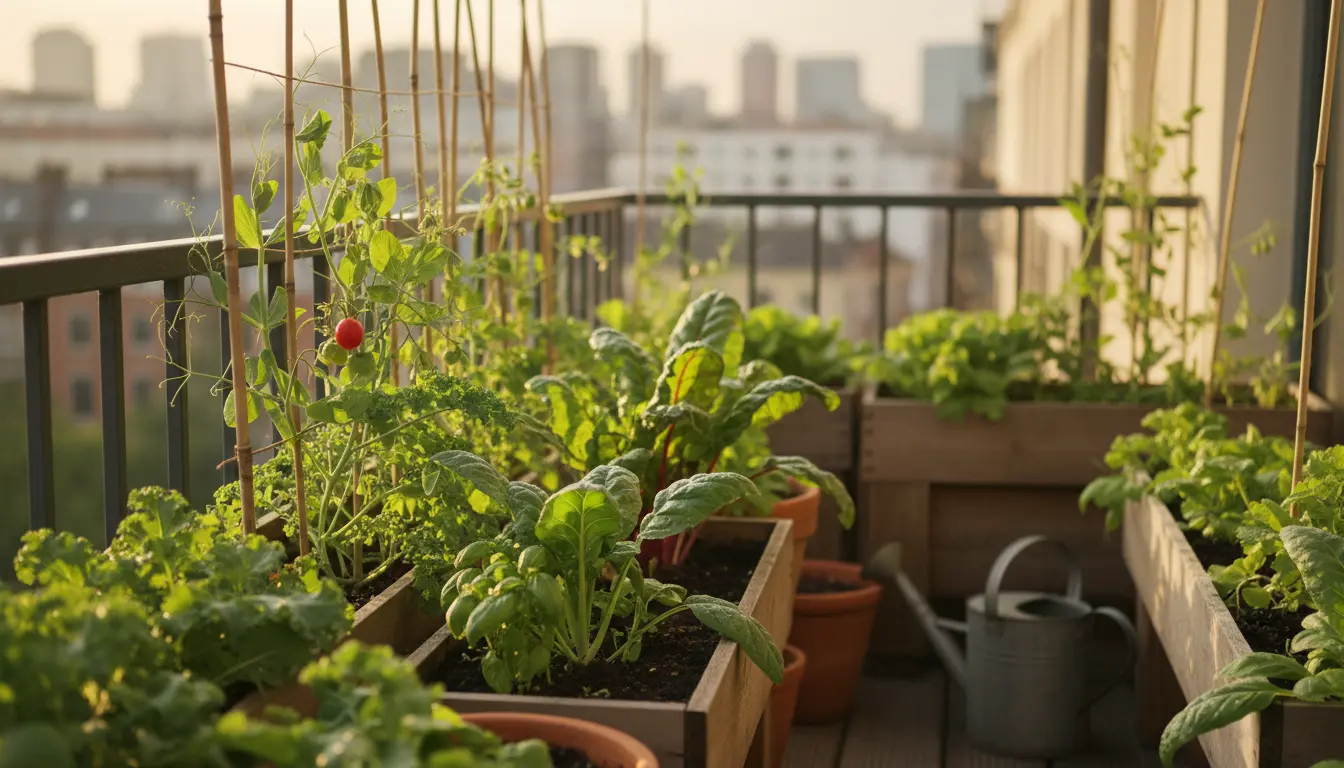
Case study: Rosa, an apartment resident, converted a 6-foot balcony into a productive garden. She used three 12-inch containers and a 4×2 foot raised bed.
Rosa planted basil, cherry tomatoes, leaf lettuce, and radishes. With weekly watering and compost teas, she harvested fresh salads throughout summer and cut grocery trips in half.
Quick Checklist to Start Your Small Vegetable Garden
- Choose a sunny spot and measure available space.
- Decide on containers, raised beds, or a small in-ground plot.
- Improve or buy good soil and add compost.
- Select compact varieties and plan succession planting.
- Set up watering routine and add mulch.
- Monitor for pests and practice organic control methods.
Final Tips for Success with a Small Vegetable Garden
Start small and expand gradually. A manageable garden is more likely to be maintained and enjoyed.
Keep a simple journal: note planting dates, harvests, and any pest or disease issues. This record helps improve yields season to season.
With modest time and basic care, a small vegetable garden can supply fresh produce and teach valuable gardening skills. Begin with a few easy crops and build confidence each season.