
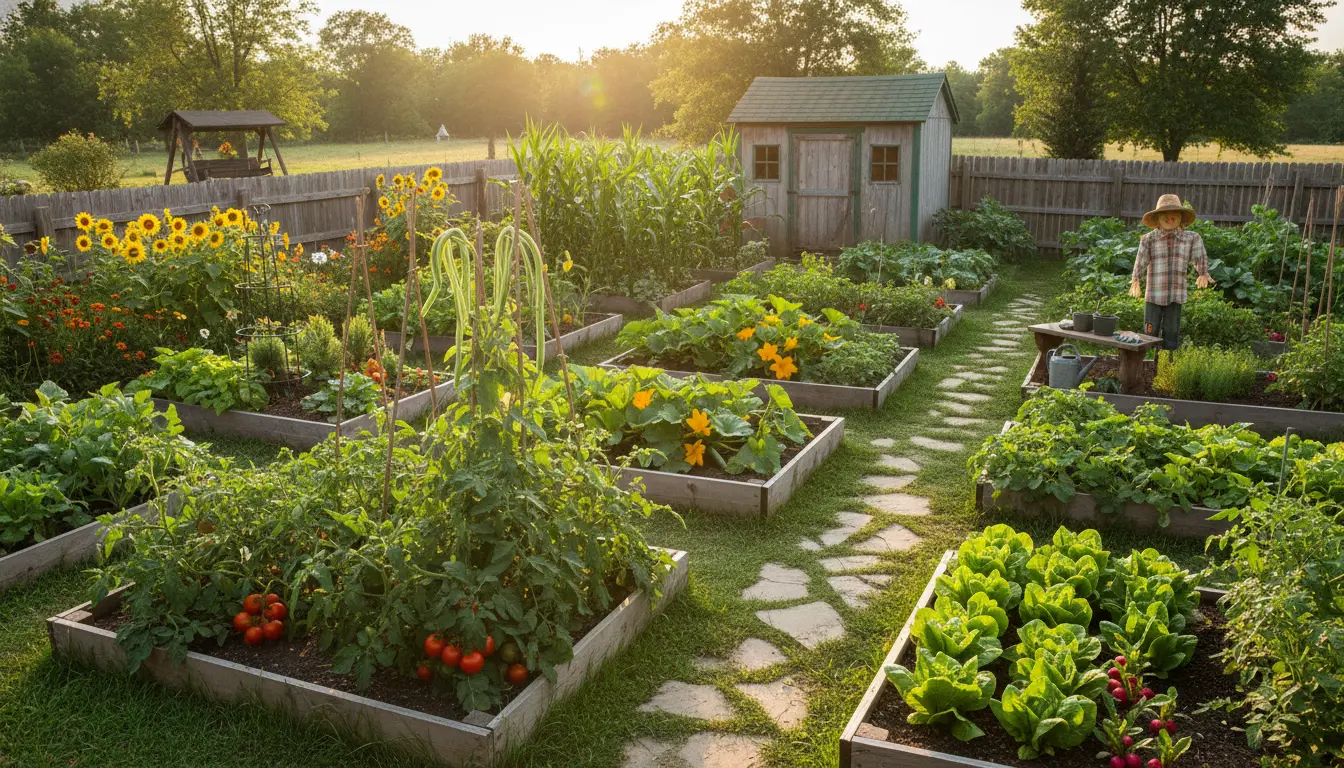
Starting a vegetable garden at home is a practical way to eat fresher food, save money, and enjoy outdoor activity. This guide gives clear steps for beginners so you can plan and maintain a productive garden with minimal stress.
Why Start a Vegetable Garden
A home vegetable garden gives control over what you grow and how it is grown. It reduces the need for store-bought produce and can improve your diet and well-being.
Gardening also teaches seasonal planning and simple ecosystem care. These skills help you get more reliable yields from small spaces.
How to Start a Vegetable Garden: Step-by-Step
Follow these practical steps to start a vegetable garden with confidence. Each step is brief so you can get started quickly.
1. Choose the Right Location
Select a spot that gets at least six hours of sunlight daily for most vegetables. If full sun is limited, choose leafy greens and herbs that tolerate partial shade.
Ensure good drainage and easy access to water. Consider proximity to your kitchen for frequent harvesting.
2. Decide Between Beds, Containers, or Rows
Raised beds and containers work well in small yards and patios. In-ground rows are fine if you have ample space and good soil.
Raised beds warm faster in spring and reduce compaction. Containers offer mobility and control over soil mix.
3. Test and Improve Your Soil
Healthy soil is the base of a successful garden. Test pH if possible, and add compost to boost structure and nutrients.
A simple mix for raised beds: two parts topsoil, one part compost, one part coarse sand or perlite for drainage.
4. Choose Easy Vegetables to Start
Begin with low-maintenance, high-reward crops. Good choices include:
- Tomatoes (staked or caged)
- Lettuce and spinach
- Radishes and carrots
- Peppers and bush beans
- Herbs like basil, parsley, and chives
Planting a mix of quick growers and longer-season crops helps continuous harvests.
5. Planting and Spacing
Follow seed packet or plant tag spacing recommendations to avoid overcrowding. Crowded plants compete for water and light.
Use succession planting: sow small-seeded crops every two to three weeks for steady supply.
6. Watering and Feeding
Water deeply and less often to encourage strong root growth. Aim for an inch of water per week, more in hot weather.
Mulch around plants to retain moisture and suppress weeds. Apply a balanced organic fertilizer at planting and midseason as needed.
7. Pest and Disease Basics
Inspect plants weekly for pests and symptoms of disease. Hand-pick large pests like caterpillars and slugs.
Use row covers for seedlings and practice crop rotation to reduce pest pressure. Remove diseased foliage promptly to limit spread.
8. Harvesting and Storage
Harvest vegetables at peak ripeness for best flavor. Many crops taste better when picked steadily, like beans and zucchinis.
Store produce properly: cool leafy greens, ripen tomatoes on the counter, and refrigerate harvested herbs in damp paper towel sacks.
Quick Tools and Supplies Checklist
- Gloves, hand trowel, and pruners
- Raised bed boards or containers (if needed)
- Quality compost and balanced fertilizer
- Mulch (straw or wood chips)
- Watering can or hose with nozzle
- Stakes, cages, or trellises for support
Common Mistakes When You Start a Vegetable Garden
Avoid these beginner errors: planting too many varieties at once, overwatering, and ignoring soil health. Small, steady improvements yield the best long-term results.
Start with a manageable area and expand after your first season. This reduces overwhelm and builds practical skills.
Growing your own vegetables can increase the variety of produce you eat and reduce grocery trips. Even a single raised bed can provide weekly salads through the growing season.
Simple Case Study: A Small Urban Garden
Maria, a homeowner in a city, used a 4-by-8-foot raised bed on her sunny balcony. She filled it with a compost-rich mix and planted tomatoes, basil, lettuce, and bush beans.
She watered deeply twice a week and mulched to hold moisture. After two months, she harvested daily salad greens and weekly beans, reducing store-bought greens by half.
Her key lessons: start small, focus on a few crops, and keep a short weekly checklist for watering and pest checks.
Maintenance Routine for Ongoing Success
Keep a short weekly routine: check moisture, remove weeds, harvest ripe produce, and inspect plants for pests. This small habit prevents larger problems.
At season end, add a layer of compost and cover crop or mulch to protect soil for next year.
Final Tips to Start a Vegetable Garden
- Plan crops by sun exposure and seasonality.
- Keep records: planting dates, varieties, and issues observed.
- Learn from one season and adjust—gardening improves with practice.
Starting a vegetable garden is a step-by-step process that rewards patience and simple care. With the right location, soil, and plant choices, beginners can enjoy fresh produce and steady improvement each year.