
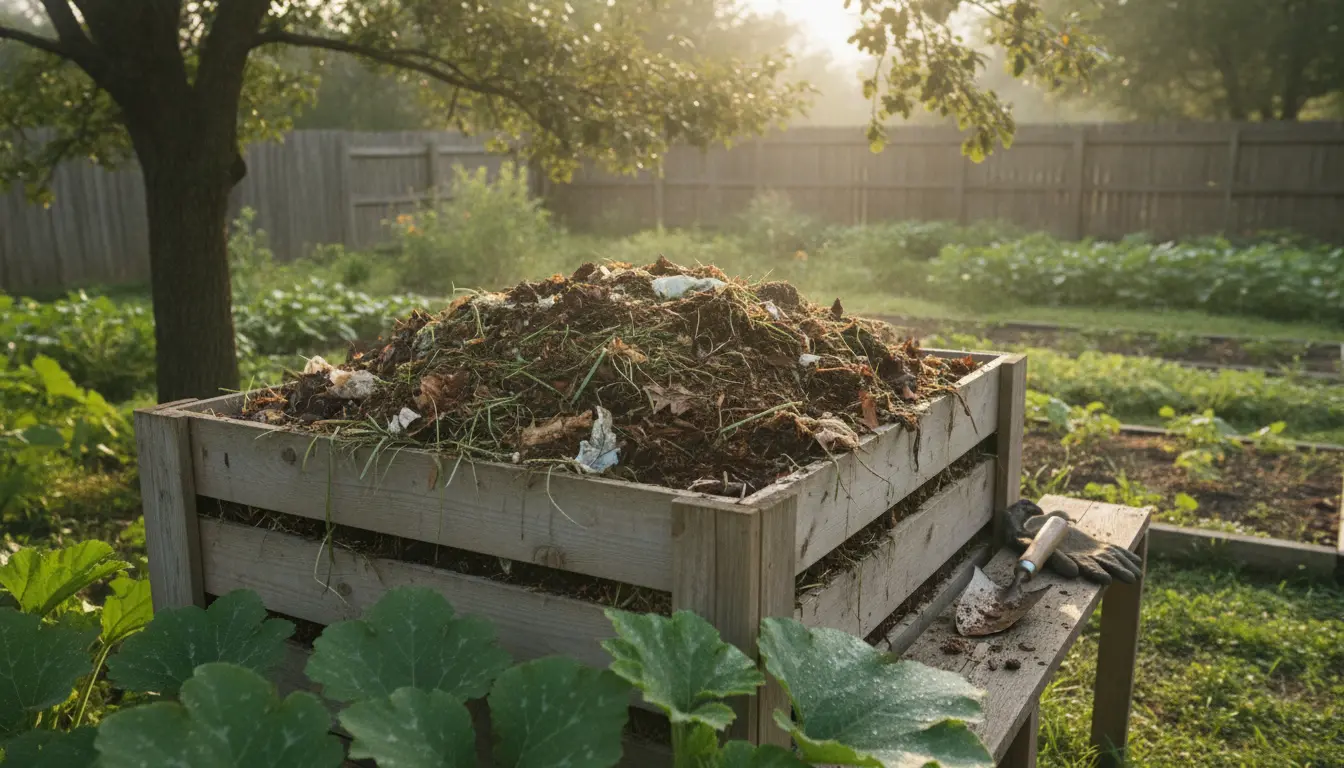
Why a Backyard Compost Bin Matters
Building a backyard compost bin turns kitchen scraps and yard waste into useful soil amendment. Compost reduces landfill waste and improves soil structure for healthier plants.
This guide walks through materials, construction, maintenance, and troubleshooting so you can start composting with confidence.
Materials for a Simple Backyard Compost Bin
Choose a bin design that fits your space and budget. Common options include a wooden pallet bin, plastic tumblers, or a DIY wire or cinder block enclosure.
- Wood pallets or treated lumber for a frame
- Wire mesh or hardware cloth for airflow
- A lid or cover to reduce rain saturation and pests
- Optional: a compost thermometer and garden fork
Step-by-Step: How to Build a Backyard Compost Bin
Pick a level spot with some shade and good drainage. Place the bin directly on soil to allow beneficial organisms and worms to enter.
1. Build the Base and Walls
Use pallets, lumber, or cinder blocks to create a 3-sided or 4-sided enclosure. Allow gaps for airflow of roughly 1/4 to 1/2 inch if using boards.
Keep the bin about 3 feet wide and 3 feet high if possible. This size retains heat and is manageable to turn.
2. Add a Lid and Access
Install a removable front panel or hinged lid for easy access when turning or harvesting compost. A lid helps control moisture and keeps animals out.
3. Prepare for Drainage and Airflow
Place coarse twigs or straw at the bottom if your area gets heavy rain. Good airflow prevents odor and supports aerobic decomposition.
What to Put in a Backyard Compost Bin
Balance carbon-rich “browns” with nitrogen-rich “greens” for efficient composting. Aim for a mix rather than only one type.
- Greens: vegetable scraps, coffee grounds, fresh grass clippings
- Browns: dry leaves, shredded paper, straw, cardboard
- Avoid: meat, dairy, diseased plants, and pet waste
Managing Your Backyard Compost Bin
Maintain moisture like a wrung-out sponge—damp but not soggy. Too dry slows decomposition; too wet creates anaerobic conditions and odor.
Turn the pile every 1–2 weeks to add oxygen and speed up breakdown. Use a garden fork to mix outer and inner layers.
Temperature and Timelines
A well-managed compost pile reaches 120–160°F (50–70°C) in the center. High temperatures kill weed seeds and pathogens.
Cold composting (no turning) can take 6–12 months. Active composting with turning can finish in 2–4 months.
Troubleshooting Common Backyard Compost Bin Problems
If the pile smells like ammonia, it likely has too many greens. Add browns and turn to reintroduce air.
If the pile is cold and slow, add moisture, greens, and turn to increase microbial activity. Consider insulating in cold climates.
- Problem: Fruit flies — Cover fresh food scraps with a layer of browns and add a lid.
- Problem: Pests — Avoid meat and dairy; secure lids and use wire mesh if necessary.
- Problem: Wet and slimy — Add dry leaves or straw and turn the pile.
Harvesting Compost from a Backyard Compost Bin
Finished compost is dark, crumbly, and smells earthy. Harvest from the bottom and use it as a soil amendment or mulch.
Screen compost if you need a fine texture for potting mixes or seed starting. Use larger bits back in the bin to keep the pile active.
One ton of food waste diverted from landfill to compost can save roughly 0.75 to 1 metric ton of CO2 equivalent emissions. Composting reduces methane from landfills and returns carbon to the soil.
Small Case Study: Suburban Vegetable Garden Success
Emily, a suburban homeowner, built a simple three-pallet bin in spring. She added kitchen scraps and leaves at a 1:2 green-to-brown ratio and turned the pile every two weeks.
By fall, she had 150 liters of finished compost. Her raised bed tomatoes showed fuller foliage and 20% higher yield the next season compared with store-bought soil alone.
Practical Tips and Checklist for a Backyard Compost Bin
Keep these practical tips handy when starting or maintaining your bin. They help prevent common mistakes and speed composting.
- Location: Level ground, partial shade, easy access to the kitchen and garden.
- Size: Aim for at least 3x3x3 feet for efficient heat retention.
- Balance: Mix greens and browns and layer, don’t just pile one type.
- Moisture: Maintain dampness similar to a wrung-out sponge.
- Turn regularly to keep the process aerobic and odor-free.
Final Notes on Backyard Compost Bin Care
Backyard composting is low-cost and environmentally beneficial. With basic materials and consistent simple maintenance, most households can produce compostable soil in months.
Start small, observe the pile, and adjust the mix and moisture. Over time, you’ll develop the rhythm that works for your climate and waste stream.