
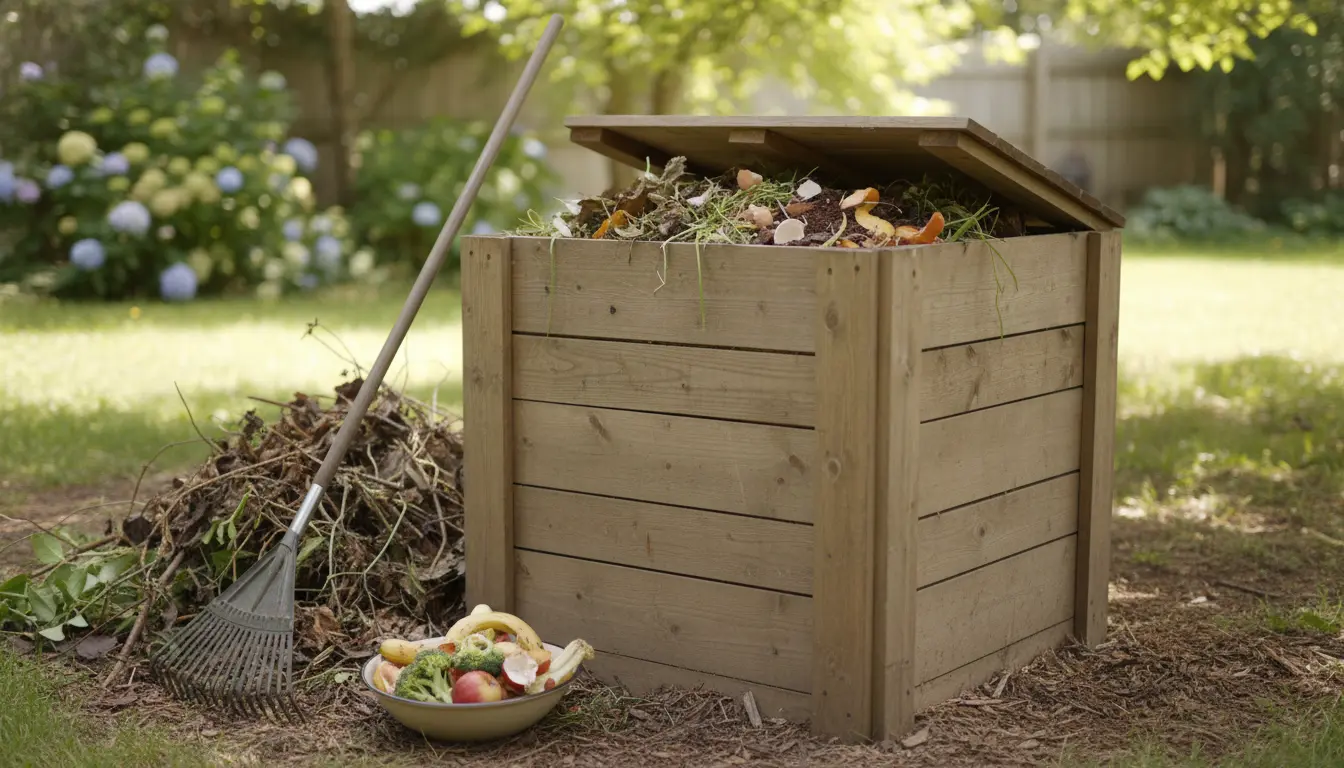
Why Home Composting Matters
Home composting turns food scraps and yard waste into a nutrient-rich soil amendment. It reduces household waste, lowers landfill methane, and improves garden health.
This guide explains practical steps for home composting for beginners, lists what to compost, and offers troubleshooting tips for common problems.
Basic Principles of Home Composting
Composting is a controlled biological process where microorganisms break down organic material. The key factors are carbon, nitrogen, moisture, air, and time.
Balancing these elements creates heat and accelerates decomposition, producing usable compost in weeks to months.
Carbon and Nitrogen Balance
Carbon-rich materials are called ‘browns’ and include dried leaves, straw, and paper. Nitrogen-rich materials are ‘greens’ like vegetable scraps and fresh grass clippings.
A common rule is roughly 3 parts browns to 1 part greens by volume, but slight adjustments are fine based on moisture and odor.
Moisture and Aeration
Compost should be as damp as a wrung-out sponge. Too dry slows decomposition; too wet creates bad odors.
Turn the pile every 1–2 weeks to add oxygen and speed up the process. For small bins, using a tumbler makes turning easier.
Step by Step: How to Start Home Composting
Follow these simple steps to set up a beginner-friendly compost system at home.
- Choose a container: bin, tumbler, or simple pile. Bins keep pests away and look tidy.
- Select a location: part shade, on soil or grass for drainage and organism access.
- Layer materials: start with coarse browns for airflow, then alternate greens and browns.
- Keep it moist: check weekly and add water or dry material as needed.
- Turn the pile: every 1–2 weeks to add oxygen and speed up breakdown.
- Harvest finished compost: when dark and crumbly, screen and use in garden beds.
Tools and Supplies
You only need a few items to begin home composting for beginners:
- Compost bin or tumbler
- Pitchfork or compost turner
- Kitchen scrap container with a lid
- Optional: compost thermometer and screen
What to Compost and What to Avoid
Knowing what to add helps prevent pests and odors. Keep a simple list near your kitchen bin to guide sorting.
Safe Compost Materials
- Vegetable and fruit scraps
- Coffee grounds and tea bags (remove staples)
- Crushed eggshells
- Yard waste: leaves, grass clippings, small twigs
- Shredded paper, cardboard (non-glossy)
Materials to Avoid
- Meat, fish, dairy, and oily foods (attract pests)
- Diseased plants or invasive weeds that may survive composting
- Pet waste from carnivores
- Large wood pieces that take too long to break down
Home composting can divert up to 30% of your household waste from the trash. A single household can produce several cubic feet of usable compost each year.
Troubleshooting Common Problems
Beginners often run into a few predictable issues. Here are quick fixes for common compost problems.
- Bad smells: Add more browns, turn the pile, and improve drainage.
- Slow decomposition: Chop materials smaller, add nitrogen-rich greens, and keep moisture steady.
- Pests: Avoid adding meat or dairy. Use a closed bin and bury food scraps in the pile.
- Pile too wet: Mix in dry browns and add air by turning.
Small Real-World Example: A Beginner Case Study
Emma, a new gardener in Austin, started a 60-liter tumbling composter on her apartment balcony. She collected kitchen scraps in a small sealed bucket and emptied it twice a week into the tumbler.
She balanced greens like vegetable peels with shredded cardboard and dried leaves from her balcony plants. By turning the tumbler every 5–7 days and keeping it moist, she had dark crumbly compost in about four months.
Emma used the compost to top up two container vegetable pots and reported healthier tomatoes and less need for store-bought fertilizer.
Using Finished Compost
Finished compost is dark, crumbly, and smells earthy. It can be used as a soil amendment or mulch.
- Work compost into garden beds at a rate of 1–2 inches for vegetables and flowers.
- Mix with potting soil for container plants to improve water retention and nutrients.
- Use as a top dressing around trees and shrubs, avoiding direct trunk contact.
Final Tips for Home Composting for Beginners
Start small, stay consistent, and adjust based on what you observe. Composting is forgiving and improves with practice.
Keep a simple log for the first few months: what you added, how often you turned the pile, and any issues. That record helps you learn quickly and get reliable results.
With minimal equipment and a little attention to balance, home composting for beginners can cut waste and produce valuable compost for healthier plants.