
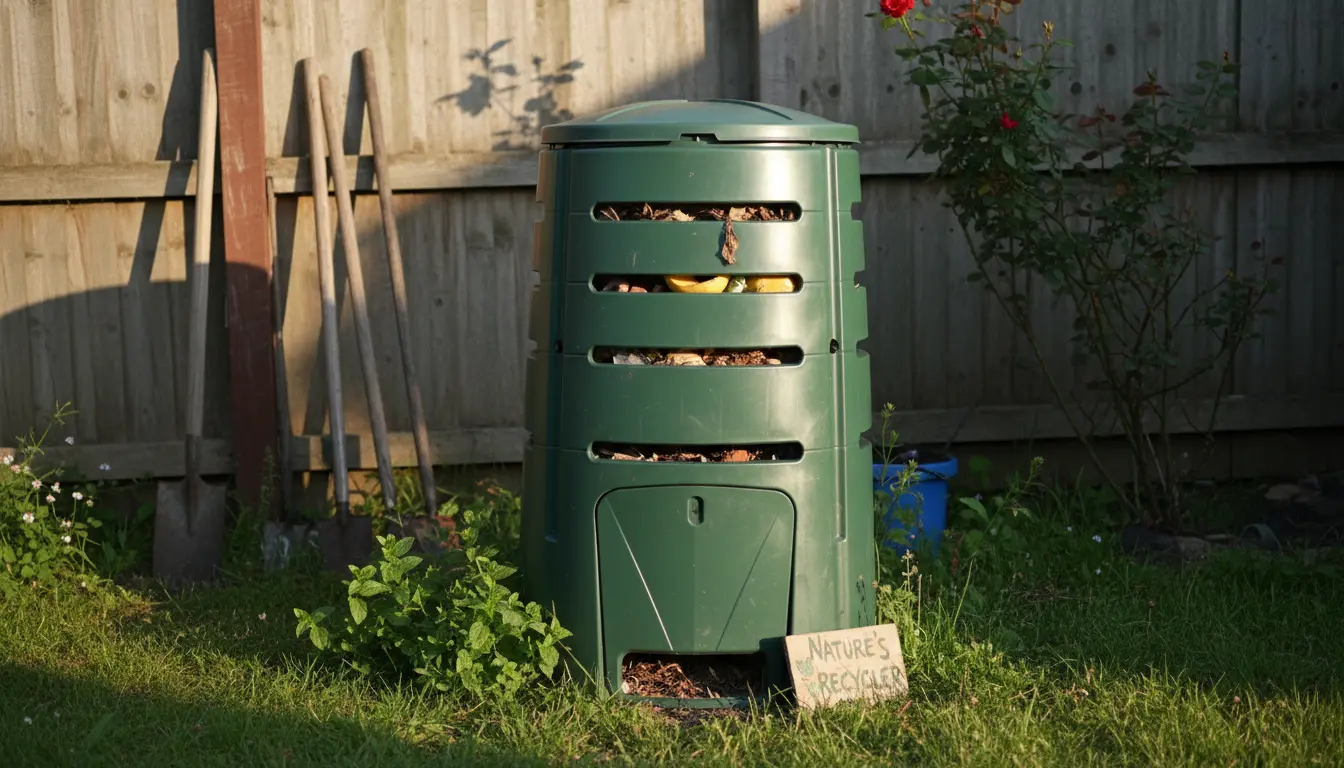
Why Home Composting Matters
Home composting turns kitchen and yard waste into a useful soil amendment. It reduces landfill waste and returns nutrients to garden soil.
This guide explains simple, practical steps to start composting at home, with tips on what to compost, how to manage a pile, and common problems to avoid.
Choosing a Method for Home Composting
Select a composting method that fits your space and time. Common options include a backyard pile, a bin, or a tumbler for faster mixing.
For small spaces, consider worm composting (vermicomposting) which works well indoors or on a balcony.
Backyard Bin or Pile
A bin or open pile is the least expensive choice. It needs room, occasional turning, and simple layering of materials.
Bins help contain material and keep animals away, while an open pile can be easier to build and maintain if space allows.
Tumbler and Worm Bins
Tumblers speed up decomposition by making turning easy. They are good for households that want faster compost with less effort.
Worm bins use red wigglers to break down food scraps. They produce rich worm castings and are ideal for apartment dwellers.
What to Compost: Materials and Ratios
Effective home composting balances carbon-rich “browns” and nitrogen-rich “greens.” Aim for a rough 3:1 ratio by volume of browns to greens.
- Greens (nitrogen): vegetable scraps, coffee grounds, fresh grass clippings.
- Browns (carbon): dry leaves, shredded paper, straw, cardboard.
- Avoid: meat, dairy, oils, diseased plants, and pet waste to prevent odors and pests.
Chop or shred larger items to speed decomposition and keep layers thin for better aeration.
How to Build and Maintain a Compost Pile
Start with a 6–12 inch layer of coarse browns to improve airflow at the base. Add alternating layers of greens and browns, keeping materials moist but not soggy.
Turn or mix the pile every 1–2 weeks to introduce oxygen. Temperature will rise in an active pile; aim for a warm, earthy smell rather than a foul odor.
Monitoring Moisture and Temperature
Check moisture by grabbing a handful—material should feel like a wrung-out sponge. Water lightly if dry and add dry browns if too wet.
Compost temperature between 120–150°F (50–65°C) indicates active decomposition. Smaller home piles may be cooler but still effective over time.
Troubleshooting Common Problems in Home Composting
If your pile smells bad, it is probably too wet or lacking oxygen. Turn the pile and add dry brown material to restore balance.
Pests often mean food scraps like meat or too much fruit were added, or the bin is not sealed. Remove offending items and cover fresh scraps with brown material.
Slow Decomposition
Slow breakdown can result from too much browns, large pieces, or low moisture. Chop materials smaller, add greens, and maintain moisture and turning.
Using Finished Compost
Compost is ready when it is dark, crumbly, and smells like soil. Use it as a soil amendment, top dressing, or mix into potting soil at up to 20% by volume.
Apply compost around vegetables, shrubs, and garden beds to improve structure, water retention, and nutrient availability.
Simple Tools and Supplies for Home Composting
- Compost bin or tumbler (or a simple wire enclosure).
- Pitchfork or compost turner for mixing.
- Kitchen caddy for collecting scraps (with a tight lid).
- Shredder or scissors for breaking down materials.
Real-World Example: A Small Household Case Study
Case: A two-person household began home composting in a 100-liter tumbler. They separated scraps into a kitchen caddy and added them to the tumbler twice a week.
After six months they filled the tumbler twice and used the finished compost to top-dress potted tomatoes. Food waste to landfill dropped noticeably and plant health improved.
Quick Start Checklist for Home Composting
- Choose a method: bin, tumbler, or worm bin.
- Collect kitchen scraps in a sealed caddy.
- Layer greens and browns; chop large pieces.
- Keep moisture like a wrung-out sponge; turn every 1–2 weeks.
- Watch for odors and pests; adjust balance as needed.
Final Tips for Successful Home Composting
Start small and adjust based on results. Composting is flexible: even cooler, slower systems will produce good material over time.
Record simple observations—what you add, how often you turn, and moisture—to learn what works best for your household and climate.
Home composting is a practical way to reduce waste, improve soil, and connect with natural cycles. With basic tools and regular attention, most households can produce useful compost within months.