
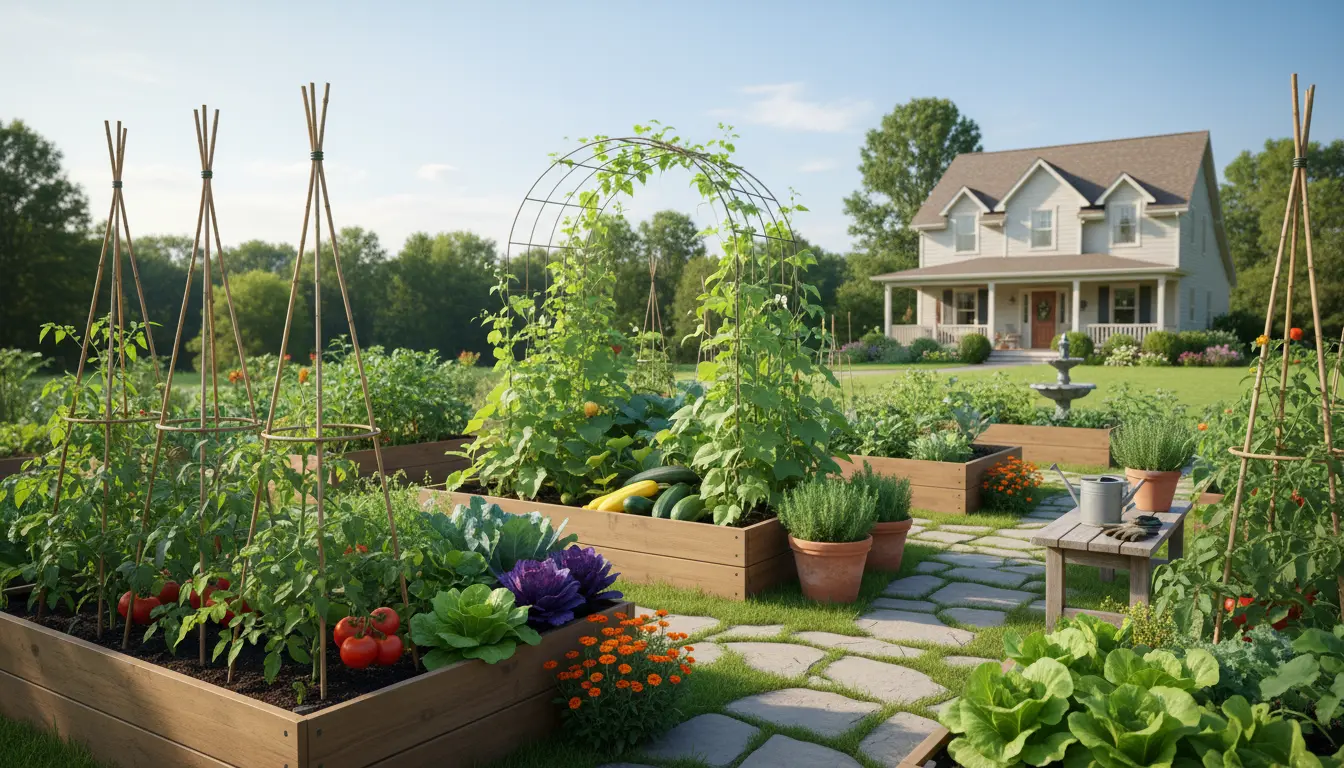
Why Start a Home Vegetable Garden
Starting a home vegetable garden saves money, improves food quality, and reduces food miles. It is also a hands-on way to learn plant care and seasonal planning.
This guide gives clear, practical steps to set up a successful home vegetable garden with minimal tools and space.
Choose a Site for Your Home Vegetable Garden
Pick a location that gets 6–8 hours of direct sunlight daily for most vegetables. Observe the site across a full day to check light patterns.
Ensure good drainage and easy access to water. If ground space is limited, consider raised beds or containers.
Sunlight and Wind Considerations
Most vegetables need full sun; leafy greens tolerate partial shade. Protect your garden from strong winds with a fence or hedging when possible.
Prepare Soil for a Home Vegetable Garden
Healthy soil is the foundation of a productive garden. Aim for loose, well-draining soil rich in organic matter.
Test the soil pH; most vegetables prefer pH 6.0–7.0. Amend clay or sandy soils with compost to improve texture and fertility.
- Work 2–4 inches of compost into the top 6–8 inches of soil.
- Use a balanced organic fertilizer if a soil test shows nutrient deficiencies.
- Consider raised beds to control soil quality and improve drainage.
Plan What to Plant in a Home Vegetable Garden
Choose vegetables suited to your climate, season, and personal preferences. Start with easy, high-yield crops for beginners.
Good Beginner Vegetables
- Tomatoes — high reward when properly staked and watered.
- Lettuce and spinach — quick-growing and tolerant of partial shade.
- Radishes and carrots — good for narrow beds and containers.
- Zucchini and bush beans — productive and low maintenance.
Planting and Spacing in a Home Vegetable Garden
Follow seed packet or plant tag spacing to avoid overcrowding. Proper spacing reduces disease risk and improves airflow.
Stagger plantings (succession planting) for a continuous harvest rather than one large harvest.
Watering and Mulching Tips
Water deeply and less frequently to encourage strong root growth. Aim for 1–1.5 inches of water per week, adjusting for rainfall.
Apply 2–3 inches of organic mulch to retain moisture, suppress weeds, and moderate soil temperature.
Pest and Disease Management for Your Home Vegetable Garden
Use integrated pest management (IPM) strategies: prevention, monitoring, and targeted control.
- Inspect plants weekly for pests or disease symptoms.
- Encourage beneficial insects with flowering companion plants.
- Use physical barriers (row covers) or handpick pests when possible.
Organic Control Options
Neem oil, insecticidal soaps, and diatomaceous earth can control many pests with minimal environmental impact. Always follow label directions.
Maintenance Schedule for a Home Vegetable Garden
Consistent, small tasks keep the garden productive. Spend 15–30 minutes daily or a few hours weekly on weeding, harvesting, and inspection.
- Weekly: Check watering, remove weeds, inspect for pests.
- Biweekly: Add compost tea or light fertilizer if growth is slow.
- Monthly: Prune and stake taller plants like tomatoes and peppers.
Plants like marigolds and nasturtiums can repel certain pests and act as trap crops, protecting vegetables naturally.
Harvesting and Storage from a Home Vegetable Garden
Harvest vegetables at peak ripeness for best flavor and nutrient content. Check each plant daily during peak season.
Use proper storage: leafy greens in cool, moist conditions and root crops in a cool, dark place to extend freshness.
Small Real-World Case Study: One Balcony, Two Raised Boxes
María, an apartment resident, started a home vegetable garden on a small balcony using two 4×2 ft raised boxes. She chose cherry tomatoes, basil, lettuce, and bush beans.
Within three months she harvested salad greens twice weekly and enough tomatoes for weekly sauces. She credits regular watering, a morning-sun location, and adding compost every six weeks for success.
Common Mistakes to Avoid in a Home Vegetable Garden
- Overwatering young plants — can cause root rot.
- Planting too densely — increases disease risk and reduces yields.
- Ignoring pH and fertility — leads to slow growth even with effort.
Quick Start Checklist for a Home Vegetable Garden
- Choose a sunny site or container location.
- Test and amend the soil with compost.
- Select easy vegetables for your season and climate.
- Plant with correct spacing and water deeply.
- Mulch, monitor pests, and harvest regularly.
With simple planning and weekly care, a home vegetable garden becomes a reliable source of fresh produce and a rewarding hobby. Start small, learn from one season, and expand based on what performed well in your space.