
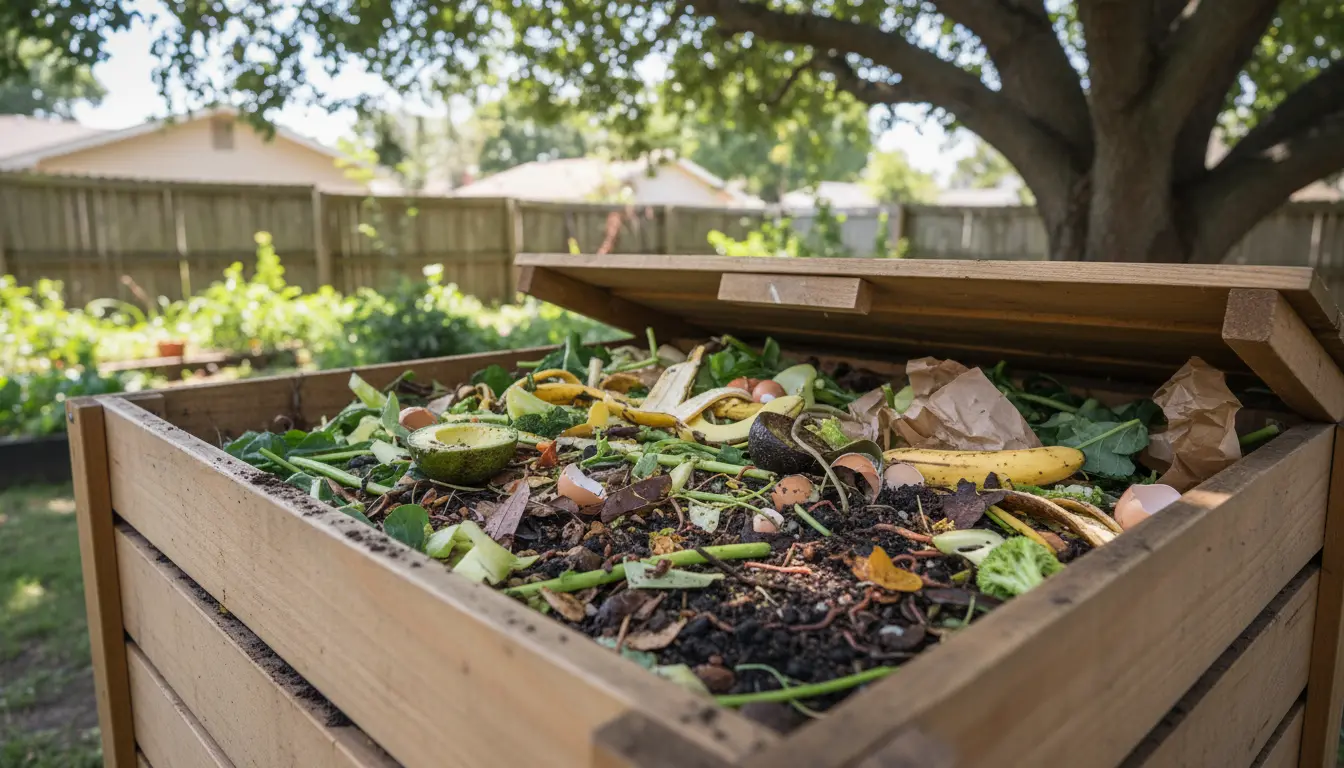
Start Home Composting Today
Composting at home is a straightforward way to recycle kitchen and yard waste into nutrient-rich soil. This guide covers the basics of setting up, maintaining, and troubleshooting a compost bin.
Why Home Composting Matters
Composting reduces landfill waste and cuts methane emissions. It also creates a free soil amendment to improve garden health and plant growth.
Food scraps and yard trimmings make up nearly 30% of household waste. Composting can redirect most of this material away from landfills.
Choosing a Compost Bin
Pick a bin that fits your space, budget, and composting goals. Common options include tumblers, stationary bins, and open piles.
Bin Types and When to Use Them
- Tumbler: Faster mixing, less physical turning, good for small gardens.
- Stationary plastic bin: Affordable, retains heat well, needs periodic aeration.
- Open pile: Low cost, good for large yards, but slower and less tidy.
What to Compost: Greens and Browns
Successful compost relies on a balance of nitrogen-rich “greens” and carbon-rich “browns.” Aim for a mix rather than one type only.
Examples of Greens and Browns
- Greens (nitrogen): Fruit and vegetable scraps, coffee grounds, fresh grass clippings.
- Browns (carbon): Dry leaves, shredded paper, straw, cardboard.
As a rule of thumb, aim for roughly 2–3 parts browns to 1 part greens by volume. Adjust if the pile is too wet or composting slowly.
How to Build and Maintain a Compost Pile
Start with a layer of coarse material to improve drainage. Alternate green and brown layers, and keep the pile moist like a wrung-out sponge.
Weekly and Monthly Tasks
- Weekly: Turn or tumble the pile to add oxygen and speed decomposition.
- Monthly: Check moisture and temperature. Add water if dry and browns if too wet.
- Ongoing: Chop or shred larger pieces to accelerate breakdown.
Troubleshooting Common Problems
Simple fixes often solve common compost issues. Identifying the symptom is the first step.
Smelly Compost
Cause: Too much green material or poor aeration. Fix: Add dry browns, turn the pile, and increase airflow.
Pile Too Dry or Slow
Cause: Not enough moisture or small surface area. Fix: Water the pile lightly and add fresh greens or smaller pieces to increase contact area.
Pests and Fruit Flies
Cause: Exposed food scraps. Fix: Bury food under browns, use a closed bin, or add a layer of finished compost or soil on top.
How to Tell When Compost Is Ready
Finished compost is dark, crumbly, and earthy-smelling. It should no longer resemble the original materials and will be cool to the touch.
Uses for Finished Compost
- Mix into garden beds to boost soil structure and nutrition.
- Top-dress lawns for gentle feeding.
- Use as potting mix component for container plants.
Small Real-World Example
Case study: A two-person household in a suburban yard started a 200L tumbler bin. They added kitchen scraps plus yard leaves at a 1:2 ratio. By turning twice a week and keeping it moist, they produced usable compost in four months.
Result: They reduced weekly trash by one small bag and used the compost to enrich two raised beds, which showed fuller, healthier tomato plants the next season.
Quick Checklist to Start Composting
- Choose a bin style that fits your space.
- Collect greens and browns separately to maintain balance.
- Layer materials and keep the pile moist but not soggy.
- Turn the pile regularly for oxygen and faster breakdown.
- Monitor for pests, smells, or dryness and adjust accordingly.
Final Tips for Success
Be patient—composting is a natural process that varies by climate and materials. Small adjustments to moisture, size, and turning frequency will improve results.
Start small and scale up as you learn what works in your yard. Consistent, simple care delivers the best compost over time.