
Home Composting Basics
Home composting turns kitchen scraps and yard waste into nutrient-rich soil. This guide gives step-by-step, practical instructions so beginners can start a small, effective compost system.
Why Choose Home Composting
Composting reduces landfill waste and improves garden soil structure. It also saves money on fertilizer and supports healthy plant growth.
How Home Composting Works
Composting is a controlled decomposition process driven by microorganisms. These microbes need the right mix of carbon, nitrogen, oxygen, and moisture to break down organic matter into humus.
Key Ingredients and Ratios
Balance is important: combine brown (carbon) and green (nitrogen) materials. Aim for a rough carbon-to-nitrogen ratio of about 25–30:1 for steady decomposition.
- Brown materials: dry leaves, cardboard, straw, shredded paper.
- Green materials: vegetable scraps, fresh grass clippings, coffee grounds.
- Water and air: keep the pile damp like a wrung-out sponge and turn it occasionally for oxygen.
Setting Up a Home Compost Bin
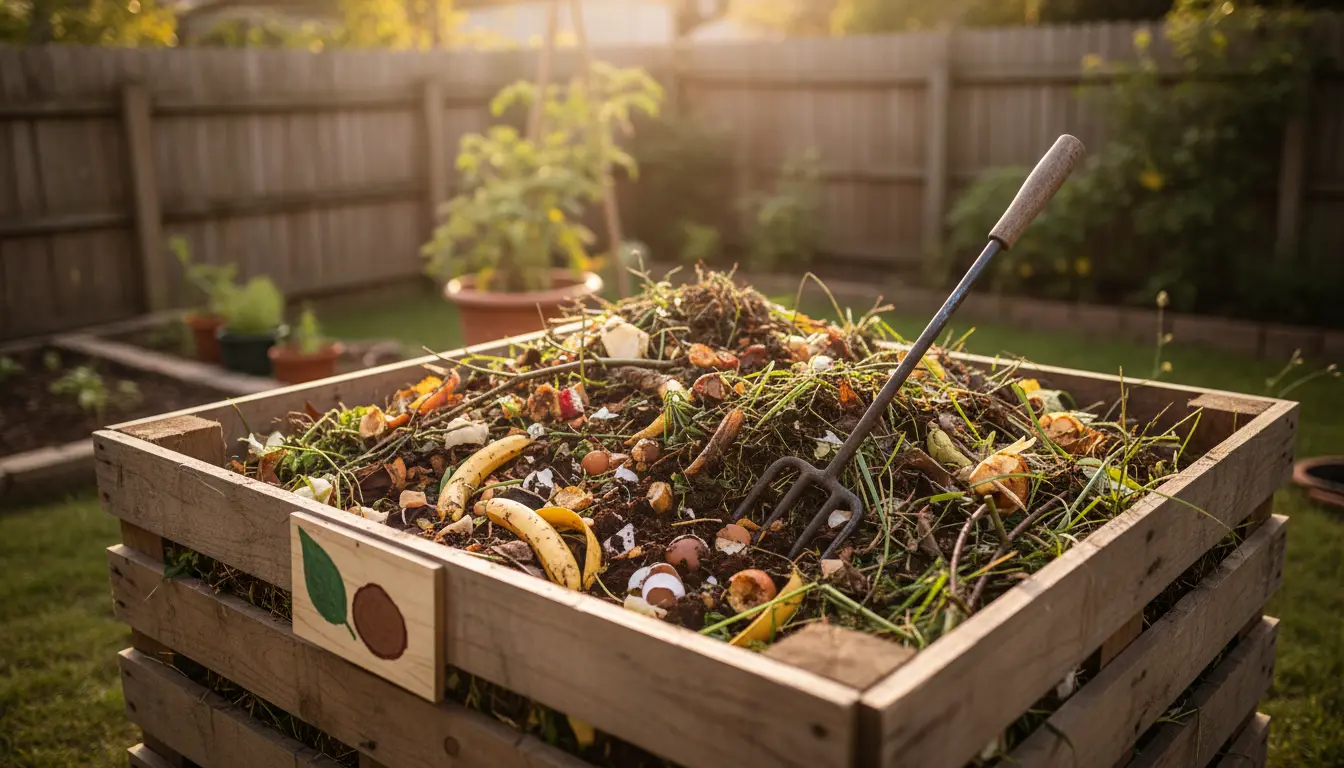
Choose a bin size that fits your yard and weekly waste. You can use a simple bin, tumbler, or a DIY wooden pallet enclosure.
Step-by-Step Setup
Start by placing the bin on bare soil to allow worms and microbes to enter. Layer materials and maintain the right moisture and aeration.
- Place a 4–6 inch base of coarse brown material for airflow.
- Add alternating layers of green and brown materials, keeping layers thin to speed decomposition.
- Keep the pile moist; add water if it dries out or cover to prevent over-saturation from heavy rain.
- Turn the pile every 1–2 weeks to add oxygen and speed breakdown.
What You Can and Cannot Compost
Knowing what to include prevents odors and pests. Most plant-based kitchen waste is safe, while some items should be avoided.
- Compostable: fruit and vegetable scraps, coffee grounds, eggshells, yard trimmings.
- Avoid: meat, dairy, oily foods, diseased plants, pet waste, and invasive weeds.
Troubleshooting Common Compost Problems
Small issues are normal and fixable. Address problems quickly to maintain a healthy pile.
Odor, Pests, and Slow Breakdown
- Bad smell: add more brown material and turn the pile to increase oxygen.
- Pests: avoid meat and bury food scraps; use a closed bin if persistent.
- Slow decomposition: chop materials into smaller pieces and check moisture and temperature.
Using Finished Compost
Finished compost looks dark, crumbly, and earthy-smelling. Use it to top-dress garden beds, mix into potting soil, or as a slow-release amendment around shrubs and trees.
Application Tips
- Vegetable gardens: mix 1–2 inches into the top 6–8 inches of soil before planting.
- Lawns: spread a thin layer (¼–½ inch) and rake it in to improve soil biology.
- Potted plants: mix 10–30% compost into potting mixes to improve moisture retention and nutrients.
Small Real-World Example
Case Study: Jane in Portland started a 3-foot compost bin in her small yard. She added kitchen scraps and yard clippings, turning the pile every two weeks.
After four months she had about 30 liters of finished compost. She used it to improve two raised beds and noticed stronger growth in her tomatoes and herbs the next season.
Simple Maintenance Routine
Consistency is more important than perfection. Follow a basic routine to keep compost active and healthy.
- Add kitchen scraps and yard waste as available.
- Layer browns and greens, keep moisture steady, and turn the pile regularly.
- Monitor for pests or odors and adjust materials as needed.
Final Tips for Composting for Beginners
Start small and learn by doing; mistakes are part of the process. Use a kitchen caddy for scraps and empty it into the pile daily to keep momentum.
Composting is a practical way to reduce waste and feed your garden. With basic tools and a little attention, anyone can succeed at home composting.