
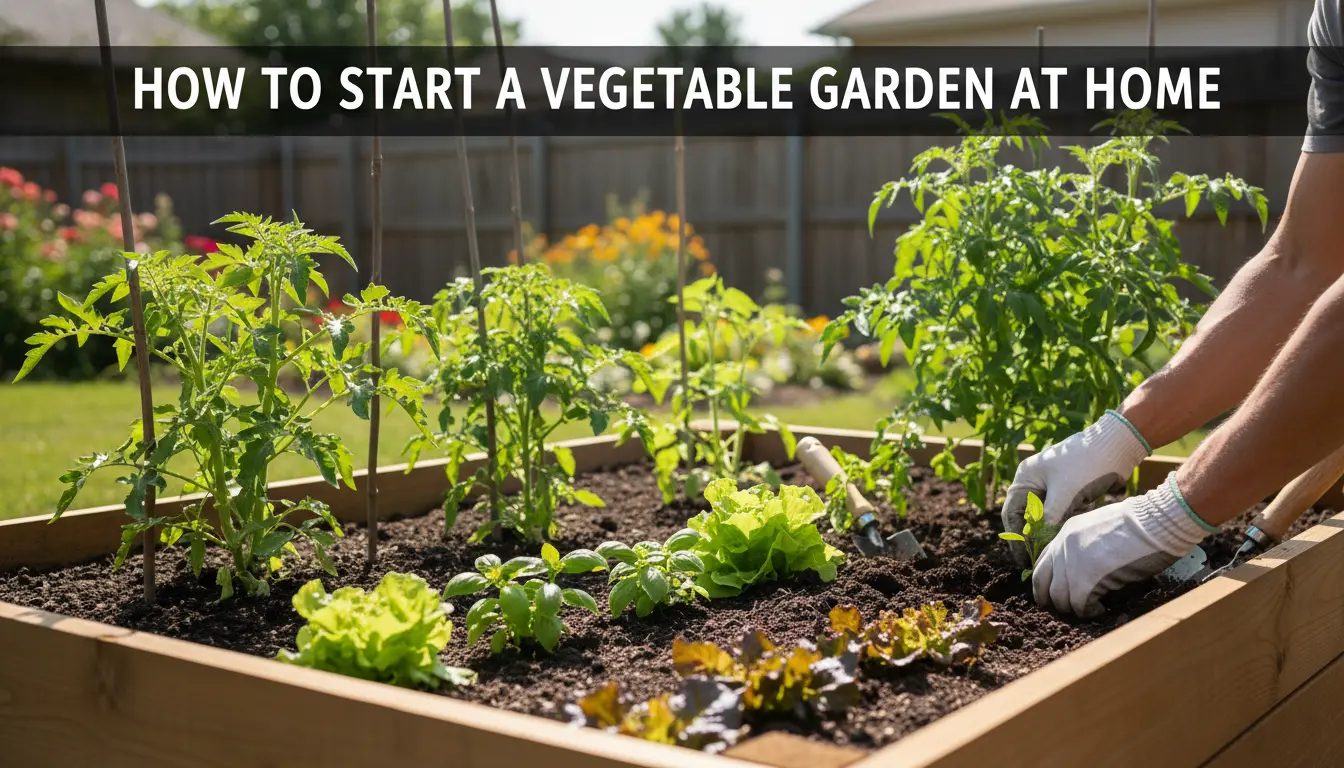
Starting a vegetable garden at home is an achievable project for any beginner. With basic planning and a few key techniques you can grow fresh produce in a yard, balcony, or even containers.
Choose the Right Location for Your Vegetable Garden
Location is the first decision that affects yield and maintenance. Pick a spot with at least six hours of direct sunlight each day for most common vegetables.
Consider access to water and ease of reaching the bed for planting and harvest. Good drainage and protection from strong winds help young plants establish.
Sunlight and Microclimate
Observe the site through a full day to map sunny and shaded areas. South- or west-facing spots usually get more sun and heat.
Use walls or fences as windbreaks and to create warmer microclimates for heat-loving crops like tomatoes and peppers.
Decide on Garden Type: In-Ground, Raised Beds, or Containers
Each garden type has pros and cons. Choose based on space, soil quality, budget, and mobility needs.
- In-ground: Best if you have good native soil and enough space.
- Raised beds: Improve soil warming, drainage, and reduce soil compaction.
- Containers: Ideal for small spaces, patios, or renters.
When to Use Raised Beds or Containers
Use raised beds if the ground soil is poor or compacted. Use containers when space is limited or you need portability.
Containers also let you control soil mix closely and reduce weed pressure.
Prepare Soil and Choose the Right Soil Mix
Healthy soil is the foundation of a productive vegetable garden. Test the soil pH and look for organic matter content.
For raised beds and containers, use a mix of quality topsoil, compost, and aeration material like perlite or coarse sand.
Soil Preparation Steps
- Clear weeds and debris from the site.
- Loosen soil to a depth of 8–12 inches for in-ground beds.
- Add 2–4 inches of compost and work it in evenly.
- Adjust pH if needed: most vegetables prefer pH 6.0–7.0.
Select Easy Vegetables for Beginners
Start with crops that are forgiving and quick to harvest. These provide early wins and build confidence.
- Leafy greens: lettuce, spinach, and Swiss chard.
- Root vegetables: radishes and carrots.
- Warm-season basics: tomatoes, bush beans, and zucchini.
- Herbs: basil, parsley, and chives.
Planting from Seed vs. Transplants
Seeds are economical and work well for many crops like carrots and beans. Transplants save time for crops that take longer to mature, such as tomatoes and peppers.
Follow seed packet instructions for depth and spacing to avoid overcrowding and poor yields.
Watering, Feeding, and Ongoing Care
Consistent care keeps plants productive. Water deeply and less frequently to encourage strong root systems.
Mulch reduces evaporation and suppresses weeds. Apply 2–3 inches of organic mulch around plants.
Fertilizing and Pest Management
Feed with a balanced, slow-release fertilizer or regular liquid feeds according to crop needs. Avoid over-fertilizing leafy crops if you want fruiting success.
Use these pest management practices:
- Inspect plants weekly for pests and disease.
- Encourage beneficial insects with flowering plants.
- Handpick larger pests and use row covers for young plants.
Harvesting and Succession Planting
Harvest vegetables when they reach recommended size to encourage continued production. Frequent harvesting of greens and beans promotes more growth.
Practice succession planting by sowing new seeds every 2–4 weeks for continuous harvest through the season.
Small Real-World Example: Backyard Raised Bed Success
Case study: A family in Portland started two 4×8 foot raised beds in spring. They filled beds with a mix of garden soil and compost and planted tomatoes, lettuce, carrots, and bush beans.
By midsummer they harvested weekly salads and had steady tomato production. Simple steps—consistent watering, mulching, and picking ripe crops—kept pests low and yields high.
Quick Checklist to Start Your Vegetable Garden
- Choose a sunny location with water access.
- Select garden type: in-ground, raised bed, or containers.
- Prepare or buy quality soil and add compost.
- Pick easy crops and follow spacing instructions.
- Water deeply, mulch, and monitor pests weekly.
Starting a vegetable garden at home is a practical project that rewards planning and consistent care. Begin small, learn from each season, and expand as you gain confidence.