
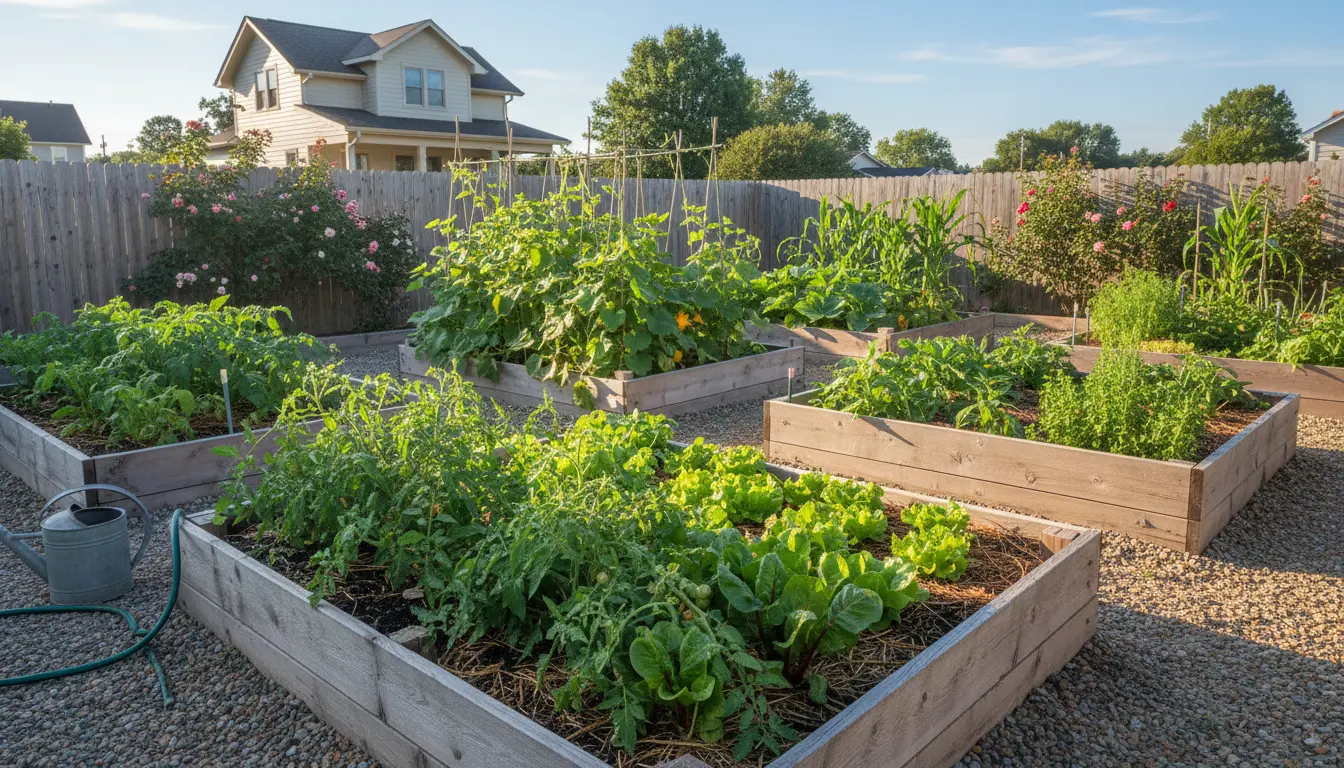
Why Start a Vegetable Garden
Starting a vegetable garden gives you fresh produce, reduces grocery costs, and connects you to the seasons. For beginners, a small, well-planned garden is easier to manage than a large one.
Planning Before Starting a Vegetable Garden
Good planning reduces wasted time and money. Begin by assessing light, space, and water access for your garden site.
Choose the Right Location
Most vegetables need 6–8 hours of direct sun. Look for a flat spot with good drainage and easy water access. Avoid low areas that stay soggy after rain.
Select Garden Type
Decide between in-ground beds, raised beds, or containers. Raised beds warm earlier in spring and give better soil control for beginners.
Soil and Raised Beds for Starting a Vegetable Garden
Soil quality is the single most important factor for a productive vegetable garden. Focus on soil structure, fertility, and drainage.
Test and Improve Soil
Get a basic soil test to check pH and nutrient levels. Most vegetables prefer a slightly acidic to neutral pH (6.0–7.0). Amend soil with compost to improve fertility and structure.
- Top-dress with 2–3 inches of compost each season.
- Mix compost into the top 6–8 inches of soil when preparing beds.
- Use organic matter to improve clay or sandy soils.
Benefits of Raised Beds
Raised beds can be 6–12 inches high or taller. They offer better drainage, easier weed control, and defined planting areas. For beginners, a 4×8 or several 4×4 beds are manageable sizes.
Planting and Layout When Starting a Vegetable Garden
Plan what to plant based on your climate, taste, and effort level. Group plants with similar water needs and sun exposure together.
Start with Easy Vegetables
Begin with reliable, low-maintenance crops like lettuce, radishes, cherry tomatoes, bush beans, and zucchini. These give quick wins and build confidence.
Use seed packets or local extension guides for spacing and planting depth. Stagger plantings of lettuce and radishes every 2–3 weeks for continuous harvest.
Companion Planting Basics
Some plants grow well together and can reduce pests or improve flavor. For example, basil with tomatoes or marigolds to deter nematodes and pests.
Watering and Maintenance for Starting a Vegetable Garden
Consistent watering is crucial, especially for young plants. Water deeply and less frequently to encourage strong root systems.
- Water early in the morning to reduce evaporation and disease risk.
- Use drip irrigation or soaker hoses for efficiency and wetting the soil, not the leaves.
- Mulch with straw or shredded leaves to retain moisture and suppress weeds.
Pest and Disease Management
Inspect plants weekly for pests or disease. Remove affected leaves, handpick larger pests, and use organic controls when needed.
Rotate crops yearly to reduce soil-borne disease pressure. Keep tools clean and avoid overhead watering when leaves are wet.
Harvesting and Seasonal Care
Harvest vegetables at peak ripeness for the best flavor and to encourage more production. Frequent harvesting of crops like beans and zucchini prolongs the productive season.
At season end, clear spent plants and add them to the compost. Consider a winter cover crop, like clover or rye, to protect and build soil over the off-season.
Did You Know?
Many common vegetables can be grown in containers on a balcony. Tomatoes, peppers, lettuce, and herbs thrive in well-drained pots with regular feeding and watering.
Simple Tools and Supplies for Starting a Vegetable Garden
- Trowel and hand fork
- Sturdy shovel and rake
- Garden hose with nozzle or soaker hose
- Compost or well-rotted manure
- Mulch and stakes or cages for tomatoes
Case Study: Small Raised Bed Success
Sarah, a beginner gardener in Portland, set up two 4×4 raised beds in her backyard. She filled them with a 60/40 mix of topsoil and compost and planted lettuce, bush beans, cherry tomatoes, and herbs.
She used drip irrigation and mulched heavily. In the first season she harvested salad greens every week and weekly pickings of beans and herbs. Lessons learned: start small, water consistently, and amend soil annually.
Checklist to Start Your First Vegetable Garden
- Choose a sunny location with good drainage.
- Decide on garden type: raised bed, in-ground, or containers.
- Test soil and add compost to improve fertility.
- Select easy vegetables and plan spacing.
- Install simple irrigation and mulch to conserve moisture.
- Inspect weekly, harvest regularly, and rotate crops each season.
Final Tips for Starting a Vegetable Garden
Keep a simple garden journal to track planting dates, varieties, and harvests. That data helps plan better the next season.
Start small, learn from one season, and expand gradually. Gardening is practical work that rewards patience and observation.