
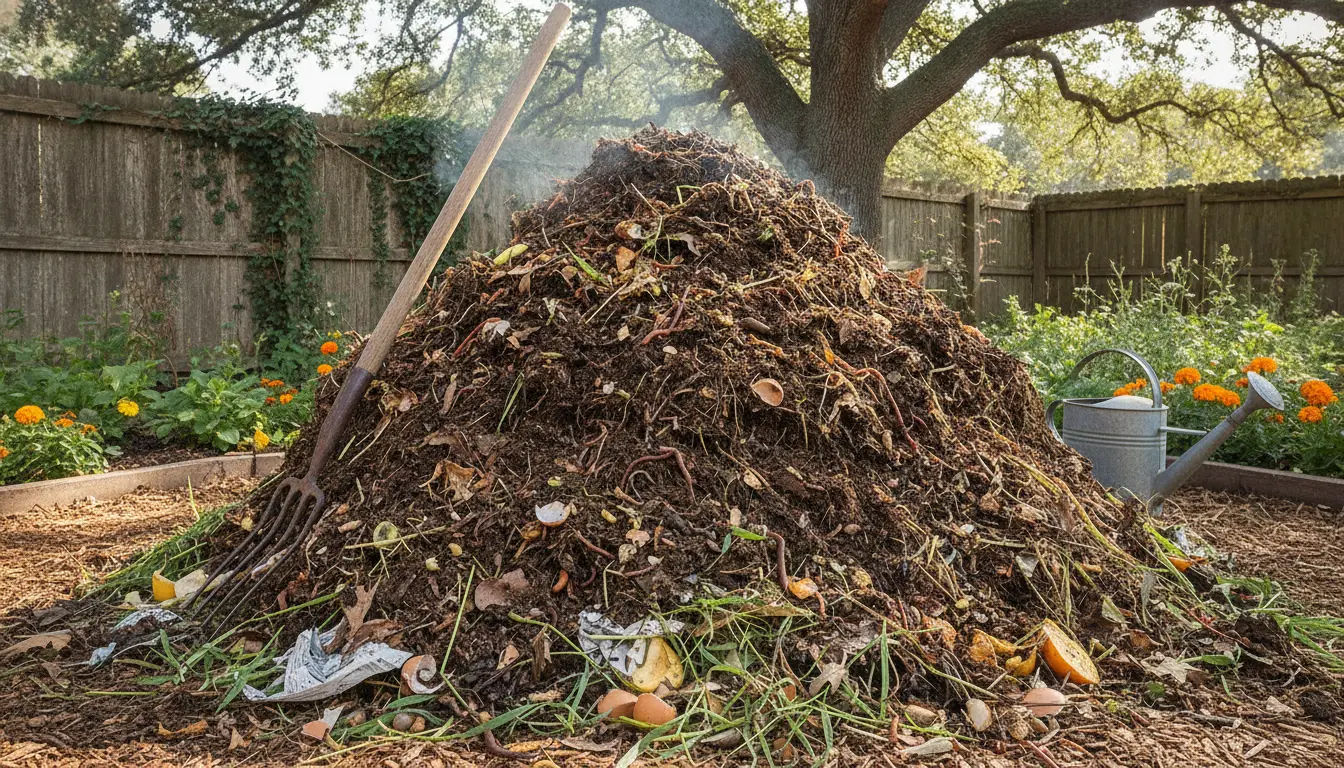
Why Home Composting Works
Home composting turns kitchen scraps and yard waste into nutrient-rich material you can use to improve soil. It reduces household waste and returns organic matter to your garden.
Composting is biological: microbes and small organisms break down organic material when conditions are right. You don’t need special skills, just consistent habits.
Choosing the Right Compost System for Home Composting
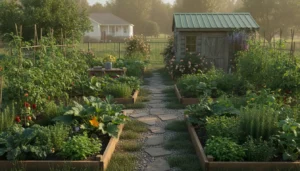
Start with a system that fits your space and routine. Common options are a simple compost pile, a tumbling bin, or a stationary bin.
- Compost heap: Low cost, flexible size, needs turning with a pitchfork.
- Tumbler bin: Easier to aerate, neater for small yards, usually more expensive.
- Stationary bin: Stable and simple, good for neighborhoods with limited space.
Where to Place Your Compost Bin
Choose a shaded, well-drained spot near a water source if possible. Avoid placing it too close to the house entrance to minimize pests and smells.
Placing the bin on bare soil helps organisms access the pile and allows drainage.
What to Add to Your Home Composting Bin
Balance is key. Aim for a mix of “greens” (nitrogen-rich) and “browns” (carbon-rich). The right ratio helps microbes thrive and prevents odors.
- Greens: Vegetable peels, coffee grounds, tea leaves, fresh grass clippings.
- Browns: Dry leaves, shredded paper, straw, cardboard pieces.
- Avoid: Meat, dairy, oily foods, diseased plants, and pet waste from carnivores.
Simple Mixing Rule
A practical rule is to add roughly two to three parts browns for each part green by volume. This reduces smell and helps the pile heat up properly.
Maintaining Your Compost: Practical Steps
Consistent maintenance keeps the process moving. Focus on aeration, moisture, and particle size.
- Turn the pile every 1–2 weeks to introduce oxygen.
- Keep the pile as damp as a wrung-out sponge; add water in dry weather and cover in heavy rain.
- Shred large items so they break down faster. Use a chipper for woody material.
How to Tell When Compost Is Ready
Mature compost looks dark, crumbly, and smells earthy. Most home systems take 2–6 months depending on materials and maintenance.
Test by placing a small amount in a pot: if plants grow well, the compost is ready to use.
Troubleshooting Common Home Composting Problems
Problems are often easy to fix once you identify the cause. Here are common issues and solutions.
- Smelly pile: Add more browns and turn the pile to aerate.
- Too dry: Water the pile and mix to distribute moisture.
- Slow decomposition: Increase surface area by chopping materials and ensure enough nitrogen (add greens).
- Pests like rodents: Avoid meat and fatty foods, use a closed bin, and bury food scraps in the center of the pile.
Compost and Winter
Composting slows in cold months but continues. Insulate the bin with straw or leaves and keep adding materials. Spring turning will restart activity.
Proper home composting can divert up to 30% of household waste from the trash and reduce methane emissions compared with landfill disposal.
Using Finished Compost
Apply finished compost as a soil amendment, mulch, or potting mix component. It improves soil structure, water retention, and nutrient availability.
- Top-dress vegetable beds with 1–2 inches in spring.
- Mix 10–25% compost into potting soil for containers.
- Work compost into lawn soil at a thin spread to avoid smothering grass.
Small Case Study: A Simple Backyard Success
Sarah, a homeowner with a small yard, started a 3-bin stationary system. She collected kitchen scraps and mixed them with shredded leaves from her neighborhood.
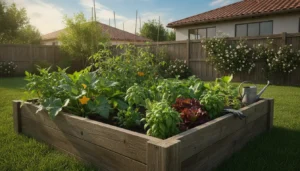
Within four months of regular turning and moisture checks, she produced enough compost to top-dress her raised vegetable beds. Her garden yield improved and her weekly trash volume decreased by one bag.
Quick Start Checklist for Home Composting
- Select a bin type suited to your space (heap, tumbler, or bin).
- Pick a shady, level location on bare soil.
- Maintain a 2–3:1 ratio of browns to greens.
- Turn every 1–2 weeks and keep moisture like a damp sponge.
- Use finished compost to enrich garden beds and pots.
Final Tips for Home Composting Beginners
Start small and learn by doing. Keep a small container for scraps in the kitchen to make collecting easy.
Join a local gardening group or community composting program if you need guidance or have limited space.