
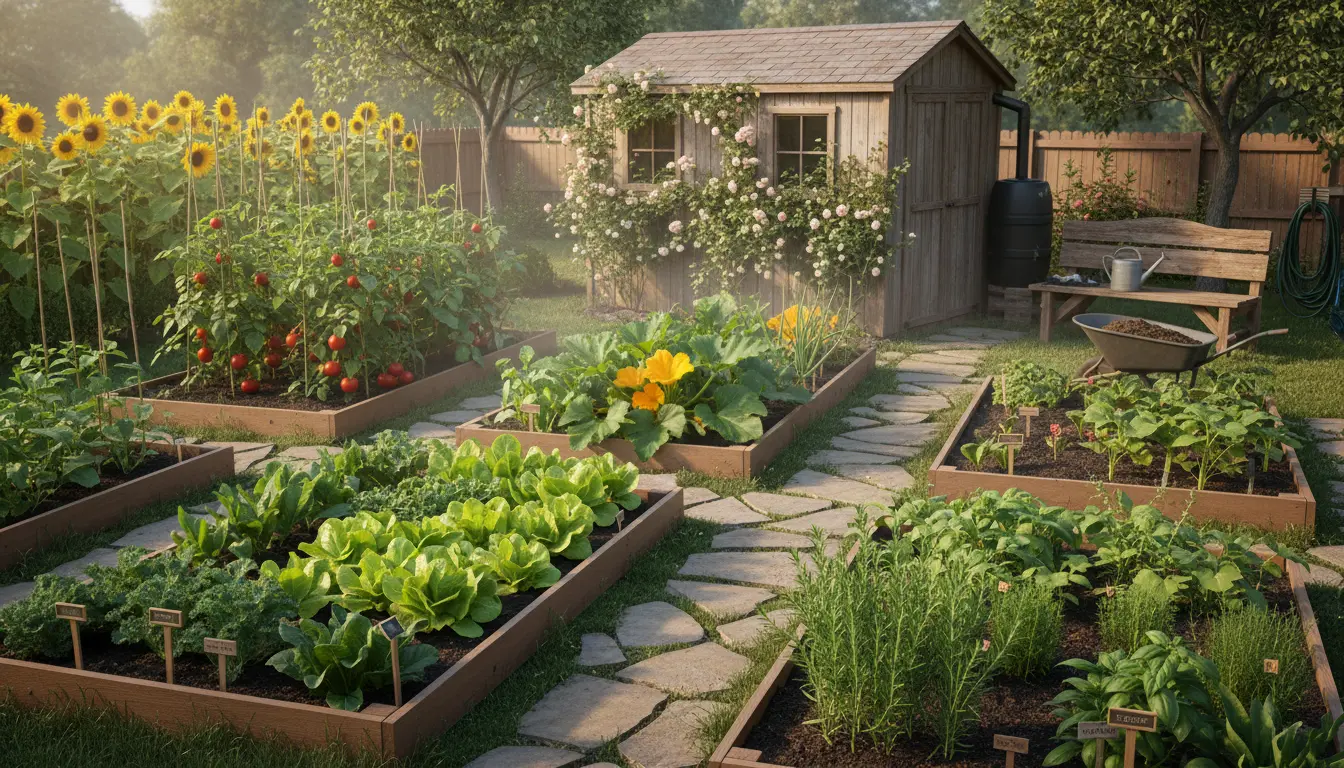
Why Start a Vegetable Garden at Home
Starting a vegetable garden at home saves money, improves meals, and reduces food miles. It also gives reliable access to fresh, seasonal produce and a practical outdoor hobby.
How to Start a Vegetable Garden: First Steps
Decide what you want to grow and why. Choosing a small, manageable area and a few reliable crops makes the first season easier.
Pick a Location for Your Vegetable Garden
Select a spot with at least 6 hours of sunlight for most vegetables. Good drainage and easy access to water are essential.
Consider raised beds or containers if your soil is poor or you have limited space.
Plan Your Vegetable Garden Layout
Sketch a simple plan showing beds, paths, and access to water. Keep beds narrow so you can reach the center from either side.
- Standard bed width: 3–4 feet
- Path width: 18–24 inches
- Reserve sunny edges for tall crops like tomatoes
Soil Preparation and Compost
Healthy soil is the foundation of any vegetable garden. Test soil pH and texture to guide amendments.
Add 2–4 inches of compost to beds and work it into the top 6–8 inches of soil. Compost improves structure, water retention, and nutrients.
Soil Tips for a Better Vegetable Garden
- Loosen compacted soil with a fork or broadfork.
- Maintain pH 6.0–7.0 for most vegetables.
- Use organic mulches to reduce weeds and conserve moisture.
Choosing What to Plant in Your Vegetable Garden
Start with easy, high-yield crops to boost confidence and harvests. Consider your climate and length of growing season.
Good beginner choices include lettuce, radishes, bush beans, zucchini, and cherry tomatoes.
Succession Planting and Companion Planting
Use succession planting to keep beds producing: plant quick crops early, then follow with longer-maturing ones. Companion planting can reduce pests and improve yields.
- Example: Plant lettuce with carrots and herbs to maximize space.
- Example: Marigolds around tomatoes can deter some pests.
Planting: Seeds vs Seedlings
Sow seeds directly for root crops and quick greens. Use seedlings (transplants) for crops that need a longer start, like tomatoes and peppers.
Follow seed packet instructions for depth, spacing, and timing to reduce thinning and transplant shock.
Watering and Maintenance for a Productive Vegetable Garden
Water deeply and less often to encourage strong root systems. Aim for 1–1.5 inches of water per week, adjusting for rain and temperature.
Use drip irrigation or soaker hoses to reduce evaporation and leaf wetness, which lowers disease risk.
Weeding, Mulching, and Feeding
Weed regularly when plants are small to reduce competition. Apply 2–3 inches of organic mulch after plants are established.
Feed with a balanced organic fertilizer or side-dress with compost midseason for heavy feeders like corn and tomatoes.
Pest Control and Common Problems in Vegetable Gardens
Monitor regularly for pests and disease. Early detection makes control easier and less toxic.
- Handpick large pests like caterpillars and slugs.
- Use row covers to protect young plants from insect damage.
- Encourage beneficial insects by planting flowers like calendula and alyssum.
Dealing with Disease
Remove and compost disease-free plants only if the disease is not systemic. Rotate crops yearly to reduce pathogen build-up.
Avoid overhead watering to limit fungal spread and improve air circulation between rows.
Harvesting and Storing Your Vegetables
Harvest frequently to encourage continued production. Pick leafy greens early in the morning for best flavor and shelf life.
Store produce according to type: root crops in cool, dark places and tomatoes at room temperature for best taste.
Small Case Study: A 10×10 Urban Vegetable Garden
One beginner gardener converted a 10×10 patch into three raised beds. They planted lettuce, cherry tomatoes, bush beans, and zucchini in year one.
With weekly watering, compost additions, and simple pest checks, the beds produced consistent harvests from May to October. The gardener cut grocery trips for salad greens and saved over $200 in the first season.
Quick Checklist to Start a Vegetable Garden
- Choose 6+ hours of sunlight and access to water
- Test soil and add compost
- Plan bed layout and crop choices
- Plant seeds or seedlings at recommended spacing
- Water deeply, mulch, and monitor for pests
- Harvest regularly and store produce correctly
Final Tips for New Vegetable Gardeners
Start small and expand after one successful season. Keep a garden journal to track what worked and what didn’t.
Be patient: gardening is a seasonal learning process. Small consistent efforts deliver steady rewards.