
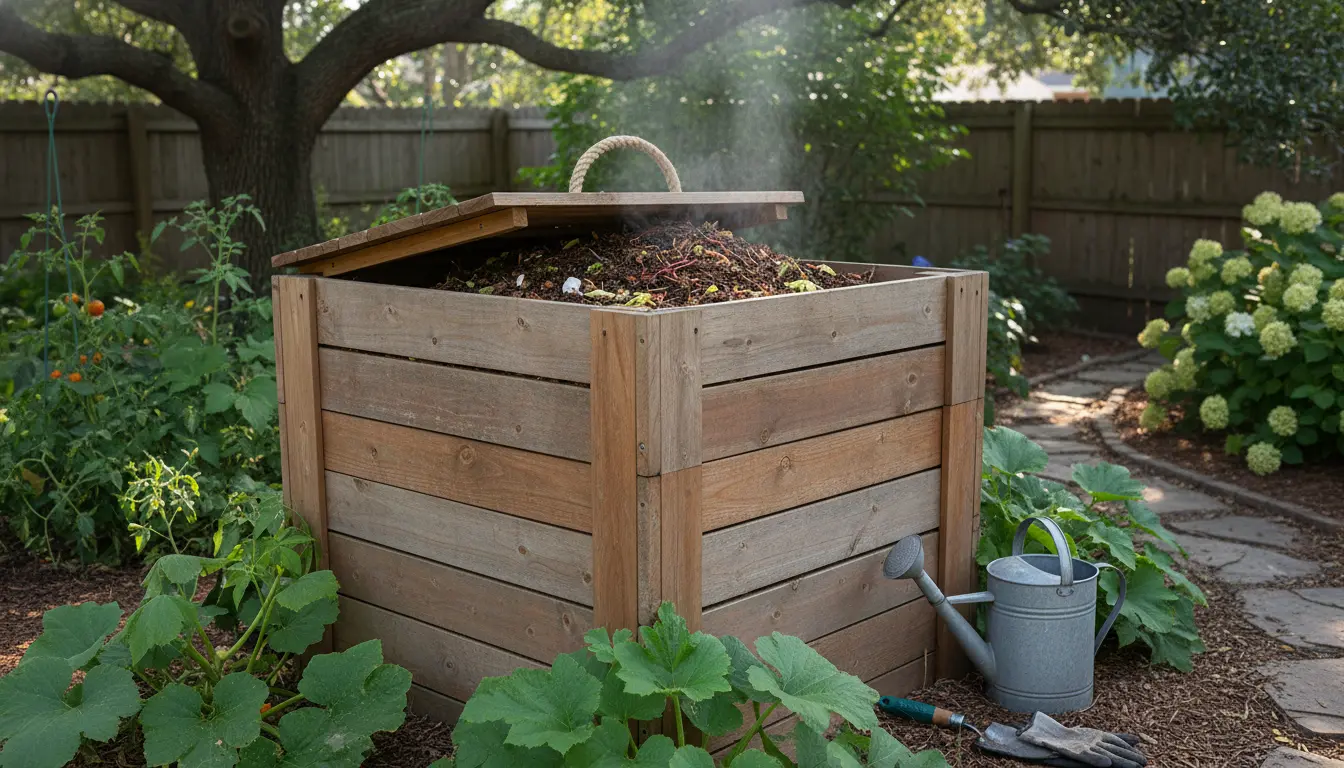
Composting at home turns kitchen scraps and yard waste into rich soil you can use in containers and garden beds. This guide gives clear, practical steps for beginners to start simple and avoid common mistakes.
Why choose home composting
Home composting reduces waste, cuts trash volume, and improves soil structure. It’s a low-cost way to return nutrients to your garden and reduce reliance on bought fertilizers.
Basic home composting components
Good compost needs a balance of carbon-rich and nitrogen-rich materials. Understanding these two groups helps you maintain a healthy compost pile.
Carbon materials (browns)
Carbon materials add structure and help absorb moisture. Common browns include dry leaves, straw, shredded cardboard, and paper.
Nitrogen materials (greens)
Nitrogen materials provide protein for microbes and speed decomposition. Use kitchen scraps, fresh grass clippings, coffee grounds, and green plant trimmings.
How to start a home composting pile or bin
Choose a location with partial shade and good drainage. A backyard corner or a sheltered spot next to a shed works well.
To build the pile, follow these simple steps:
- Start with a 4–6 inch layer of coarse browns for airflow.
- Add a 3–4 inch layer of greens on top of the browns.
- Alternate layers until the bin is full, keeping the ratio near 25–30 parts carbon to 1 part nitrogen by volume.
- Moisten each layer as you build; the pile should feel like a wrung-out sponge.
Maintaining your home composting system
Maintenance keeps decomposition efficient and prevents problems. Regular attention pays off with finished compost in a few months to a year.
Turning and aeration
Turn the pile with a pitchfork or aerator every 1–3 weeks to add oxygen and speed up breakdown. If you have a tumbling bin, rotate it per manufacturer guidance.
Moisture and temperature
Check moisture weekly. Add water if too dry and add more browns if it becomes soggy. A properly working pile will heat to 120–150°F (50–65°C) in the center.
What not to compost at home
Avoid items that attract pests, spread disease, or contain persistent chemicals. These include:
- Meat, bones, dairy, and oily foods
- Diseased plants and perennial weeds with seeds or roots
- Pet feces from carnivores
- Coal ash, treated wood, and synthetic chemicals
Troubleshooting common home composting issues
Simple fixes resolve most problems quickly. Match the fix to the symptom for best results.
- Bad smell: Add more brown materials and turn the pile to increase airflow.
- Not heating: Add greens and moisten; check the pile size—too small piles fail to heat.
- Pests: Bury kitchen scraps deeper or switch to a closed bin; avoid meat and dairy.
Compost can reduce household waste by up to 30 percent. Finished compost also boosts soil water retention by improving structure and organic matter.
Finishing and using home compost
Compost is ready when it looks dark, crumbly, and smells earthy. This can take 3 months with active management or up to a year if left to rot slowly.
Use finished compost to top-dress lawns, mix into potting soil, or enrich garden beds. Apply a 1–3 inch layer and work it into the topsoil for best results.
Small real-world case study: Quick backyard compost
Case: Sarah, a city homeowner, started a 3-bin system on a sunny patio in spring. She added kitchen scraps and shredded leaves, turning weekly and keeping layers moist.
Results: In 16 weeks she had usable compost for container vegetables. Her waste to landfill decreased by nearly half for organic waste, and her tomato plants showed fuller foliage the following season.
Simple home composting tips for success
- Keep materials chopped or shredded to speed decomposition.
- Maintain balance: too many greens cause odor, too many browns slow activity.
- Use a mesh or wire bin if you want low-cost airflow and easy turning.
- Label bins and keep a small counter jar for daily kitchen scraps to avoid pests.
Starting home composting is a practical step toward a greener household. With basic balance, regular turning, and a little patience, you can convert waste into valuable soil improver and support a healthier garden.