
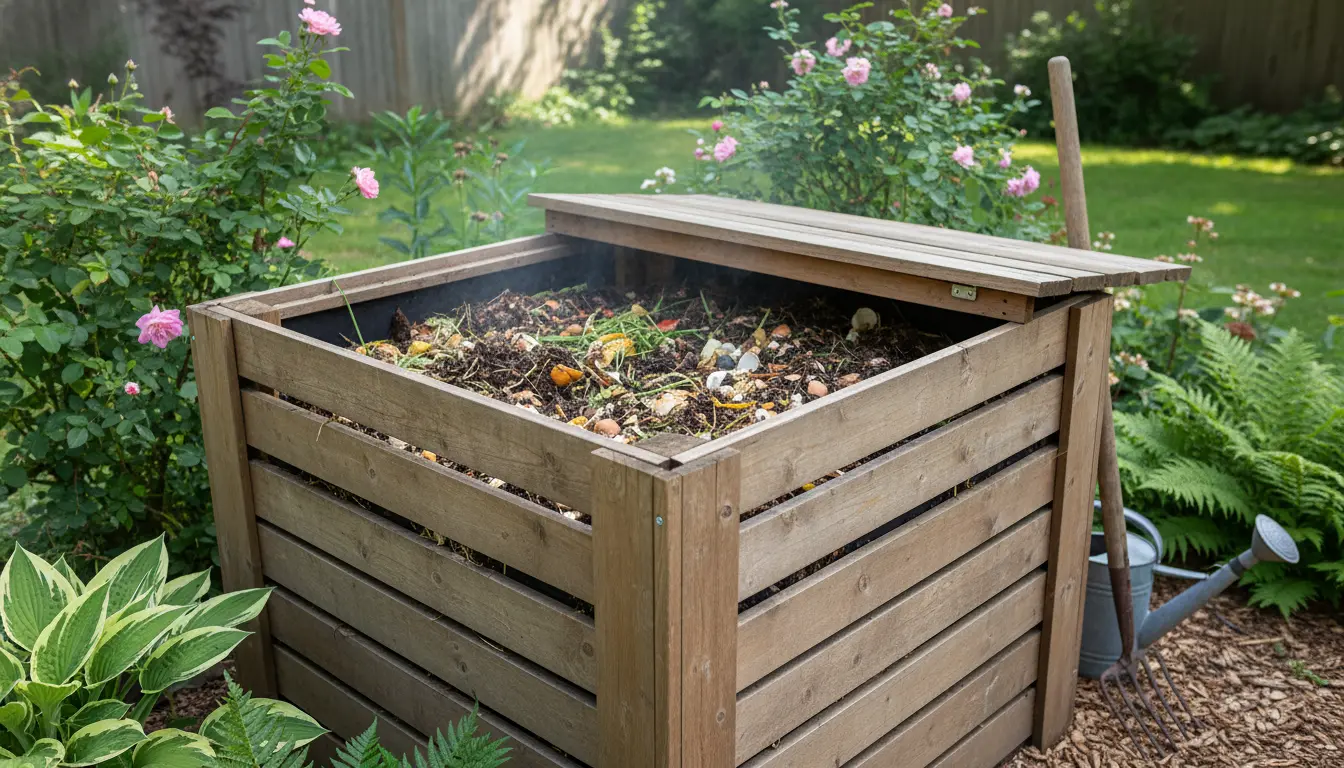
Composting at home turns kitchen scraps and yard waste into rich soil you can use for plants. This guide covers practical steps, common mistakes, and simple troubleshooting to get you started.
Why Choose Home Composting
Home composting reduces waste, saves money, and improves garden soil structure. It also lowers methane emissions from landfills by diverting organic matter.
Home Composting Basics
Composting relies on three elements: carbon, nitrogen, and oxygen. Carbon-rich ‘browns’ and nitrogen-rich ‘greens’ must be balanced for efficient decomposition.
Key Materials to Compost
- Greens (high nitrogen): fruit and vegetable scraps, coffee grounds, fresh grass clippings.
- Browns (high carbon): dry leaves, shredded paper, straw, cardboard pieces.
- Water and air: keep the pile moist like a wrung-out sponge and turn it to add oxygen.
What Not to Compost
- Meat, fish, and dairy (attract pests and smell).
- Oily or processed foods (slow to break down).
- Diseased plants, invasive weeds with seeds, and pet waste.
Choosing a Compost System
Select a compost method that fits your space, time, and effort. Common options include a simple pile, a rotating bin, and a worm composter (vermicomposting).
Bin Types and When to Use Them
- Open pile: Good for large yards; low cost but less tidy.
- Closed bin: More compact and neater; helps retain heat and deter pests.
- Worm bin: Best for apartments and small spaces; produces liquid fertilizer and fine compost.
Step-by-Step Home Composting Process
Follow these practical steps to build an active compost pile and speed up decomposition.
- Start with a 6–12 inch base of coarse browns to improve airflow.
- Add alternating layers of greens and browns, keeping the greens slightly thicker.
- Moisten the pile as you build it; it should feel like a damp sponge.
- Turn the pile every 1–2 weeks to add oxygen and mix materials.
- Monitor temperature; a hot pile (130–160°F or 55–70°C) breaks down materials faster.
Speeding Up Composting
- Shred or chop materials to increase surface area.
- Maintain a carbon-to-nitrogen ratio near 25–30:1 by volume.
- Add a shovel of garden soil to introduce microbes.
Brown materials such as leaves can take months to a year to fully break down, but mixing them with greens and turning the pile can speed the process to 2–6 months.
Troubleshooting Common Problems
Compost problems are usually easy to fix if you address moisture, aeration, and balance.
Smelly Compost
Bad odors usually mean too much nitrogen or poor aeration. Add more browns, turn the pile, and ensure good drainage.
Pile Not Heating Up
A cold pile may be too small, too dry, or lacking nitrogen. Add fresh greens, moisten, and insulate the pile with a tarp or straw in cool weather.
Pests Like Rodents
Avoid meat and dairy, and use a closed bin or wire mesh to keep animals out. Bury fresh food scraps under a layer of browns.
Using Finished Compost
Finished compost is dark, crumbly, and earthy-smelling. Use it as a soil amendment, mulch, or ingredient in potting mixes.
- Top-dress lawns and garden beds with 1/4 to 1 inch of compost annually.
- Mix 1 part compost to 3 parts soil when planting to improve moisture retention.
- Use worm castings from vermicomposting as a concentrated soil drench.
Small Real-World Case Study
Case Study: Sarah’s Apartment Compost
Sarah started a worm bin on her apartment balcony to handle kitchen scraps. She used a 10-gallon container with shredded cardboard and red wigglers.
After three months she harvested about 3 liters of worm castings and a cup of liquid fertilizer each month. Her potted herbs showed faster growth and used less store-bought potting mix.
Quick Checklist to Start Home Composting
- Pick a bin type: open pile, closed bin, or worm bin.
- Gather browns and greens and a small shovel or aerator tool.
- Monitor moisture and temperature weekly for the first month.
- Turn the pile regularly and harvest finished compost when ready.
Home composting is a low-cost way to recycle organic waste and enrich soil. Start small, observe a few simple rules, and adjust your process as you learn what works in your space.