
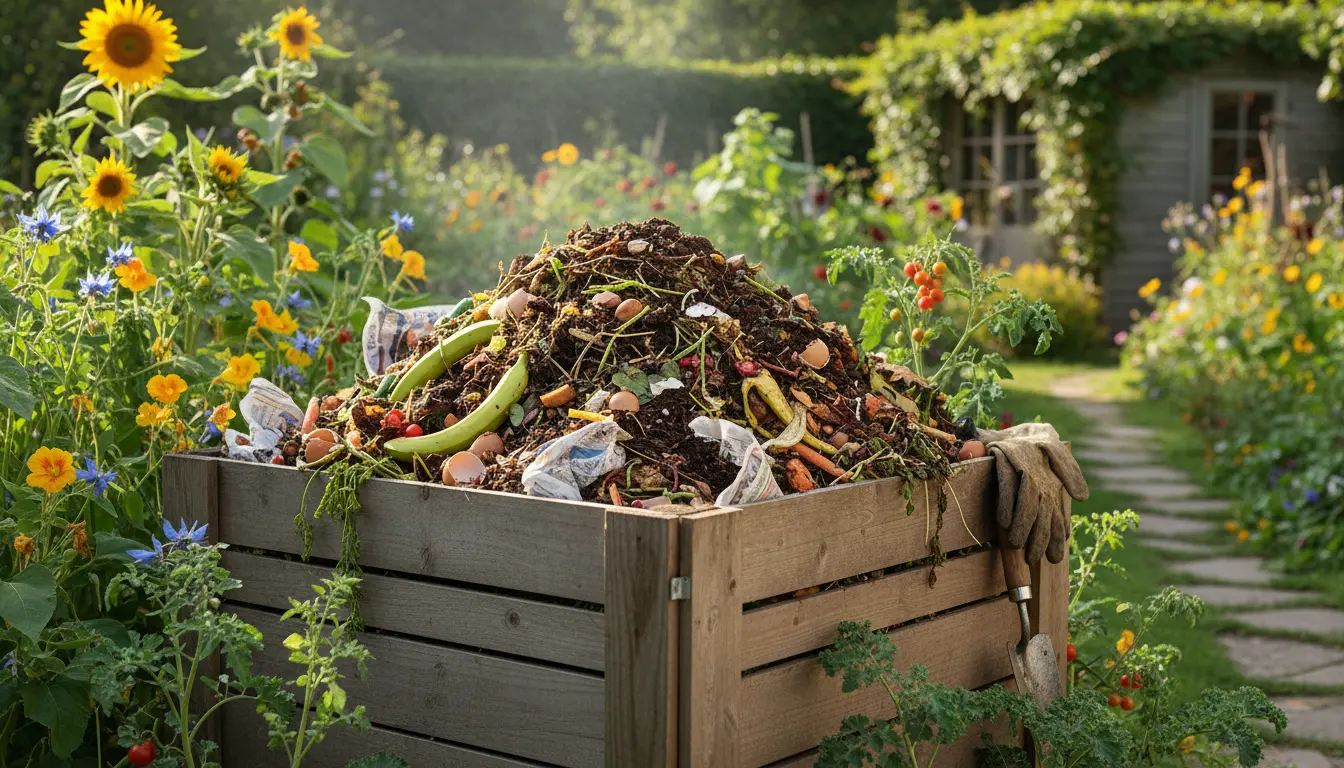
Start home composting with confidence
Home composting turns kitchen scraps and yard waste into nutrient-rich soil. This guide gives practical steps you can use right away to set up and maintain a compost bin.
Why home composting matters
Composting reduces landfill waste and cuts methane emissions. It also creates compost you can use to improve soil and grow healthier plants.
Choosing a compost bin for home composting
Selecting the right compost bin affects how easy the process will be. Consider size, ventilation, pest protection, and placement when choosing a bin.
Types of compost bins
- Plastic tumblers: Fast mixing and contained odor control.
- Stationary bins: Simple and inexpensive for large volumes.
- Worm bins (vermicomposting): Ideal for indoor use and small kitchens.
- DIY piles or wooden bins: Low cost, scalable for gardens.
How to start home composting: step-by-step
Starting composting requires three core elements: the right materials, proper layering, and regular care. Follow these simple steps to get going.
Materials: Browns and Greens
Compost works best when you balance carbon-rich “browns” and nitrogen-rich “greens.” Aim for roughly a 3:1 ratio of browns to greens by volume.
- Greens: fruit and vegetable scraps, coffee grounds, fresh grass clippings.
- Browns: dry leaves, shredded paper, cardboard, wood chips.
Layering and aeration
Start with a layer of coarse browns to aid drainage. Alternate thin layers of greens and browns to maintain balance. Turn or tumble the pile every 1–2 weeks to add oxygen.
Monitoring moisture and temperature
Compost should feel like a damp sponge, not soaking wet. If it’s too dry, add water or more greens. If it’s too wet, add dry browns and improve aeration.
Maintaining your compost bin
Routine maintenance keeps the composting process efficient. Small actions prevent common problems and speed up decomposition.
- Turn the pile regularly to supply oxygen and mix materials.
- Keep the bin moist but not waterlogged.
- Chop large pieces into smaller ones to decompose faster.
- Cover food scraps with browns to reduce odors and pests.
How long will it take?
Composting time varies with method and care. Active management can yield finished compost in 2–4 months. Passive piles may take 6–12 months.
Common problems and quick fixes
Home composting can present a few challenges, but most are easy to solve with simple adjustments.
- Bad smell: Add more dry browns and turn the pile to increase aeration.
- Pests: Bury food scraps deeper and use a closed bin or fine mesh on vents.
- Slow breakdown: Chop items smaller, maintain balance of greens and browns, and increase turning frequency.
Composting one ton of organic waste can reduce greenhouse gas emissions by about one ton of CO2 equivalent. Small household efforts add up when adopted widely.
Using finished compost
Finished compost is dark, crumbly, and earthy-smelling. Use it to enrich garden beds, topdress lawns, or mix with potting soil for containers.
Application tips
- Vegetable beds: Mix 2–3 inches into the topsoil before planting.
- Lawns: Spread a thin 1/4 to 1/2 inch layer in spring or fall.
- Potted plants: Blend 10–20% compost into potting mixes for better drainage and nutrients.
Case study: Small urban compost success
Anna, a renter in Portland, started vermicomposting in a 10-gallon bin under her kitchen sink. She collected food scraps for 6 months and fed the bin daily.
After four months she harvested rich worm castings and reduced her household waste by half. The castings improved her balcony tomatoes, which produced earlier and had stronger growth.
Quick checklist to start your home composting
- Choose a bin suitable for your space and volume.
- Gather browns and greens and set up layering.
- Monitor moisture and turn regularly for faster composting.
- Use finished compost to enrich soil and reduce purchased fertilizers.
Home composting is a low-cost, high-impact way to reduce waste and improve soil health. With the right bin, materials, and simple maintenance, you can start turning scraps into valuable compost in weeks to months.