
How to Start a Vegetable Garden: First Steps
Starting a vegetable garden is a practical project that rewards planning and simple daily care. This guide breaks down essential steps so you can begin with confidence.
Choose the Right Location
Pick a spot that gets at least 6 hours of sun daily for most vegetables. Look for good drainage and easy access to water.
Avoid low areas that hold cold air or soggy soil after rain. If sunlight is limited, focus on shade-tolerant crops like leafy greens.
Decide Between Beds, Containers, or Rows
Raised beds warm faster in spring and offer better drainage. Containers are ideal for small spaces and balconies. Traditional rows work well if you have a larger yard.
- Raised beds: Easier on the back, good soil control.
- Containers: Portable, great for patios and balconies.
- Rows: Best for large scale plantings and mechanized tools.
How to Start a Vegetable Garden: Soil and Preparation
Healthy soil is the foundation of a productive garden. Invest time in preparing and improving soil before planting.
Test and Improve Soil
Use a basic soil test kit to check pH and nutrient levels. Most vegetables prefer a slightly acidic to neutral pH (6.0–7.0).
Add compost to increase organic matter and improve structure. If the test shows deficiencies, apply fertilizer based on recommendations.
Prepare the Planting Area
Remove weeds and loosen compacted soil to a depth of 8–12 inches. Mix in 2–3 inches of compost across the surface and rake smooth.
For raised beds, fill with a mix of topsoil, compost, and a light organic material for good drainage and fertility.
How to Start a Vegetable Garden: Choosing Plants
Select crops suited to your climate, soil, and available sunlight. Start with easy, high-reward plants if you are new to gardening.
Beginner-Friendly Vegetables
- Tomatoes (staked or in containers)
- Lettuce and salad greens
- Zucchini and summer squash
- Radishes and carrots
- Beans and peas
Plant more of what you and your family eat. For continuous harvest, use succession planting: sow small amounts every 2–3 weeks.
Planting and Early Care
Follow spacing and depth instructions on seed packets or plant tags. Water gently but thoroughly after planting to settle roots.
Watering Guidelines
Water early in the morning to reduce evaporation and fungal risks. Aim for deep, infrequent waterings rather than daily shallow sprays.
Use mulch to keep soil moist, suppress weeds, and moderate temperature.
Fertilizing and Feeding
Most gardens benefit from a balanced organic fertilizer at planting and again during mid-season. Avoid over-fertilizing leafy crops if you want better flavor.
Maintenance: Pests, Weeds, and Pruning
Regular maintenance keeps a garden productive. Inspect plants weekly for pests, diseases, and signs of nutrient stress.
Pest Management
Use integrated pest management (IPM): monitor, hand-pick pests, use row covers, and encourage beneficial insects like ladybugs.
For severe infestations, choose the least-toxic treatment and follow label instructions carefully.
Weeding and Pruning
Remove weeds promptly to reduce competition for water and nutrients. Prune indeterminate tomatoes to improve airflow and fruit quality.
Harvesting and Season Extension
Harvest vegetables at peak ripeness for best flavor and nutritional value. Regular harvesting often encourages plants to produce more.
Extend the Season
- Use row covers to protect from light frost.
- Install cold frames or cloches for early spring or late fall crops.
- Grow heat-tolerant varieties in summer to avoid bolting.
Tomato flavor improves when vines experience slight water stress before harvest. Consistent overwatering dilutes sugars and reduces taste.
Small Real-World Example
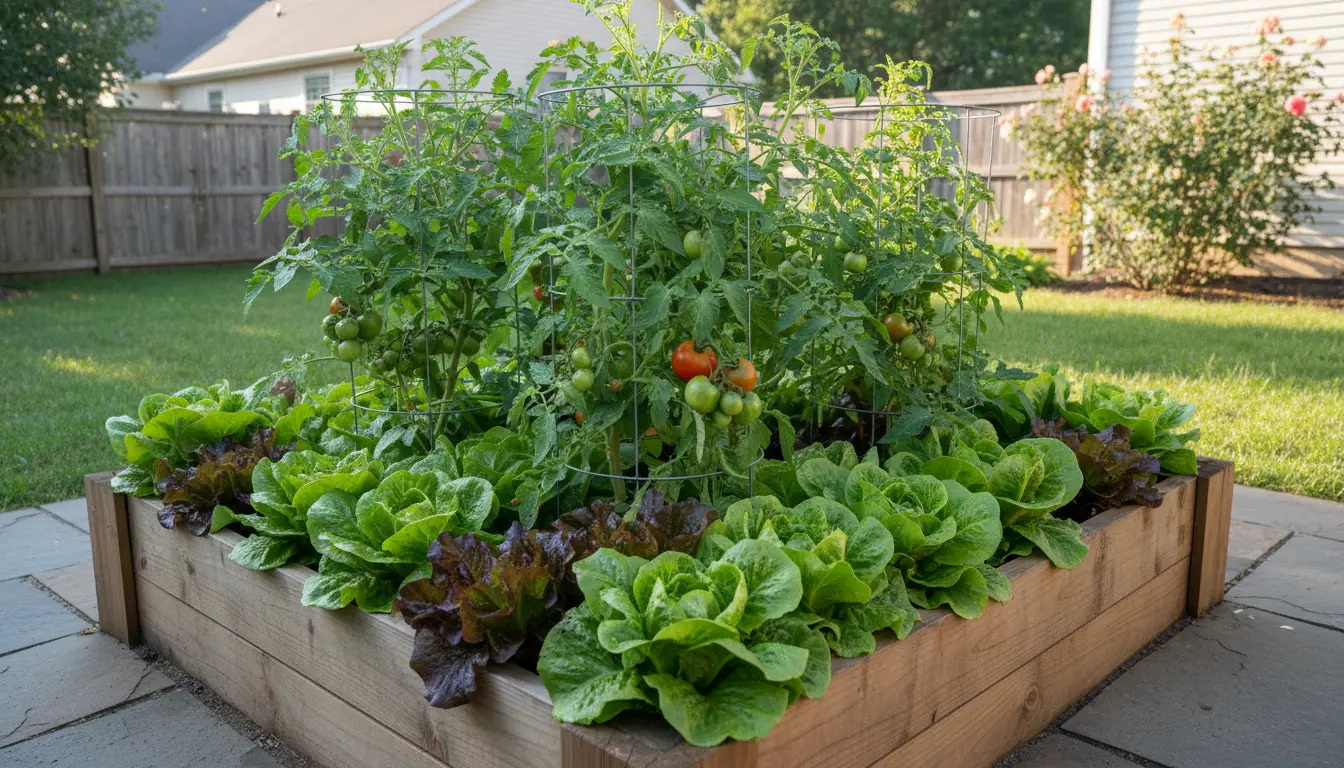
Case study: A two-person household started a 4×8 raised bed in their suburban backyard. They planted tomatoes, lettuce, carrots, and beans.
Using weekly compost additions and mulch, they harvested lettuce within six weeks and tomatoes all summer. The bed produced enough vegetables to replace grocery lettuce and reduce tomato purchases by half.
Practical Tips and Final Checklist
Keep tasks manageable with a simple weekly routine. A few minutes each day is enough to water, check for pests, and harvest.
- Choose a sunny spot and check water access.
- Test and amend soil before planting.
- Start with 3–6 easy crops for your first season.
- Mulch to conserve moisture and cut weeding time.
- Observe plants weekly and harvest promptly.
Starting a vegetable garden is a step-by-step process. With the right location, soil, and a short weekly routine, you can grow reliable vegetables for your table.