
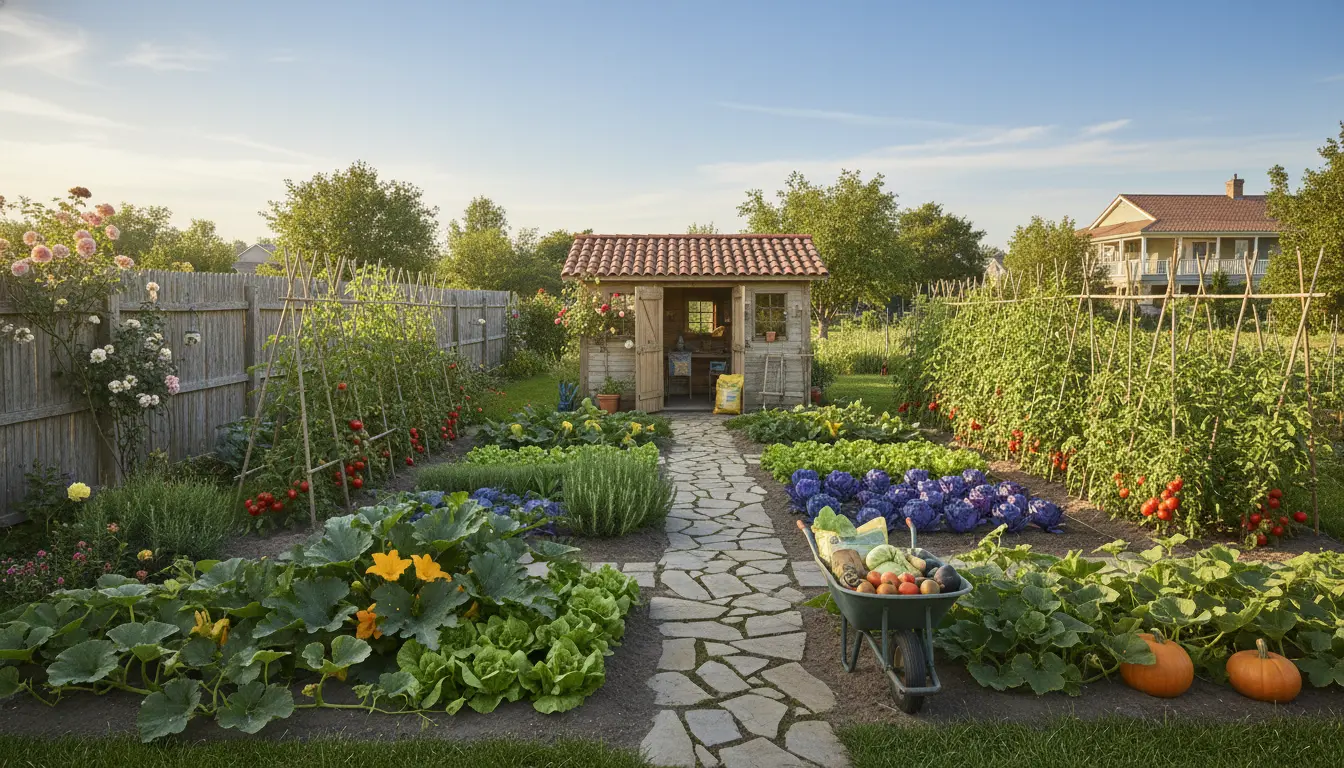
Starting a vegetable garden at home is a practical way to grow fresh food, save money, and enjoy a hands-on hobby. This guide gives clear steps you can follow, whether you have a small balcony or a backyard space.
Plan Before You Start a Vegetable Garden
Good planning reduces wasted time and effort. Begin by listing the vegetables you and your family eat most often.
Consider the seasonality and growing time for each crop so you can stagger planting and harvest.
Choose Plants that Fit Your Space
Select easy-to-grow varieties for your first season. Tomatoes, lettuce, radishes, beans, and herbs are forgiving and productive.
If space is limited, focus on compact or container-friendly varieties labeled “bush” or “compact.”
Choose Where to Start a Vegetable Garden
Sunlight, access to water, and soil quality determine where your garden will thrive. Most vegetables need 6–8 hours of direct sun daily.
Locate the garden near a water source to make regular watering easier.
Assess Soil or Use Raised Beds
Test your soil by checking texture and drainage. Dig a small hole and fill it with water—if it drains within a few hours, drainage is adequate.
If soil is heavy clay, shallow, or contaminated, use raised beds or large containers with a good-quality growing mix.
Prepare Soil and Planting Areas
Healthy soil is the foundation of a productive vegetable garden. Improve soil structure with organic matter like compost or well-rotted manure.
A simple mix for raised beds is 60% topsoil, 30% compost, and 10% coarse sand or perlite for drainage.
Basic Soil Preparation Steps
- Clear weeds and debris from the area.
- Loosen soil to a depth of 8–12 inches with a fork or tiller.
- Work in 2–3 inches of compost and a balanced organic fertilizer if needed.
Planting: Seeds or Transplants
Decide whether to start from seeds or buy transplants. Seeds are cheaper but need more patience and care early on.
Transplants give a head start for long-season crops like tomatoes and peppers.
Planting Tips
- Follow seed packet directions for depth and spacing.
- Plant taller crops on the north side of the bed to avoid shading lower plants.
- Mulch around plants to conserve moisture and suppress weeds.
Watering and Maintenance for a Vegetable Garden
Consistent watering is crucial, especially during germination and fruiting. Aim for deep, infrequent watering to encourage strong roots.
Drip irrigation or soaker hoses deliver water at the root zone and reduce evaporation and disease risk.
Pest and Disease Management
Use prevention first: rotate crops annually, remove diseased plants, and avoid overcrowding.
Hand-pick pests, use row covers, or apply organic controls like insecticidal soap when needed.
Harvesting and Ongoing Care
Harvest vegetables at their peak for best flavor and to encourage further production. Pick regularly to prevent overripening.
Keep beds tidy by removing spent plants and adding compost to replenish nutrients for the next crop.
Quick Checklist to Start a Vegetable Garden
- Choose site with 6+ hours sun.
- Decide between containers, raised beds, or in-ground rows.
- Improve soil with compost and test drainage.
- Select beginner-friendly crops and plan planting dates.
- Install simple irrigation and mulch around plants.
Small Real-World Example: Backyard Starter Bed
Maria, a first-time gardener, converted a 4×8 ft raised bed on her sunny patio. She filled it with a mix of topsoil and compost and planted:
- 3 tomato plants (indeterminate)
- 6 lettuce seedlings in succession every two weeks
- 3 bush bean plants along the back edge
- A row of basil between tomatoes
With weekly watering via a soaker hose and monthly compost top-ups, Maria harvested salad greens within six weeks and tomatoes by late summer. Her initial seed and supply cost was under $60, and she harvested dozens of meals over the season.
Common Beginner Mistakes and How to Avoid Them
Avoid overcrowding plants; give them room to grow and air to circulate. Overcrowding increases disease and reduces yields.
Don’t overwater daily. Check soil moisture 1–2 inches below the surface; water when that layer feels dry.
When to Expand Your Vegetable Garden
Once you consistently harvest a few crops, expand by adding another raised bed or more containers. Try new crops conservatively to learn their needs.
Keep records of planting dates, varieties, and yields to improve planning each year.
Starting a vegetable garden at home is a step-by-step process that rewards careful planning and simple daily care. With modest time and investment, you can grow fresh, tasty produce and build knowledge to expand season after season.