
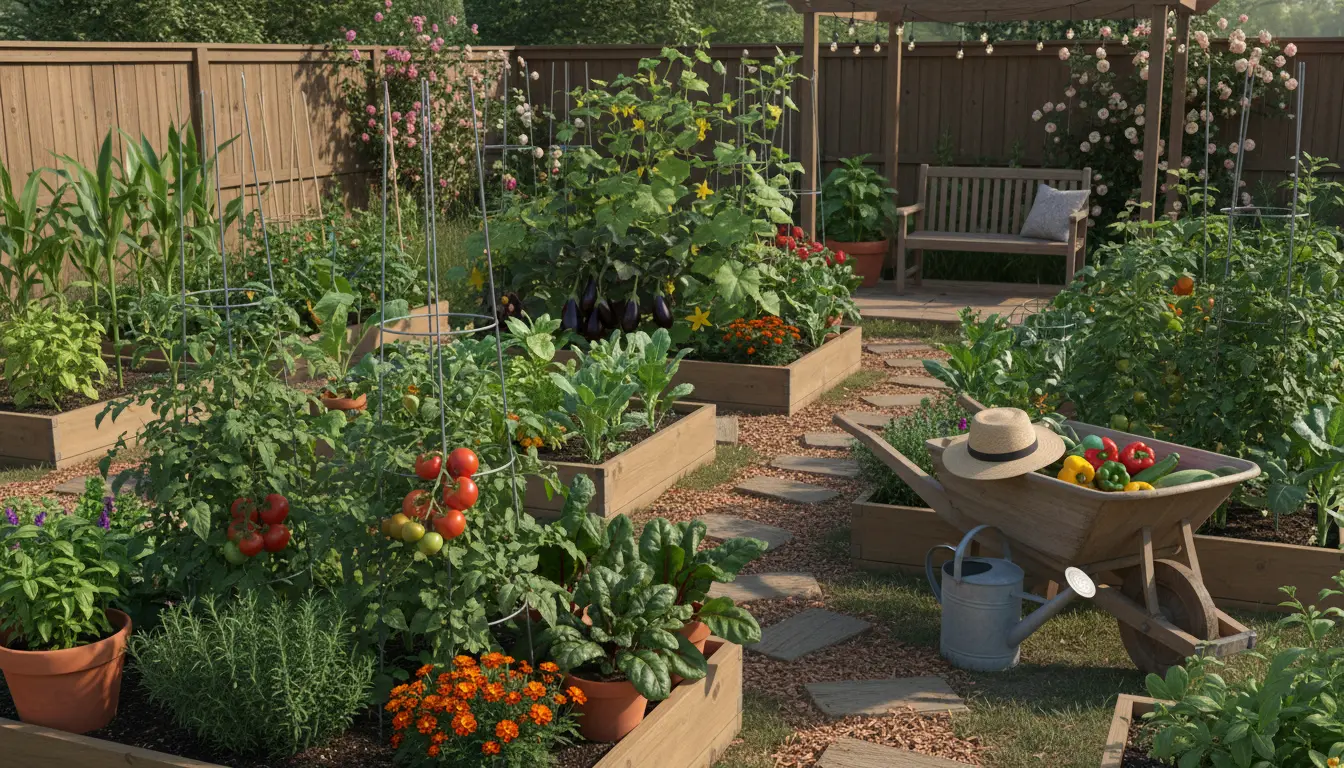
Why Start a Vegetable Garden
Starting a vegetable garden gives you fresh produce, saves money, and connects you to the growing process. It also reduces food miles and can improve your diet with seasonal vegetables.
This guide shows practical steps to start a vegetable garden for beginners, focusing on planning, soil, planting, and maintenance.
Site Selection to Start a Vegetable Garden
Choosing the right location is the first major decision when you start a vegetable garden. Look for a spot with at least 6 hours of direct sunlight for most vegetables.
Consider access to water, drainage, and proximity to your home for easier daily care.
Sunlight, Soil, and Water
Sunlight is crucial; tomatoes, peppers, and cucumbers need full sun. Leafy greens tolerate part shade but prefer morning sun.
Test soil drainage by digging a hole and filling it with water; if it drains within 24 hours, drainage is acceptable. Ensure a water source is nearby for regular irrigation.
Step-by-Step: How to Start a Vegetable Garden
Follow these practical steps to start a vegetable garden. Each step is actionable and aimed at beginners.
1. Decide Garden Type
Choose between in-ground beds, raised beds, or containers. Raised beds warm faster and have better drainage, while containers are ideal for small patios.
2. Prepare the Soil
Good soil is the foundation of a productive vegetable garden. Start by removing weeds and debris.
- Test soil pH with a simple kit; most vegetables prefer pH 6.0–7.0.
- Add compost and well-rotted manure to improve structure and nutrients.
- For heavy clay, mix in coarse sand and organic matter to loosen it.
3. Plan Your Layout
Map where each crop will go based on height and spacing. Tall plants should not shade low-growing crops.
Use succession planting to maximize yield—stagger plantings of lettuce or radishes every 2–3 weeks.
4. Choose What to Plant
Select vegetables suited to your climate and season. Beginners should start with easy, forgiving crops.
- Easy summer crops: tomatoes, zucchini, beans
- Easy cool-season crops: lettuce, spinach, radishes
- Herbs for beginners: basil, parsley, chives
5. Planting and Spacing
Follow seed packet or plant tag spacing to avoid overcrowding. Proper spacing reduces disease and improves yields.
Plant tender seedlings after the last frost date; sow cool-season crops earlier in spring or late summer for fall harvest.
Maintenance Tips After You Start a Vegetable Garden
Ongoing care keeps the garden productive. Focus on watering, feeding, and pest control.
Watering and Feeding
Water deeply and less frequently to encourage strong roots. Aim for 1–1.5 inches per week, adjusted for rainfall.
Feed with balanced organic fertilizer or side-dress with compost mid-season to sustain heavy feeders like corn and squash.
Pest and Disease Management
Inspect plants weekly for pests and signs of disease. Remove affected leaves and consider row covers for insect protection.
- Encourage beneficial insects like ladybugs and lacewings.
- Use mulch to suppress weeds and maintain soil moisture.
Harvesting and Crop Rotation
Harvest vegetables when they reach recommended size for best taste. Frequent picking often encourages more production.
Practice crop rotation each season to reduce pests and nutrient depletion. Avoid planting the same family in the same bed year after year.
Small Real-World Example: Casey’s First Raised Bed
Casey, a city renter with a small balcony, started one 4×4 foot raised bed and three containers. They chose tomatoes, lettuce, and herbs for easy care.
By preparing soil with store-bought compost, using a drip watering can, and planting basil as a companion to tomatoes, Casey harvested fresh salad greens for four months and saved on grocery bills.
Common Beginner Mistakes and How to Avoid Them
New gardeners often overwater, overcrowd plants, or skip soil preparation. Address these with a simple checklist.
- Test and amend soil before planting.
- Space plants according to recommendations to reduce disease risk.
- Water at the base of plants early in the day to limit evaporation and fungal problems.
Quick Checklist to Start a Vegetable Garden
- Choose a sunny site with good drainage
- Decide on garden type: raised bed, in-ground, or containers
- Test and improve soil with compost
- Select beginner-friendly vegetables and plan spacing
- Set up a watering routine and pest monitoring
Starting a vegetable garden is a manageable project when broken into clear steps. With the right site, soil, and simple maintenance, beginners can enjoy fresh homegrown produce in their first season.