
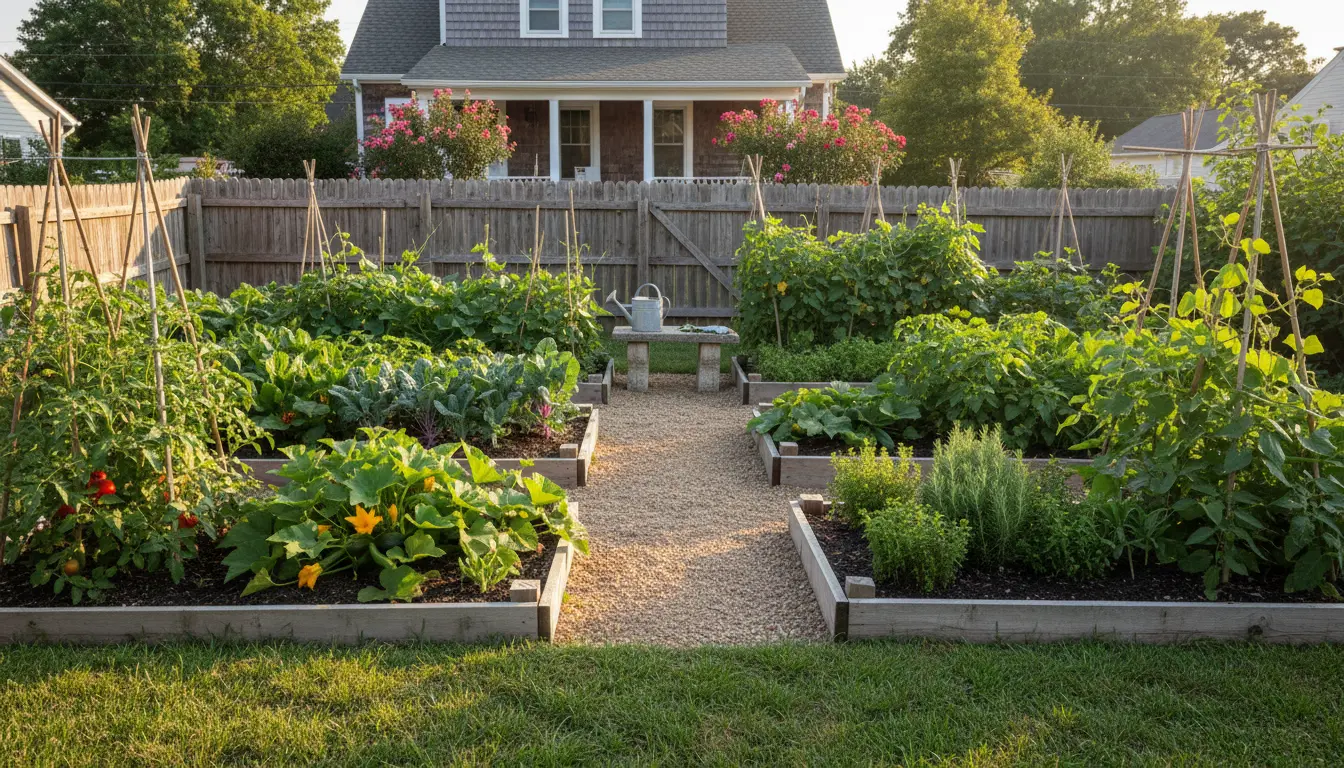
Start a Vegetable Garden: Quick Overview
Starting a vegetable garden at home is achievable with basic planning and regular care. This guide breaks the process into clear steps so beginners can grow food successfully.
Start a Vegetable Garden: Plan Your Space
Decide where to place the garden based on sunlight, access to water, and convenience. Most vegetables need 6 to 8 hours of direct sunlight daily.
Measure the space and choose a layout: in-ground beds, raised beds, or containers. Raised beds and containers simplify soil control and are good for small yards or balconies.
Choose Plants for Your Climate
Select vegetables suited to your hardiness zone and season. Cool-season crops include lettuce, spinach, and peas. Warm-season crops include tomatoes, peppers, and beans.
Start with easy crops for beginners: radishes, leaf lettuce, bush beans, and cherry tomatoes are forgiving and quick to harvest.
Start a Vegetable Garden: Prepare Soil and Containers
Good soil is the foundation of a productive garden. Aim for loose, well-draining soil rich in organic matter.
If using containers or raised beds, buy or mix a quality potting blend with compost. For in-ground beds, test soil pH and add compost and lime or sulfur as needed.
- Simple soil mix for containers: 40% compost, 40% coconut coir or peat, 20% perlite or coarse sand.
- For in-ground beds: spread 2–4 inches of compost and work it into the top 6–8 inches of soil.
- Check drainage by digging a small hole and filling with water; it should drain within a few hours.
Fertilization Basics
Use a balanced organic fertilizer at planting time and side-dress with compost mid-season. Follow package rates to avoid overfeeding.
Beans and peas fix nitrogen, so they need less nitrogen fertilizer but still benefit from phosphorus and potassium.
Start a Vegetable Garden: Planting and Care
Plant seedlings after the last frost date for your area, or sow seeds directly for fast-growing crops. Read seed packet directions for depth and spacing.
Watering is critical. Water deeply and less often to encourage strong roots. Aim for 1–1.5 inches of water per week from rainfall or irrigation.
- Morning watering reduces disease risk by letting foliage dry during the day.
- Use drip irrigation or soaker hoses to deliver water to the root zone efficiently.
- Mulch with straw or shredded leaves to conserve moisture and suppress weeds.
Pest and Disease Management
Inspect plants weekly for signs of pests or disease. Early detection limits spread and damage.
Use integrated pest management: hand-pick pests, apply insecticidal soap for soft-bodied insects, and rotate crops yearly to reduce soil-borne diseases.
Start a Vegetable Garden: Common Problems and Solutions
Yellowing leaves can indicate nutrient deficiency or overwatering. Check soil moisture and add compost or a balanced fertilizer if needed.
Stunted growth often means poor soil or compacted roots. Loosen soil around roots and add organic matter to improve structure.
- Slow germination: check seed age and soil temperature; keep soil moist but not waterlogged.
- Blossom end rot on tomatoes: ensure consistent calcium and even watering.
- Powdery mildew: remove affected leaves and improve air circulation between plants.
Start a Vegetable Garden: Harvesting and Storage
Harvest vegetables at peak ripeness for best flavor and to encourage continued production. Many plants bear more when picked regularly.
Leafy greens can be cut-and-come-again. Pick tomatoes when they are fully colored and slightly soft. Store root vegetables in a cool, dark place.
Extend the Season
Use row covers, cold frames, or cloches to protect plants from light frosts and to start earlier in spring. Container gardens can be moved to sunny or sheltered spots.
Succession planting—stagger sowing dates—keeps harvests steady rather than all at once.
Companion planting, such as growing basil near tomatoes, can improve flavor and reduce pests. Beans fix nitrogen that benefits heavy feeders like corn.
Case Study: Balcony to Basket Garden
A small case: Emma, living in an urban apartment, converted a 4-by-6 foot balcony into a productive vegetable area. She used three 12-inch deep containers and one 4×4 raised bed box.
Within one season she harvested radishes, leaf lettuce, two cherry tomato plants, and a handful of herbs. Emma focused on vertical supports to save space and used a drip-watering timer to maintain consistent moisture.
Start a Vegetable Garden: Simple Checklist
- Choose a sunny spot with water access.
- Decide between in-ground, raised bed, or containers.
- Prepare soil or container mix with compost.
- Select beginner-friendly crops for your season.
- Water consistently and mulch to conserve moisture.
- Monitor pests and diseases weekly.
- Harvest regularly and preserve surplus.
Starting a vegetable garden is a practical project with tangible rewards. With planning, basic soil care, and simple maintenance routines, most people can grow fresh vegetables at home.