
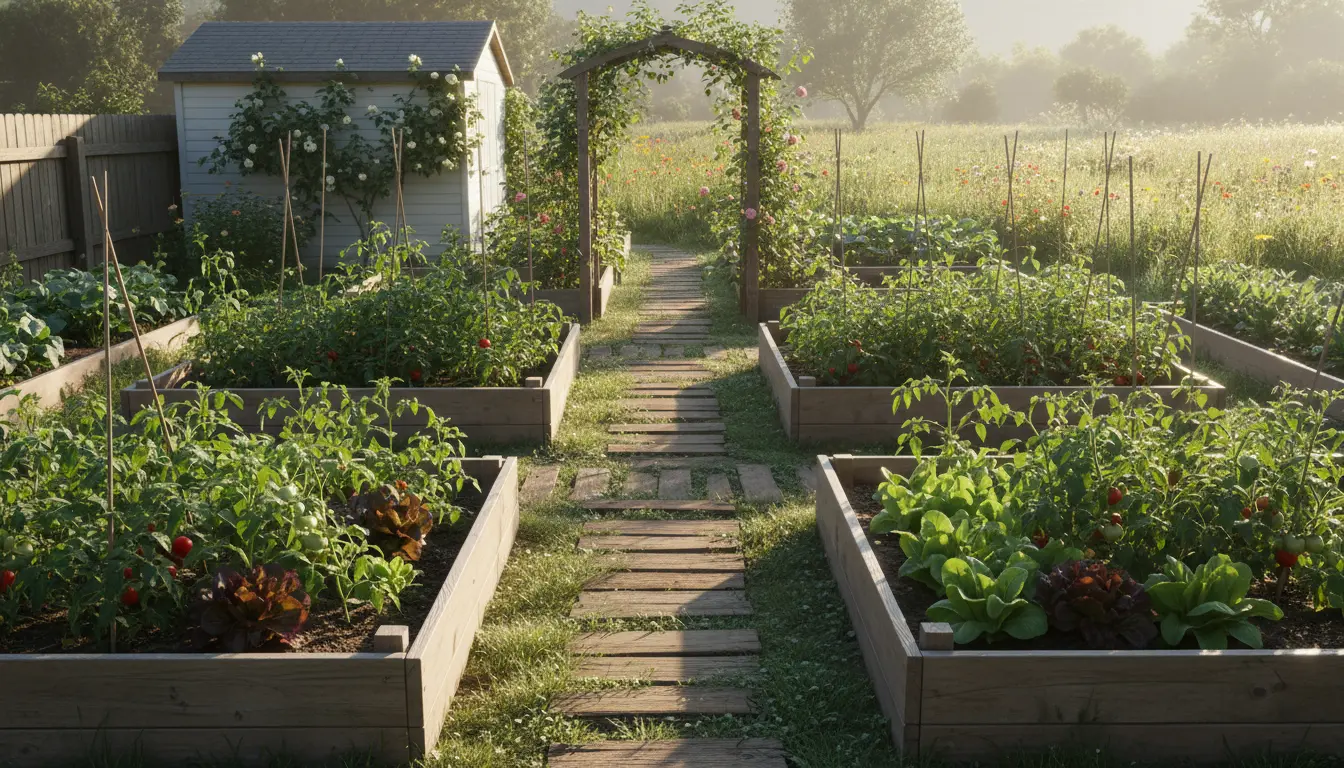
Starting a vegetable garden at home is a practical way to grow fresh produce, save money, and enjoy outdoor activity. This guide gives clear, actionable steps you can follow, whether you have a small balcony or a backyard plot.
Why Start a Vegetable Garden at Home
A vegetable garden at home delivers fresher food and better flavor than store-bought produce. It also reduces grocery trips and can improve your diet with seasonal vegetables.
Benefits of a Home Vegetable Garden
- Lower food costs over time when you grow staples like tomatoes and greens.
- Better nutrition from fresh, ripe vegetables harvested when needed.
- Physical activity and stress reduction from gardening tasks.
Choose the Right Location for Your Vegetable Garden at Home
Location is the most important early decision for a vegetable garden at home. Most vegetables need 6 to 8 hours of direct sunlight daily.
Site Selection Tips
- Pick a level spot with good sun exposure and easy access to water.
- Avoid areas under dense trees where roots and shade limit growth.
- If space is limited, use containers or raised beds on balconies or patios.
Plan Your Vegetable Garden at Home
Good planning saves time and improves yields. Start small and expand as you gain experience and confidence.
Selecting Crops
Choose vegetables that match your climate, available space, and family preferences. Fast-growing crops give quick rewards and learning opportunities.
- Easy starters: lettuce, radishes, green beans, herbs, and cherry tomatoes.
- Longer commitment: peppers, eggplants, and winter squash.
- Companion planting: plant basil near tomatoes to improve flavor and deter pests.
Garden Layout Examples
Use simple layouts for small plots: rows, square foot gardening, or several raised beds. Keep pathways for watering and harvest access.
- Square foot method: divides beds into 1-foot squares for organized planting.
- Traditional rows: good for larger spaces and mechanical tools.
Prepare Soil and Beds for Your Vegetable Garden at Home
Healthy soil is the foundation of a productive vegetable garden at home. Test and amend the soil before planting to ensure the right structure and nutrients.
Soil Testing and Improvement
Conduct a simple soil test for pH and nutrient levels using a kit or local extension service. Most vegetables prefer slightly acidic to neutral soil, pH 6.0 to 7.0.
- Add compost to improve texture, water retention, and microbial life.
- Use aged manure or balanced organic fertilizer if tests show nutrient deficiencies.
Raised Beds and Containers
Raised beds warm up faster in spring and offer better drainage, making them ideal for many home gardeners. Containers work well for patios and small spaces.
- Fill raised beds with a mix of topsoil, compost, and coarse sand for drainage.
- Choose pots with drainage holes and use a high-quality potting mix for containers.
Planting and Care for Your Vegetable Garden at Home
Plant at the right time for your region and follow a simple care schedule. Consistency in watering and monitoring prevents common problems.
Watering, Mulching, and Feeding
Water deeply and less frequently to encourage strong root systems. Mulch reduces weeds, conserves moisture, and moderates soil temperature.
- Water in the morning to reduce fungal issues and evaporation.
- Use 2 to 3 inches of organic mulch like straw or shredded leaves around plants.
- Side-dress with compost or balanced organic fertilizer during the growing season.
Pest and Disease Management
Use integrated pest management (IPM) to handle pests with minimal chemicals. Start with physical controls and encourage beneficial insects.
- Remove damaged leaves and use row covers to protect young plants.
- Encourage predators like ladybugs and lacewings by planting flowers and avoiding broad-spectrum pesticides.
Tomatoes and peppers are heavy feeders and often respond well to weekly compost tea or a balanced organic fertilizer during fruiting. Regular feeding can increase yields by up to 20 percent.
Harvesting and Storing from Your Vegetable Garden at Home
Harvest vegetables at peak ripeness for the best flavor and nutrition. Frequent harvesting can also encourage more production in many plants.
Storage Tips
- Cool, dry storage for root vegetables like carrots and beets extends shelf life.
- Tomatoes are best stored at room temperature and used within a week for flavor.
- Blanch and freeze surplus greens and beans for winter use.
Real World Example: Small Backyard Success
Case study: A family converted a 10 ft by 12 ft lawn patch into two raised beds. They planted tomatoes, lettuce, kale, and bush beans.
In the first season they harvested weekly greens and summer tomatoes, reducing grocery lettuce purchases by 75 percent. The initial investment in soil and beds paid off in the first year through saved produce and reduced food waste.
Next Steps to Grow Your Vegetable Garden at Home
Start with a simple plan, prepare good soil, and plant a few easy crops. Monitor plants weekly and adjust care based on observations.
Checklist to Begin
- Select a sunny location and decide on beds or containers.
- Test and amend soil, add compost, and set up irrigation if needed.
- Choose 3 to 5 easy crops and make a planting schedule for your zone.
With consistent care and small, steady improvements, a vegetable garden at home can provide a reliable source of fresh food and a satisfying hobby. Start small, learn each season, and expand as you gain confidence.