
Why Start a Small Vegetable Garden
Growing your own vegetables saves money and gives you fresher produce. A small vegetable garden fits in a backyard, balcony, or community plot.
This guide gives step-by-step instructions to plan, plant, and maintain a productive small vegetable garden with common tools and techniques.
Planning Your Small Vegetable Garden
Good planning makes a small garden productive. Start by choosing the right location, size, and layout for the space you have.
Site Selection for a Small Vegetable Garden
Pick a spot with at least 6 hours of sunlight per day for most vegetables. Avoid low spots that collect water and areas under large trees.
Consider access to a water source and easy paths for maintenance. Sun, water, and access are the three basic requirements.
Choose the Right Size
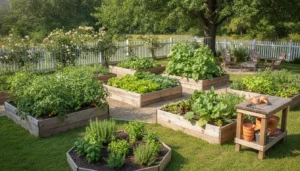
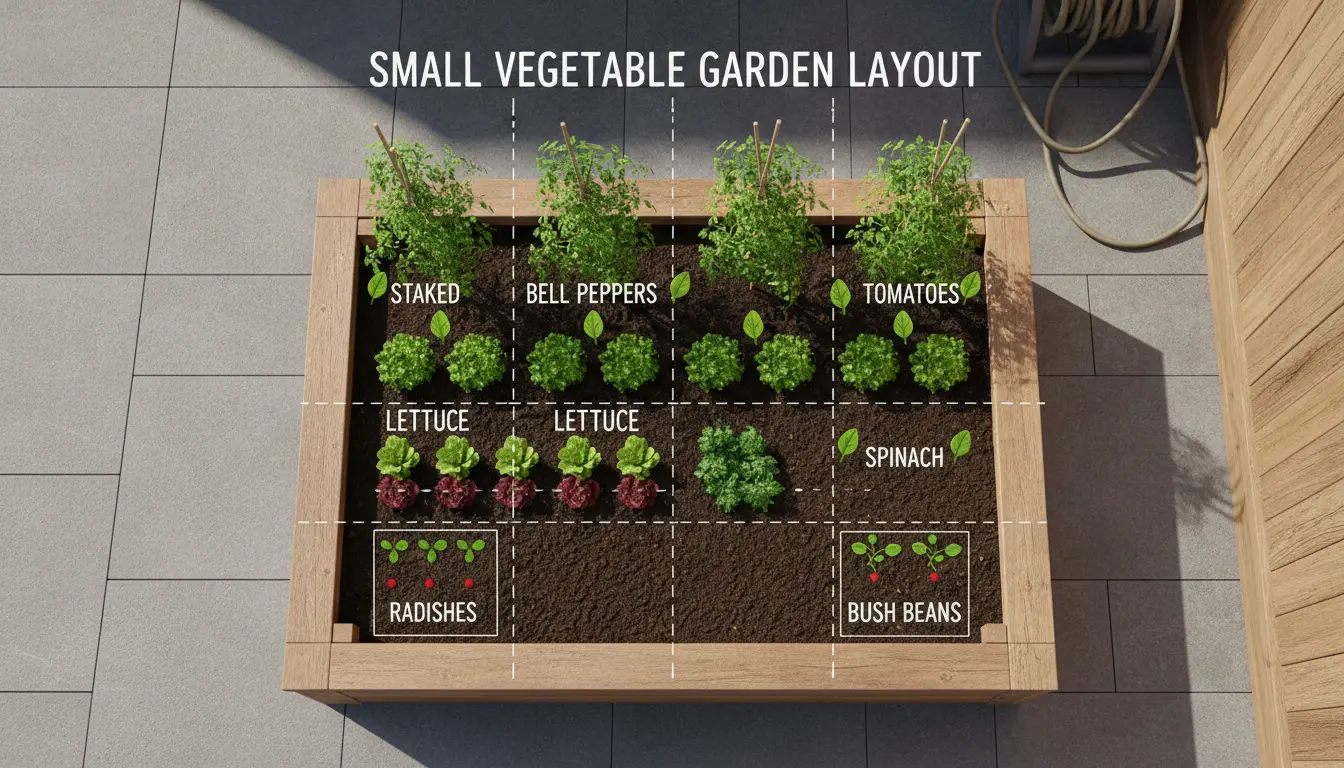
For beginners, a 4×8 foot raised bed or several containers is a good starting point. This size is easy to maintain and can feed a small family.
Start small and expand as you learn which vegetables perform well in your space.
Choosing Vegetables for a Small Garden
Select crops that give high yield in limited space. Focus on quick-growing and space-efficient varieties.
- Leafy greens: lettuce, spinach, arugula
- Root crops: radishes, carrots, beets
- Fruit-bearing: cherry tomatoes, peppers, bush beans
- Herbs: basil, parsley, cilantro
Use succession planting to harvest multiple times. Plant quick crops between slower ones to maximize yield from a small vegetable garden.
Preparing Soil and Beds for a Small Vegetable Garden
Soil quality is the most important factor for success. Improve soil before planting with organic matter and testing.
Test and Amend Soil
Do a basic soil test for pH and nutrients or use an at-home kit. Most vegetables prefer slightly acidic to neutral soil (pH 6.0–7.0).
Work in compost and well-rotted manure to improve texture and fertility. Aim for 2–4 inches of compost mixed into the top 6–8 inches of soil.
Raised Beds and Containers
Raised beds warm faster in spring and provide better drainage. Use a good mix of topsoil, compost, and a small amount of coarse sand if drainage is poor.
Containers should be at least 12 inches deep for most vegetables. Use a quality potting mix formulated for edibles.
Planting and Watering in a Small Vegetable Garden
Follow seed packet or plant tag spacing and depth instructions. Overcrowding reduces airflow and increases disease risk.
Watering Basics
Water deeply and less often rather than light frequent sprinkling. Aim for moist but not waterlogged soil.
Drip irrigation or soaker hoses save water and keep foliage dry, reducing disease pressure in a small vegetable garden.
Maintenance and Pest Control
Regular maintenance keeps plants strong and productive. Plan for weekly checks for watering, weeding, and pest damage.
- Weed regularly to reduce competition for nutrients and water.
- Mulch 2–3 inches around plants to retain moisture and suppress weeds.
- Rotate crops each season to reduce pest and disease buildup.
Use integrated pest management (IPM): identify pests, use mechanical controls first, and apply organic treatments as needed.
Harvesting and Storage from a Small Vegetable Garden
Harvest regularly to encourage production. Many vegetables taste best when picked at their peak size.
Store produce properly: leafy greens in a cool drawer, root crops in a cellar or refrigerator, and tomatoes at room temperature until ripe.
Container-grown tomatoes can produce fruit in as little as 60 days from transplanting. Containers warm faster and allow earlier planting in spring.
Small Vegetable Garden Calendar
Timing matters. Use this simple calendar as a guide, adjusting for local climate and frost dates.
- Early spring: prepare beds, sow peas and cool-season greens.
- Late spring: transplant tomatoes, peppers, and basil after last frost.
- Summer: direct sow beans, radishes, and succession greens.
- Fall: plant spinach, kale, and fall root crops for cool-season harvest.
Simple Case Study: One-Season Balcony Garden
Maria has a south-facing balcony with three 12-inch containers. She planted cherry tomatoes, basil, and a mixed leaf lettuce in early May.
Using a commercial potting mix, drip-style watering, and weekly liquid fertilizer, she harvested daily salad greens and several kilos of tomatoes by September.
Her small vegetable garden produced fresh meals and saved grocery trips, showing how limited space can still yield satisfying results.
Common Mistakes and Quick Fixes
Beginners often overwater or crowd plants. Watch for yellowing leaves or stunted growth as signs of stress.
- Overwatering: reduce frequency and improve drainage.
- Poor germination: check seed depth and soil temperature.
- Pest outbreaks: remove affected leaves and introduce beneficial insects or barriers.
Final Tips for a Successful Small Vegetable Garden
Start with a simple plan and a few favorite crops. Keep a garden notebook to track what works and what does not.
Enjoy the process and learn each season. A small vegetable garden is a practical step toward fresher food and a greener routine.