
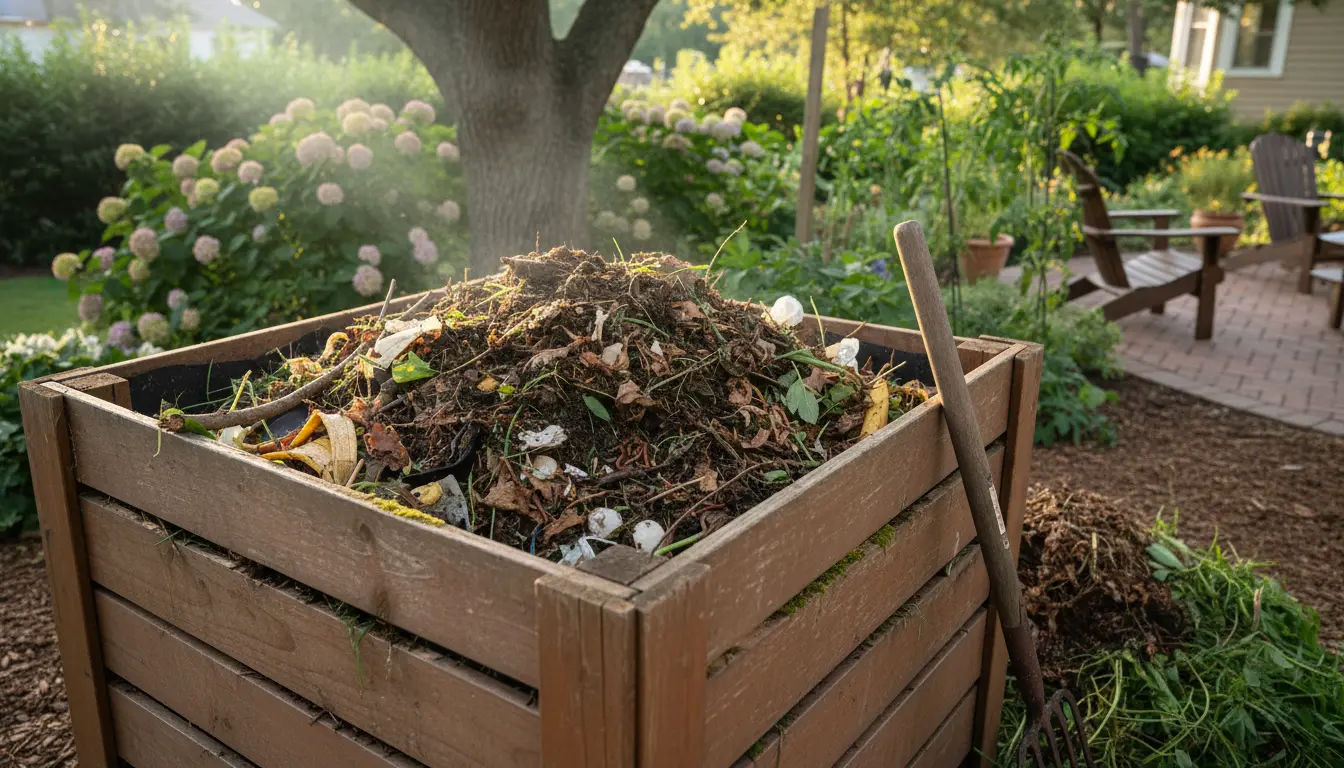
Start composting at home with simple steps
Composting at home turns kitchen scraps and yard trimmings into a useful soil amendment. This guide explains practical methods, common mistakes, and a short case study so you can start quickly.
Why composting at home matters
Composting reduces household waste sent to landfill and returns nutrients to soil. It improves garden soil structure, water retention, and plant health with little cost.
Environmental and garden benefits of composting at home
Compost cuts methane emissions from landfill and lowers the need for synthetic fertilizers. For gardens, it increases organic matter and supports beneficial microbes.
- Reduces food waste and trash volume.
- Improves soil fertility and aeration.
- Helps retain moisture and reduce irrigation needs.
How to start composting at home: choose a method
Pick a composting method that fits your living situation and time. Common options include backyard bins, tumblers, vermicomposting, and Bokashi systems.
- Open bin or compost pile — Simple and low cost, good for yards.
- Tumbler — Enclosed, faster decomposition with regular turning.
- Vermicompost (worm bin) — Great for small spaces and kitchens; uses red wigglers.
- Bokashi — Fermentation method for any kitchen scraps, including meat and dairy.
Picking a spot and container
Choose a level, shaded spot with good drainage. Containers should allow airflow and moisture control. For urban apartments, a worm bin or Bokashi bucket is most practical.
How to build and maintain your compost at home
Good compost needs a balance of carbon and nitrogen, moisture, and air. Follow a few basic steps for reliable results.
- Layer materials — Alternate brown (carbon) and green (nitrogen) materials. Examples: dry leaves and cardboard as browns; vegetable scraps and grass clippings as greens.
- Maintain moisture — Compost should feel like a wrung-out sponge. Add water if dry or dry browns if too wet.
- Turn occasionally — Aerate the pile every 1–2 weeks for faster decomposition. Tumblers make this easier.
- Monitor temperature — A properly active pile will warm up; cooling indicates it needs turning or fresh greens.
What to compost at home
Knowing what to include and avoid keeps your compost healthy. Use this simple list to get started.
- Good to compost: Fruit and vegetable scraps, coffee grounds, eggshells, tea bags, grass clippings, dry leaves, shredded newspaper, cardboard.
- Avoid or limit: Meat, bones, dairy, oily foods (unless using Bokashi), diseased plants, weeds with seeds, pet waste from carnivores.
Troubleshooting common problems when composting at home
Most issues are fixable with small adjustments. Here are quick fixes for frequent problems.
- Bad odor: Add more brown materials and turn the pile to introduce air.
- Pests: Use closed bins, bury food scraps, or switch to Bokashi or worm bins.
- Slow breakdown: Chop materials smaller, add nitrogen (greens), and keep the pile moist and aerated.
Simple maintenance schedule
Keep tasks small and regular. This schedule works for most home systems:
- Daily: Add kitchen scraps to your collection container.
- Weekly: Transfer scraps to the main bin and turn or mix.
- Monthly: Check moisture and add browns or greens as needed.
Real-world example: Urban family who started composting at home
A two-person apartment household began with a 20-liter worm bin on their balcony. They added coffee grounds and vegetable scraps and avoided citrus and onion overload. Within three months they had rich castings for potted herbs and reduced their weekly trash by half.
They solved minor odor by ensuring the bin remained slightly moist and adding shredded cardboard. The small start grew into a routine that saved money on potting mix and reduced waste pickup needs.
Composting diverts organic waste from landfill where it would create methane, a potent greenhouse gas. A single household can compost hundreds of pounds of material each year.
Quick checklist to start composting at home
Use this checklist to begin in one weekend.
- Choose a method: bin, tumbler, worm bin, or Bokashi.
- Gather materials: container, brown and green materials, basic tools (pitchfork or compost aerator).
- Set a spot: shaded, level, and accessible.
- Start layering and keep the pile moist and aerated.
- Monitor and troubleshoot: odors, pests, moisture, and decomposition speed.
Composting at home is adaptable to any living situation. Start small, learn by doing, and adjust your system to fit your routine. Within a few months you’ll have nutrient-rich compost to benefit your plants and reduce household waste.