
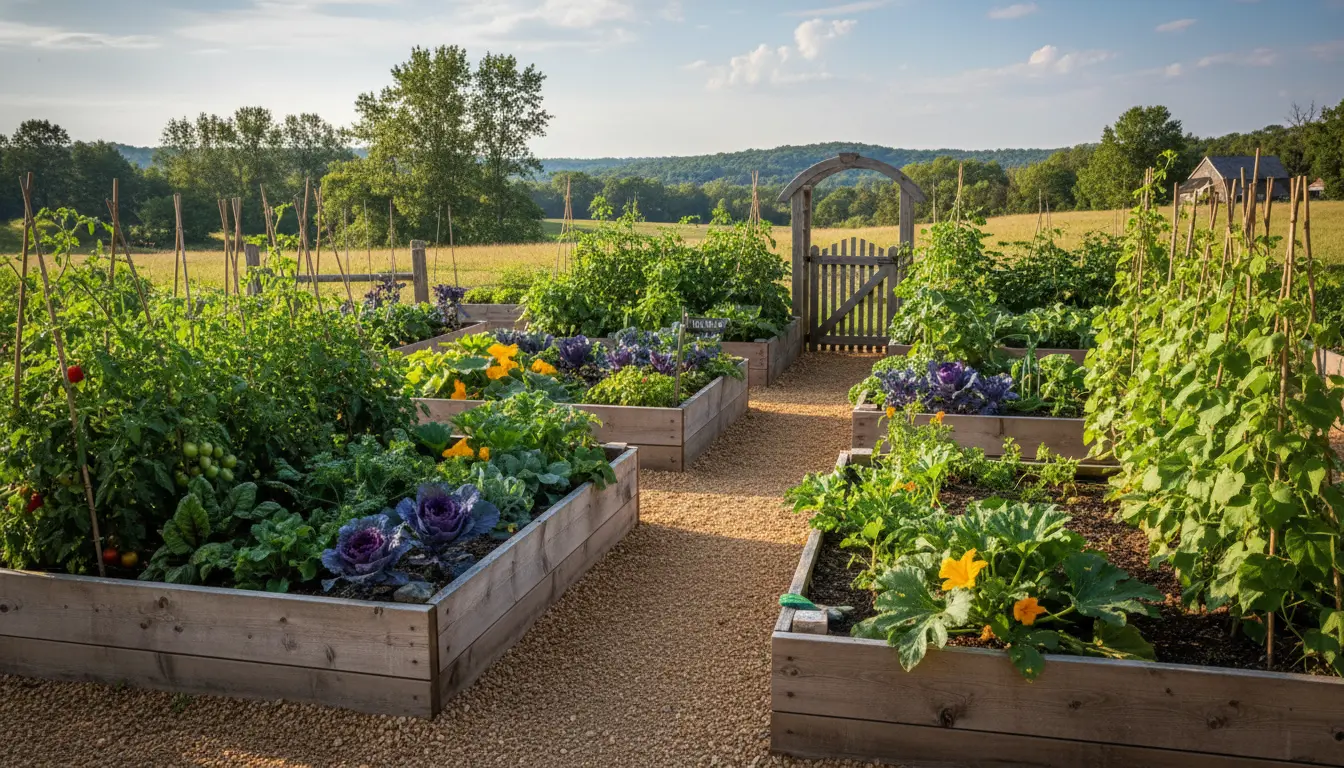
Starting a vegetable garden can be simple and rewarding. This guide gives practical steps you can follow to plan, plant, and maintain a productive garden even if you are a complete beginner.
Plan Your Vegetable Garden
Good planning saves time and makes your garden more productive. Start by choosing a location with at least six hours of direct sunlight and good drainage.
Consider these planning basics:
- Sun exposure: Most vegetables need 6–8 hours of sun daily.
- Soil access: Choose a spot with soil you can test and amend.
- Water access: Place the garden near a hose or irrigation source.
- Space: Decide on bed size based on available space and maintenance ability.
Choosing Plants for a Beginner Vegetable Garden
Select easy-to-grow vegetables that produce quickly and tolerate common mistakes. This builds confidence and gives you fresh produce sooner.
- Leafy greens: Lettuce, spinach, and Swiss chard are fast growers.
- Root crops: Radishes and carrots are low-maintenance options.
- Fruiting plants: Cherry tomatoes and bush beans are forgiving choices.
- Herbs: Basil, parsley, and chives are useful and compact.
Garden Layout and Bed Types
Decide between in-ground rows, raised beds, or containers. Each option fits different yards and schedules.
Raised beds are ideal for beginners because they warm faster, drain well, and allow you to control the soil mix. Containers work well on patios or balconies.
Example Layouts
- Single raised bed: 4×8 feet is manageable and productive.
- Multiple small beds: Easier to rotate crops and isolate pests.
- Container clusters: Group pots of herbs and peppers for small spaces.
Prepare Soil and Compost
Soil quality determines much of your garden’s success. Test your soil pH and texture to know what to change.
Improve soil with organic matter. Mix compost into the top 6–8 inches of soil before planting.
- Soil test: Use a home kit or extension service to check pH and nutrients.
- Amendments: Add compost, well-rotted manure, or peat-free alternatives.
- Drainage: If soil is heavy clay, add coarse sand and organic matter.
Mulching and Watering for a Healthy Vegetable Garden
Mulch reduces weeds, conserves moisture, and stabilizes soil temperature. Apply a 2–3 inch layer of organic mulch around established plants.
Water consistently. Most vegetables need about 1 inch of water per week. Use a soaker hose or drip irrigation to deliver water to roots and minimize disease.
Planting and Timing for Your Vegetable Garden
Follow planting dates for your climate. Use seed packets and plant labels to track spacing and depth.
Practice succession planting to extend your harvest. For example, sow lettuce every two weeks to maintain a steady supply.
- Cool-season crops: Plant early in spring and again in fall (lettuce, peas).
- Warm-season crops: Plant after last frost (tomatoes, peppers).
- Staggered sowing: Sow small amounts every 1–3 weeks for continuous harvest.
Maintenance and Pest Control in a Vegetable Garden
Daily or twice-weekly checks reduce problems early. Remove diseased leaves, pull weeds, and inspect for pests.
Use integrated pest management (IPM): promote beneficial insects, hand-pick pests, and use barriers or organic sprays only when needed.
- Companion planting: Grow basil near tomatoes to help deter pests.
- Physical barriers: Row covers protect seedlings from insects and birds.
- Natural controls: Encourage ladybugs and predatory wasps by planting flowers.
Interplanting, such as planting radishes beside carrots, can boost total yield and reduce pests by disrupting pest cycles.
Harvesting and Crop Rotation
Harvest vegetables at peak ripeness for best flavor. Regular harvesting often encourages more production, especially for plants like beans and zucchini.
Rotate crops each season to reduce disease build-up and nutrient depletion. Move families of vegetables to different beds year to year.
- Leafy crops follow root crops to use different nutrients.
- Tomato family (nightshades) should not follow other nightshades for at least a year.
Small Real-World Case Study
Sarah, a beginner gardener in a small town, built a 4×8 raised bed and planted tomatoes, lettuce, and bush beans. She amended the soil with 2 wheelbarrows of compost and used drip irrigation.
In the first season Sarah harvested lettuce weekly and picked 20 pounds of tomatoes by late summer. Her consistent watering and succession planting made the bed productive and low-maintenance.
Quick Checklist to Start Your Vegetable Garden
- Choose a sunny, well-drained site near water.
- Decide bed type: raised bed, in-ground, or containers.
- Test and amend soil with compost.
- Select easy plants: lettuce, radish, cherry tomato, bush beans.
- Plant at the right time and water consistently.
- Inspect for pests weekly and use IPM practices.
- Harvest regularly and rotate crops each season.
Starting a vegetable garden is a step-by-step process that rewards planning and regular care. Follow these practical instructions and adapt them to your climate, and you’ll be harvesting fresh vegetables in your first season.