
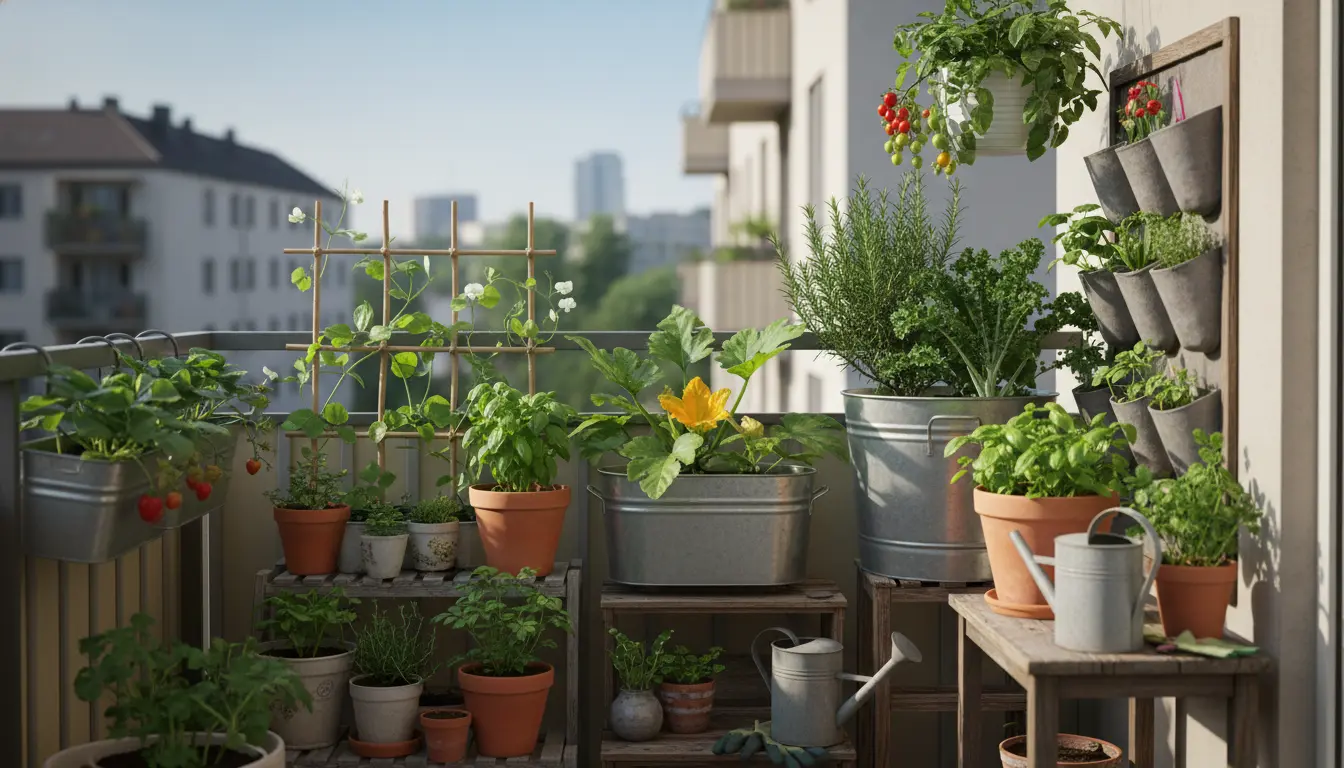
Planning Your Small Space Vegetable Garden
Starting a vegetable garden in small spaces begins with planning. Assess light, available area, and how much time you can dedicate to care.
Choose a few high-value crops that do well in containers or tight beds. This helps maximize yield with minimal effort.
Choose the right location for your small space vegetable garden
Observe sun patterns for several days. Most vegetables need 6–8 hours of direct sunlight, but some crops tolerate partial shade.
Consider access to water and protection from strong wind. A spot near a balcony door or patio makes regular care easier.
Container and Soil Choices for Small Space Vegetable Garden
Containers let you grow in balconies, patios, and tiny yards. Pick the right size and material for plant health and convenience.
Use high-quality potting mix instead of garden soil. Potting mix drains better and keeps roots healthier in containers.
Best containers for small space vegetable garden
- Tomatoes: 18–24 inch deep pots
- Leafy greens: 6–10 inch shallow planters
- Peppers and eggplants: 12–16 inch pots
- Herbs: small pots or window boxes
Lightweight plastic or fabric grow bags are easy to move and drain well. Make sure every container has drainage holes.
Selecting Vegetables for Small Space Vegetable Garden
Pick crops suited to containers and short seasons. Focus on varieties labeled compact, patio, or dwarf for best results.
Good choices include salad greens, radishes, bush beans, dwarf tomatoes, peppers, and herbs.
Succession planting and spacing tips
Succession planting maximizes production. After harvesting radishes, plant a new crop in the same container.
Follow package spacing recommendations but reduce slightly for containers. Overcrowding reduces airflow and increases disease risk.
Watering and Fertilizing Your Small Space Vegetable Garden
Containers dry out faster than ground beds. Check moisture daily in hot weather and water when the top inch of soil feels dry.
Use a balanced, water-soluble fertilizer every 2–4 weeks or slow-release pellets at planting time for steady nutrients.
Watering methods for small space vegetable garden
- Hand watering with a watering can for precise control
- Soaker hoses or micro drip lines for multiple containers
- Self-watering containers to reduce daily maintenance
Pest and Disease Management in Small Space Vegetable Garden
Small spaces can concentrate pests but also make monitoring easier. Check leaves weekly and remove affected parts quickly.
Use physical controls like netting, row covers, and sticky traps before moving to chemical options.
Common pest solutions for small space vegetable garden
- Aphids: blast with water or use insecticidal soap
- Slugs: handpick at night or use beer traps
- Powdery mildew: increase airflow and remove infected leaves
Seasonal Care and Crop Rotation for Small Space Vegetable Garden
Rotate containers or change plant families each season to reduce soil-borne pests and nutrient depletion.
Use cover crops or compost between seasons to restore soil health in containers and raised beds.
Winter and summer tips
- Summer: mulch containers to retain moisture and shade the root zone
- Winter: move portable containers to protected areas or insulate them
- Off-season: clean and store tools, refresh potting mix with compost
Simple Tools and Supplies for Small Space Vegetable Garden
You don’t need a shed full of tools. A hand trowel, pruners, watering can, and a small fork cover most needs.
Invest in a moisture meter and a pair of gloves to prevent overwatering and protect your hands while gardening.
Did You Know?
One well-maintained balcony or patio garden can produce enough salad greens for a small household all season. Container plants often mature faster than in-ground crops due to warmer root zones.
Real-World Example: Jenna’s Balcony Tomato Case Study
Jenna had a 6-foot balcony and no yard. She planted two determinate tomato plants in 20-inch pots with a high-quality potting mix.
She positioned pots for 6–7 hours of sun, used a drip line on a timer, and fertilized every three weeks. By late summer she harvested 10–12 pounds of tomatoes from two plants.
Key takeaways: choose compact varieties, ensure good drainage, and water consistently to get a reliable harvest even in small spaces.
Quick Checklist to Start Your Small Space Vegetable Garden
- Assess light and space for planting
- Choose containers with good drainage
- Select compact, high-yield crops
- Use quality potting mix and regular feeding
- Monitor water, pests, and diseases weekly
Final Tips for a Successful Small Space Vegetable Garden
Start small and expand as you gain confidence. Track what works on your balcony or patio so you can improve each season.
With the right containers, soil, and care, you can grow fresh vegetables even with limited outdoor space.