
Remote Work Productivity: Core Principles
Remote work productivity depends on structure, environment, and habits. Small changes in each area compound into meaningful gains over weeks.
Apply the principles below in a focused, repeatable way rather than chasing every new productivity trend.
Define Clear Goals for Remote Work Productivity

Start each week with 3 primary outcomes you must achieve. Break those outcomes into daily tasks that can be completed in focused sessions.
Use a simple tool: a master task list plus a daily priority list. This creates clarity and reduces decision fatigue.
Set Up Your Workspace for Remote Work Productivity
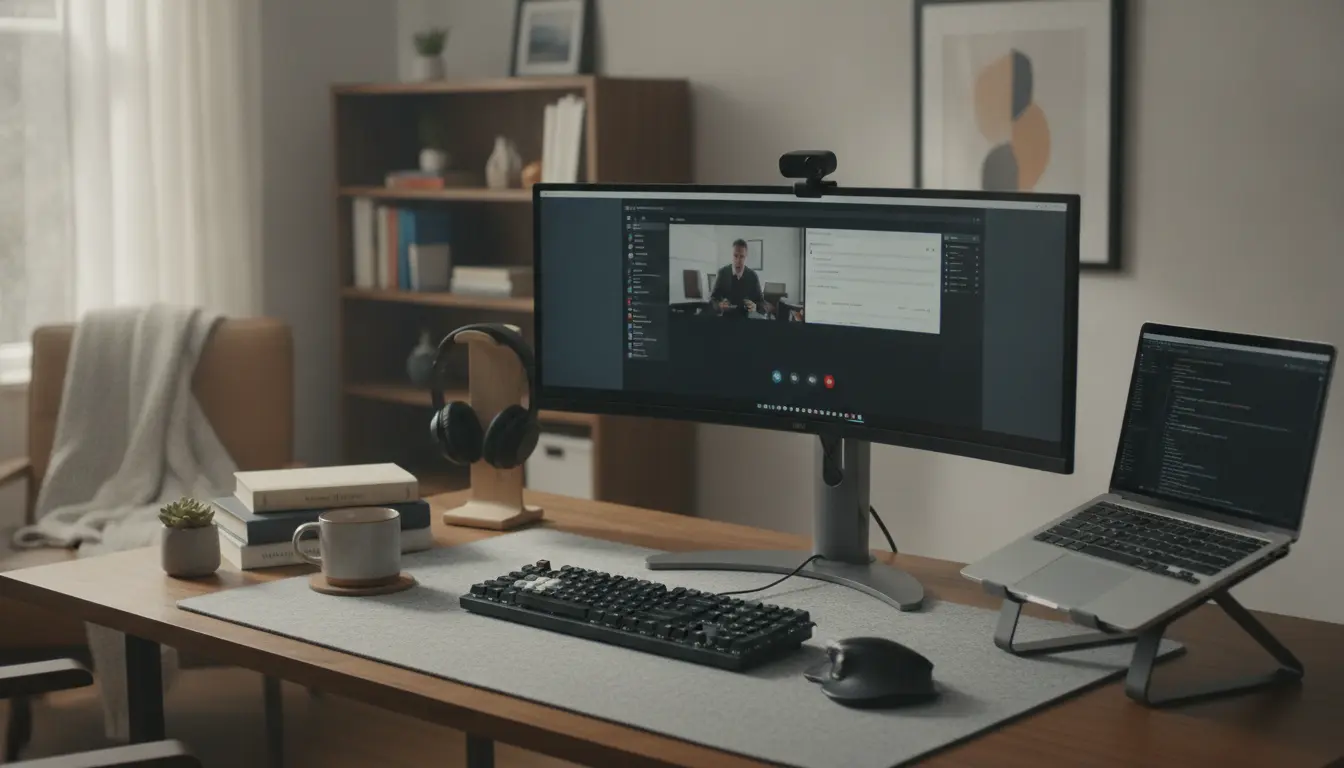
A functional workspace reduces friction and helps sustain focus. Prioritize ergonomics, lighting, and minimal distractions.

If you lack a dedicated room, define a consistent spot and a small set of rituals to signal the start of work.
Workspace checklist
- Ergonomic chair and monitor at eye level
- Good natural or task lighting to reduce eye strain
- Decluttered desk with essential tools within reach
- Headphones for calls and to block noise
Daily Routines That Improve Remote Work Productivity
Routines reduce friction and make productive behavior automatic. Keep morning and end-of-day rituals consistent.
Example morning routine: wake, hydrate, 10 minutes of planning, first focused work block. This anchors your day and sets momentum.
Time Blocking and Focus Sessions

Time blocking assigns specific tasks to fixed time slots. Combine this with focused work sessions of 45–90 minutes and short breaks.
- Plan blocks for deep work, communication, and admin tasks.
- Use a timer (Pomodoro or 52/17) to enforce focus and rest cycles.
- Protect at least one multi-hour deep work block daily for priority tasks.
Manage Communication Without Losing Productivity
Unstructured messaging and meetings are major productivity drains. Set expectations about response times and meeting types.
Adopt asynchronous communication where possible, and schedule focused meeting-free blocks.
Practical communication rules
- Use status indicators and shared calendars to show availability.
- Batch non-urgent messages into two check times per day.
- Agenda every meeting and keep them under 30 minutes when possible.
Tools That Support Remote Work Productivity
Choose a few reliable tools and use them consistently. Too many apps fragment attention and increase context switching.
Recommended tool categories
- Task manager (Asana, Todoist, or a simple spreadsheet)
- Calendar with time blocking (Google Calendar or Outlook)
- Focus/timer apps (Forest, Be Focused, or a kitchen timer)
- Asynchronous communication (Slack, Microsoft Teams, or email guidelines)
Reduce Distractions and Protect Deep Work
Identify your top three distractions and eliminate or limit them. Common issues include social apps, unscheduled meetings, and household interruptions.
Use simple tactics like website blockers, a visible do-not-disturb sign, and shared family schedules.
Measure and Iterate on Productivity Habits
Track outcomes, not just hours. Note weekly progress on your three primary outcomes and adjust routines that consistently fail.
Small experiments—changing work blocks, adjusting meeting times, or swapping tools—help find improvements that stick.
Case Study: Freelance Designer Improves Remote Work Productivity
Background: A freelance graphic designer struggled with inconsistent delivery times and frequent interruptions. Their baseline was four billable hours per day on average.
Actions taken: They implemented a morning planning ritual, two daily deep work blocks of 90 minutes, and a strict client communication window from 2–3pm. They also removed social apps from their work device.
Results after 8 weeks: Billable hours increased to six per day on average, project turnaround time dropped by 30%, and client satisfaction improved due to predictable response windows.
Quick Action Plan to Boost Remote Work Productivity Today
- Identify 3 weekly outcome goals and daily priority tasks.
- Set up one dedicated work spot and apply a 45–90 minute focus block.
- Limit communications to scheduled windows and use asynchronous updates.
- Run a one-week experiment tracking outcomes and adjust accordingly.
Remote work productivity is less about motivation and more about systems. Create simple, repeatable routines, protect deep work, and measure results to iterate toward steady improvement.