
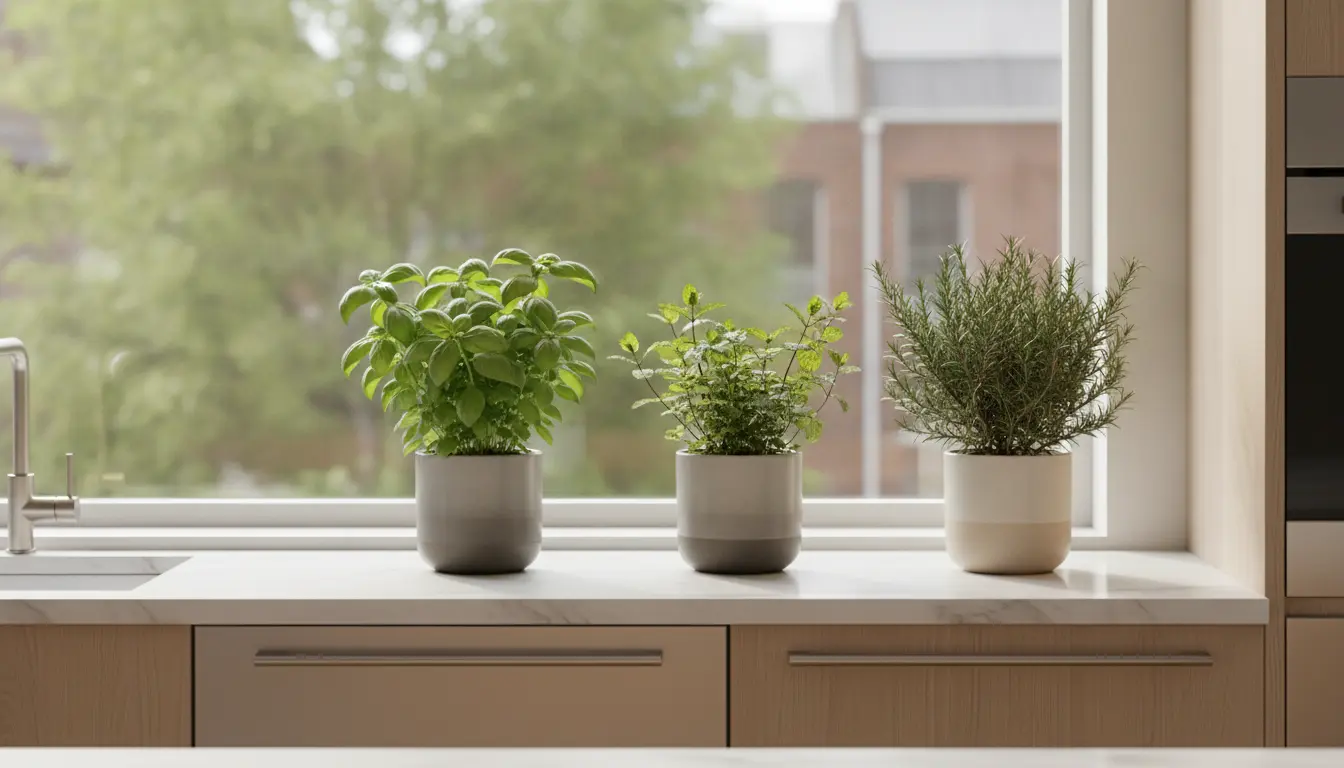
Why try indoor herb gardening
Indoor herb gardening brings fresh flavor to cooking and saves grocery trips. It is also a compact, low cost way to grow plants year round, even in small spaces.
This practical guide explains how to start and maintain an indoor herb garden with clear steps and examples you can follow today.
Choosing herbs for indoor herb gardening
Pick herbs that perform well indoors and suit your cooking. Easy choices include basil, mint, parsley, chives, and rosemary.
Consider growth habits: herbs like basil and mint grow fast and may need frequent pruning, while rosemary is slower and prefers drier conditions.
Best beginner herbs
- Basil – quick growth, loves light and regular watering.
- Mint – hardy and tolerant, but contain it to a pot to avoid spreading.
- Parsley – slower starter but reliable in medium light.
- Chives – compact and useful for garnishes.
- Rosemary – needs bright light and good drainage.
Light and placement for indoor herb gardening
Light is the most important factor. Most herbs need 6 to 8 hours of bright light each day. A south or west facing window is ideal.
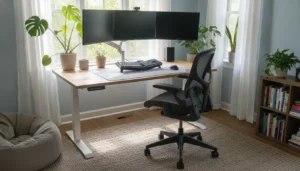
If natural light is limited, use an LED grow light positioned about 6 to 12 inches above the plants. Set a timer for 12 to 14 hours daily for steady growth.
Placement tips
- Rotate pots weekly so plants grow evenly.
- Avoid drafty windows or heat sources that dry soil quickly.
- Group plants with similar light needs together.
Containers and soil for indoor herb gardening
Choose pots with drainage holes to prevent root rot. Use saucers to protect furniture from water.
Use a light potting mix formulated for containers. Avoid garden soil, which compacts and drains poorly indoors.
Container size and material
- Small herbs like chives do well in 4 to 6 inch pots.
- Larger herbs like basil or rosemary prefer 6 to 8 inch pots.
- Terracotta is breathable and helps prevent overwatering, but dries faster than plastic.
Watering, feeding, and maintenance
Watering frequency depends on pot size, plant type, and light. Check soil with your finger; water when the top inch is dry for most herbs.
Feed herbs with a balanced liquid fertilizer every 3 to 4 weeks during active growth. Reduce feeding in winter when growth slows.
Pruning and harvesting
- Harvest regularly to encourage bushier growth. Pinch or cut above a pair of leaves.
- Never remove more than one third of the plant at a time.
- Pinch flowers on basil and parsley to keep leaves productive.
Pest control and common problems
Indoor pests are usually manageable. Common culprits include aphids, spider mites, and fungus gnats.
Start with prevention: clean pots, avoid overwatering, and inspect new plants before bringing them inside.
Safe pest remedies
- Use a strong water spray to dislodge aphids and mites.
- Apply insecticidal soap or neem oil for persistent infestations.
- Allow the soil to dry slightly to reduce fungus gnat populations.
Many herbs, like basil and mint, release stronger aromas and more essential oils when grown in bright light. More light often means more flavor.
Seasonal care for indoor herb gardening
Indoor herb gardens still respond to seasonal changes. In winter, reduce watering and lower fertilizer frequency as growth slows.
Rotate plants closer to light and consider supplemental lighting if days are short. Watch humidity levels; many herbs prefer moderate humidity.
Small real world example
Case Study: Sara’s Kitchen Basil Success
Sara started with three basil plants on a sunny windowsill and an inexpensive LED grow light. She used 6 inch terracotta pots and a light potting mix.
By pruning weekly and watering only when the top inch of soil was dry, Sara harvested fresh basil for eight months. Regular pruning prevented flowering and promoted fuller plants.
Practical checklist for starting your indoor herb garden
- Choose 3 to 5 beginner herbs to start.
- Select pots with drainage and a quality potting mix.
- Place in a bright window or use an LED grow light.
- Water when top inch of soil is dry; avoid overwatering.
- Feed lightly during the growing season and prune regularly.
- Inspect plants weekly for pests and remove any weak growth.
Final tips for successful indoor herb gardening
Start small and learn each herb’s needs. Track watering and light routines for a few weeks to find the best schedule.
Enjoy the convenience of fresh herbs for cooking and the satisfaction of growing living plants indoors. With simple care, an indoor herb garden can thrive for years.