
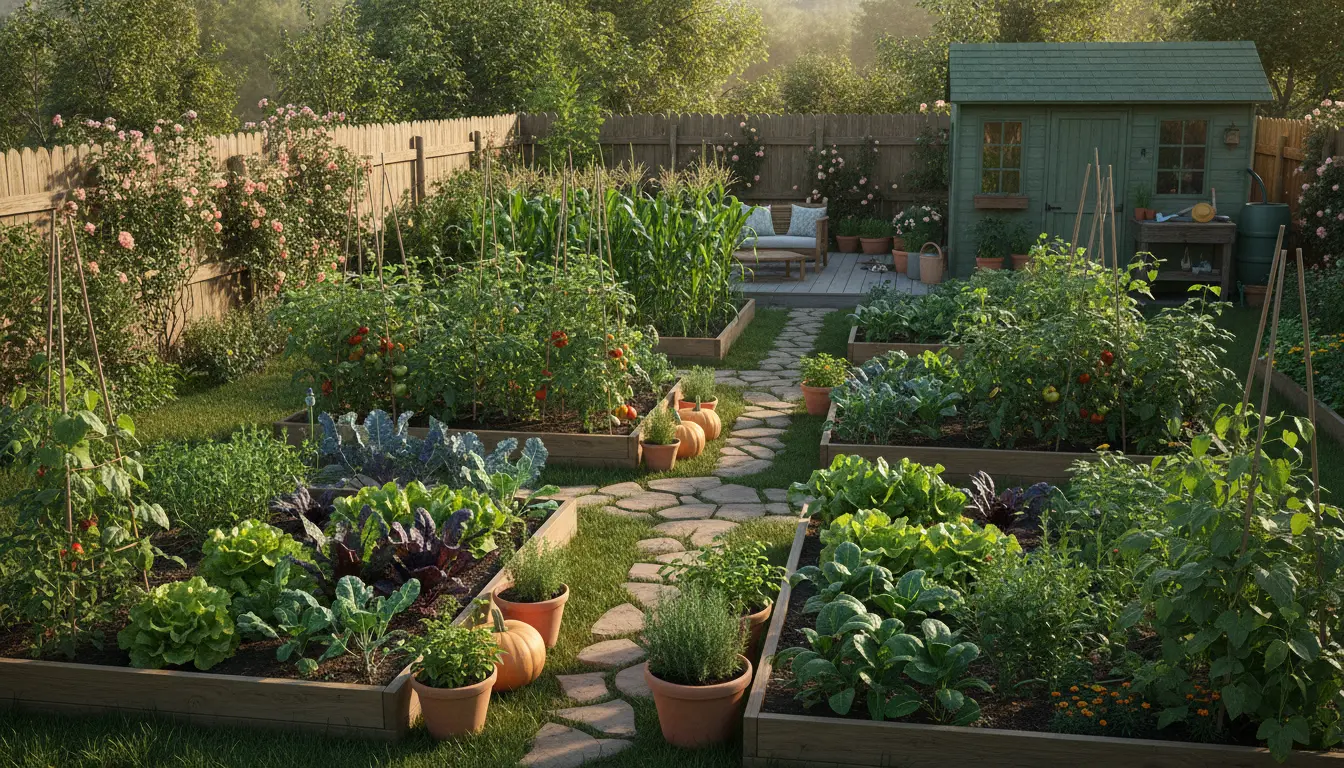
Start a Vegetable Garden: Quick Overview
Starting a vegetable garden is a practical way to grow fresh food, improve health, and save money. This guide shows clear steps you can use whether you have a balcony, small yard, or larger plot.
Step 1: Decide Why You Want to Start a Vegetable Garden
Clarify your goals before you dig: do you want frequent salad greens, a few tomato plants, or year-round production? Your goals affect plant choices, space, and effort.
List two or three priorities. That will guide decisions on space, containers, or raised beds.
Step 2: Choose the Best Location to Start a Vegetable Garden
Location determines success. Most vegetables need at least six hours of direct sunlight daily. Pick a spot with good sunlight and easy access to water.
Also consider wind protection, drainage, and proximity to the house for daily care. If shade is unavoidable, choose shade-tolerant crops like lettuce and herbs.
Soil and Drainage When You Start a Vegetable Garden
Healthy soil is the foundation. Test soil texture and drainage by digging a small hole and filling it with water; it should drain within a few hours.
If drainage is poor, use raised beds or containers and add well-draining mix. Aim for loamy soil rich in organic matter.
Step 3: Plan What to Grow
Select vegetables that match your climate, season, and skill level. Beginners often start with lettuce, radishes, tomatoes, beans, and herbs.

Use these guidelines to pick crops:
- Grow what you will eat regularly.
- Choose fast-growing crops for quick rewards (e.g., radishes, salad greens).
- Limit high-maintenance crops until you gain experience.
Crop Examples for Small Spaces
Try these combos if space is limited: cherry tomatoes and basil in containers, leaf lettuce in window boxes, and pole beans trained up a trellis.
Step 4: Prepare Soil and Beds
Improve soil by adding compost and aged manure. Mix in a 2–4 inch layer of organic matter and turn it into the top 6–8 inches of soil.
For raised beds, fill with a blend of topsoil, compost, and coarse sand or perlite for drainage. Raised beds warm faster and reduce compaction.
Step 5: Planting Tips to Start a Vegetable Garden
Follow seed packet or plant tag spacing and depth. Overcrowding leads to disease and low yields. Stagger planting dates for continuous harvests.
Consider direct seeding for root vegetables and transplants for tomatoes and peppers. Harden off transplants by exposing them to outdoors gradually over a week.
Step 6: Watering and Mulching
Water deeply and less often to encourage strong roots. Aim to keep soil consistently moist but not waterlogged.
Apply a 2–3 inch layer of organic mulch to retain moisture, suppress weeds, and moderate soil temperature. Straw, wood chips, and shredded leaves work well.
Step 7: Basic Maintenance and Troubleshooting
Inspect plants regularly for pests and disease. Pick off damaged leaves, hand-pick pests, and use row covers for protection when needed.
Rotate crops each year to reduce disease pressure and maintain soil health. Add compost annually to replenish nutrients.
Common Problems and Simple Fixes
- Yellow leaves: Check water and nutrient levels; add compost or balanced fertilizer if needed.
- Slow growth: Ensure adequate sunlight and loosen compacted soil.
- Pests: Use barriers, beneficial insects, or organic sprays as last resort.
Interplanting (also called companion planting) can increase yields and reduce pests. For example, planting basil near tomatoes can improve flavor and deter some insects.
Small Real-World Example: A Weekend Starter
Case study: Sara had a 10×6 ft patch with poor soil and limited time. She built two 4×2 ft raised beds, filled them with a soil-compost mix, and planted lettuce, radishes, bush beans, and two tomato seedlings.
She watered deeply twice a week, applied mulch, and harvested greens in three weeks. The raised beds improved drainage and reduced weeding, delivering fresh salads all season.
Practical Checklist to Start a Vegetable Garden
- Pick a sunny location with water access.
- Test and improve soil with compost.
- Choose easy crops for your climate.
- Plant at the right time and depth.
- Water deeply, mulch, and monitor pests.
Next Steps After You Start a Vegetable Garden
Keep a simple garden journal noting planting dates, varieties, and harvests. This record speeds learning and improves yields year to year.
Start small, enjoy the process, and expand as you gain confidence. Growing food is a practical skill anyone can learn with a bit of planning and regular care.