
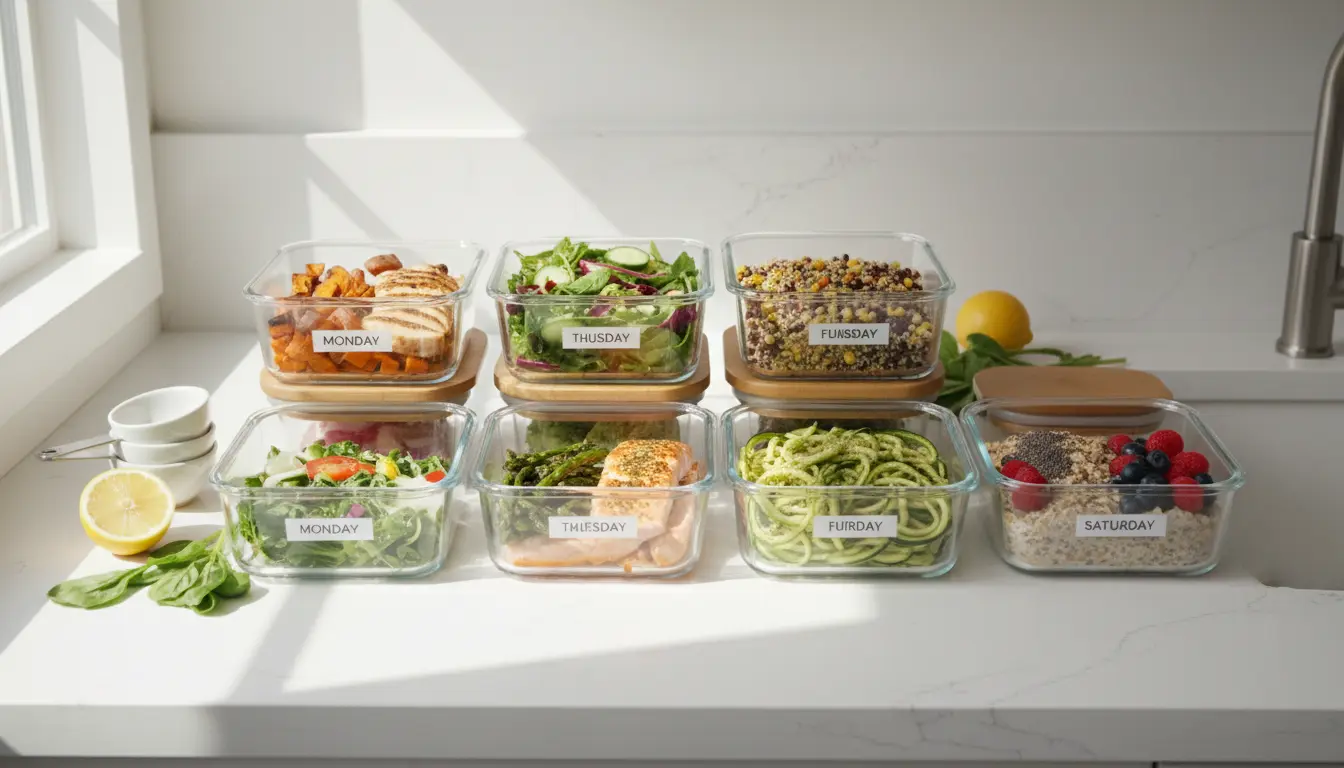
Why Meal Prep for Busy Professionals Works
Meal prep reduces decision fatigue and saves time during busy workweeks. Preparing food in focused sessions gives you reliable meals and lowers stress about what to eat.
This guide shows a simple weekly plan, storage rules, and tools to make meal prep predictable and sustainable for professionals with limited time.
Quick Principles of Meal Prep for Busy Professionals
Start with three core principles: plan, batch-cook, and store. Planning prevents wasted food. Batch-cooking uses a single cooking session for multiple meals. Proper storage keeps food safe and fresh.
Follow these small rules for consistent results:
- Choose 2-3 proteins, 2-3 grains, and 3-4 vegetables per week.
- Use recipes that scale and reheat well, like bowls, casseroles, and soups.
- Reserve one night for fresh-cooked dinner to keep variety.
Weekly Meal Prep for Busy Professionals: Step-by-Step
Spend 60–90 minutes on a single prep day, usually Sunday or a free evening. Divide the session into shopping, cooking, and storage tasks.
1. Plan Meals and Make a Shopping List
Decide breakfasts, lunches, dinners, and two snack options. Keep portion sizes consistent so containers match storage needs.
Example list items: chicken breasts, canned beans, brown rice, quinoa, sweet potatoes, mixed greens, eggs, Greek yogurt, and mixed nuts.
2. Batch-Cook Smart
Cook multiple items at once: roast vegetables while grain cooks and protein bakes. Use one-sheet pan or oven-batch methods to save time and energy.
Batch-cook tips:
- Roast a tray of mixed vegetables at 400°F for 20–30 minutes.
- Cook a large pot of rice or quinoa that will serve several meals.
- Season proteins simply so they pair with multiple sides.
3. Portion and Store
Invest in 4–6 airtight containers. Portion meals into single-serving containers for grab-and-go lunches and breakfasts.
Label containers with contents and date. Keep a shallow top shelf for ready-to-eat containers and a bottom shelf for raw or long-cook items.
Sample Weekly Menu for Busy Professionals
This sample covers five workdays and two flexible meals for evenings or weekends. Swap proteins or grains based on preference.
- Breakfasts: Overnight oats or yogurt jars with fruit and nuts.
- Lunches: Grain bowls with roasted vegetables and choice of protein.
- Dinners: Quick stir-fry, sheet-pan chicken, or pasta made fresh one night.
- Snacks: Hummus with carrot sticks, mixed nuts, hard-boiled eggs.
Grocery Shopping Checklist
Buy based on the sample menu and adjust for household size. Stick to versatile ingredients to reduce leftovers.
- Proteins: Chicken breast, canned tuna, tofu, eggs
- Grains: Brown rice, quick-cook quinoa, whole-wheat wraps
- Vegetables: Sweet potatoes, broccoli, bell peppers, greens
- Dairy/alternatives: Greek yogurt, milk or plant milk
- Pantry: Olive oil, spices, canned beans, nuts
Storage and Food Safety Rules
Follow safe cooling and storage practices. Let hot food cool slightly before sealing, but refrigerate within two hours to avoid bacterial growth.
Use cooked meals within 3–4 days or freeze for up to 3 months. Thaw in the refrigerator overnight and reheat until steaming hot.
Tools That Help Meal Prep for Busy Professionals
Tools reduce hands-on time and increase consistency. You do not need every gadget; pick two or three that suit your cooking habits.
- Sharp chef knife and cutting board
- Large baking sheet for sheet-pan meals
- One large pot for grains and soups
- Airtight, microwave-safe containers for reheating
Prepping one hour on the weekend can save more than five hours across the workweek in cooking and cleanup time.
Common Mistakes and How to Avoid Them
Avoid these errors to keep meal prep sustainable across months.
- Overcomplicating recipes — choose simple seasoning blends.
- Cooking too many new recipes — test one new dish per week.
- Ignoring storage needs — plan meals that reheat well to prevent sogginess.
Small Real-World Case Study
Case study: Sarah is a marketing manager who started meal prepping on Sundays. She spent 90 minutes prepping and divided food into five lunches and breakfasts.
Her routine: roasted two trays of vegetables, baked chicken, and cooked a pot of quinoa. She also made three breakfast jars. Sarah reduced daily cooking time from 45 minutes to 10 minutes and saved an estimated seven hours that week.
Wrap-Up: Making Meal Prep a Habit
Start with one prep session and refine your menu the following week. Track what you eat and adjust portions so food does not go to waste.
Meal prep for busy professionals is a repeatable system: plan, batch-cook, and store. With consistent practice you will save time, reduce stress, and eat better on busy days.